
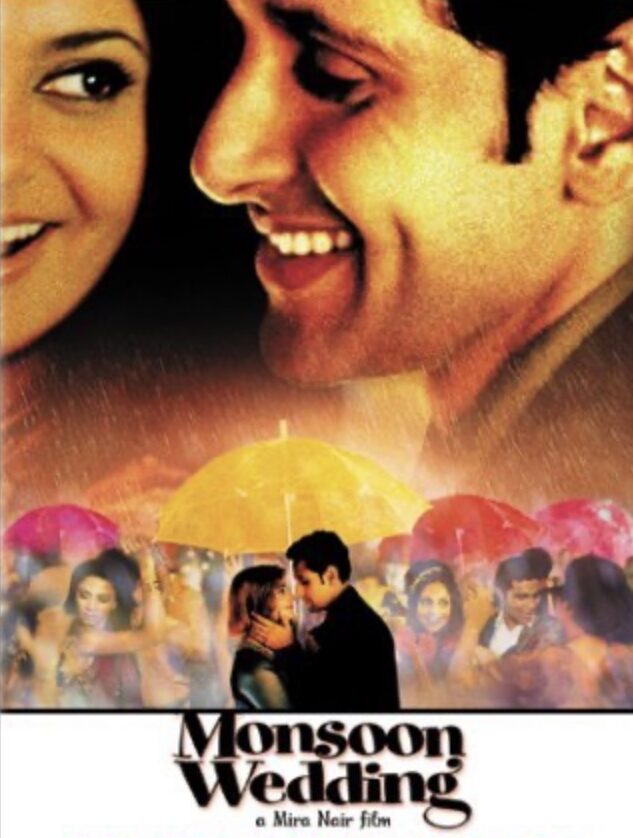
 Mira Nair’s modern monsoonal fable Monsoon Wedding is as relevant and throbbing with life as it was when released. Nair’s sixth feature film is the ultimate Bollywood dream: a real, warm, thoughtful, sensitive, moving, and shocking look at a wedding in a Punjabi Delhi family done in loud, flamboyant shades which are never—repeat, NEVER—colour co-ordinated.
The spontaneous flow of lively, vibrant visuals with emotions to match, and the marvellously unrestrained spontaneity displayed by the huge ensemble cast, are comparable with the best romantic comedies we’ve seen in any part of the world.
On one level, we can look at Monsoon Wedding as the perfect ‘Bollywood’ entertainer with a digestible brand of glamour encircling the enchanting ensemble of fully believable characters who seem not to speak to cinematographer Declan Quinn’s absolutely unobtrusive camera, but amongst themselves. On another level, layer after layer of heartbreaking love and lyrical redemption flows out of the narrative in a wellspring of inspired creativity.
As the harassed, bravely upbeat parents Lalit and Pammi Verma (Naseeruddin Shah and Lilette Dubey) prepare for their daughter Aditi’s (Vasundhara Das)wedding, the guests converge with clamorous conviction into Sabrina Dhawan’s effortless and easy-flowing screenplay. The various sub-plots within the festive format emerge like chrysalis to conquer spaces in Nair’s emotional universe.
Whether it’s the timid bride scampering off to meet her lover (Sameer Arya) one more time before her wedding day, or the Delhi’s chic woman of the world Ayesha (Neha Dubey) dancing in utterly unrestrained abandon to the sound of ‘Aaja na jhoole meri chunri sanam’ (Sush, please move over) , or the marriage manager Dubey (Vijay Raaz) standing outside the maidservant’s kitchen with a heart made of marigolds…like the flowers that thread themselves through the nimble narrative as a metaphor, we carry little-little moments of big-big significances in the basket of our memories.
Nair’s film deserves the highest praise possible for being an articulate and intelligent entertainer that makes audiences laugh and cry without resorting to the banshee cues. Audiences’ emotions rise and well unconditionally as the characters present themselves to us in no predictable or pre-defined order or code.
The swirl of captivating energy that defines the characters is also a measure of the director’s unstoppered creative brio. As we fall into the narrative’s raw syncopated rhythms, we instinctively begin to look for those great defining moments in the plot that deliver Monsoon Wedding to the doors of greatness. The performers take it beyond that door.
Perhaps calling the people who inhabit Mira’s mellow monsoonal milieu “performers” is an anomaly akin to describing Shakespearean soliloquies as rabblerousing rhetorics. Every character is as real to us as the people we meet , or the people that we know meet—the film’s reality checkpost stretches no further than that.
We can go on and on extolling the virtues of the lyrical realism that Mira Nair invests into her “love song for Delhi”. The Bhangra music and the thumris that carpet the soundtrack elevate the collage of obtainable emotions to a poetic plane. In its use of colour and music, Monsoon Wedding goes much further than Mira Nair’s pathbreaking Salaam Bombay. And yet those components that furnish the film with glamour are also the narrative’s life-support system. For what would an upper-middle-class Punjabi wedding be without its colours, music, domestic politics, and sexual synergy?!
At heart, Monsoon Wedding is a very clever entertainer exuding an indefinably persuasive aroma of erotic pursuits and emotional high points. Most of all, it’s a film of acting skills that leave us groping for superlatives. Naseeruddin Shah, as the bride’s hassled, frazzled, and dazzled father, brings an unstrained emotional punch into his routine role. This is his best performance in recent times.
The huge supporting cast of trained theatre actors are a joy to behold. Relative unknowns like the love sick Vijay Raaz as the marriage manager and Tilottama Shome as the maid whom he courts in a ritual that goes from low comedy to high tragedy, gift us with people whom we can’t leave behind after the end-titles roll.
A special word for Shefali Shah as Lalit Verma’s orphaned niece, who hides a dark and unspeakable truth in her heart, which comes bubbling to the surface during the marriage festivities. Shefali’s face is a map of the human heart. When Lalit takes a stand against the uncle who abused her when she was a child, Shefali’s face is a portrait of familial tranquility. When she finally dances at the wedding with the rest of the cast our heart dances for her.