
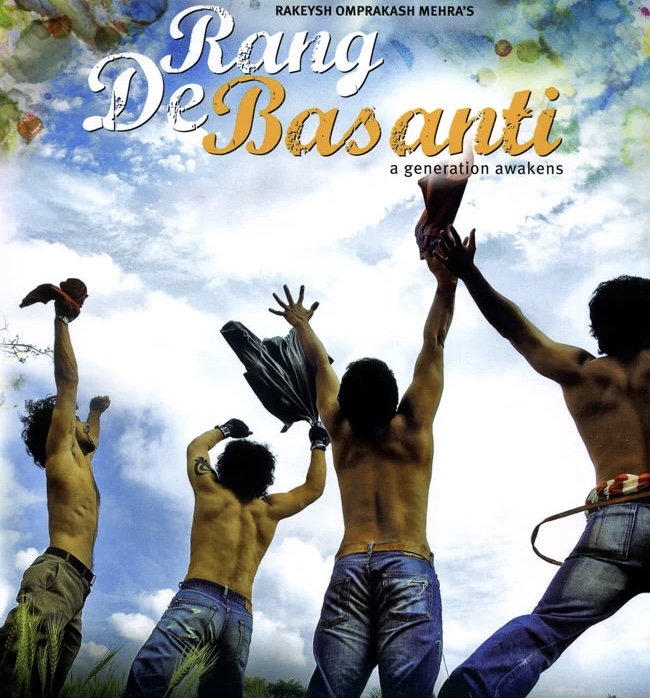
 Celebrating 20 years of Rakeysh Omprakash Mehra’s Rang De Basanti, Subhash K Jha, reflects on the film that starred the I credible ensemble cast of Aamir Khan, Siddharth, Atul Kulkarni, Sharman Joshi, Kunal Kapoor, Alice Patten, Waheeda Rehman, and Soha Ali Khan. We also present a throwback interview with the director about the making of this iconic film.
When Rang De Basanti opened on January 26, 2006, I was in a theatre in Patna watching a very fidgety, very confused audience reacting as we all did to unfamiliar experiences, with embarrassment and heckling.
The film adopted a unique format to tell the story of a freedom that we all have taken for granted. The entire film unfolds through the eyes of a young British documentary maker, Sue (Alice Patten), in India to shoot a documentary on the Freedom Struggle. The film is in two time zones. In the past, with Aamir Khan cast as Chandrashekar Azad, the Tamil star Siddharth as Bhagat Singh, Atul Kulkarni as Ramprasad Bismil, Kunal Kapoor as Ashfaqullah Khan, and Sharman Joshi as Rajguru. The same actors were also seen in contemporary times grappling with the grammar of socio-political corruption.
On release, I was stunned by director Rakeysh Omprakash Mehra’s audacity and creative energy. I knew I was watching a film that would create history. But I also felt, wrongly, that it would be a box-office disaster. As usual, I underestimated the power of the Indian audience to absorb and assimilate unique cinematic experiences.
Rang De Basanti is undoubtedly one of the cinematic landmarks of this millennium. Its theme is so excitingly original, the tonal textures are so untried and yet so visually, emotionally, and aesthetically energized, you wonder how such a near-flawless merger of history and fiction could be achieved with such editing and directorial cogency.
In every sense of the word, Rang De Basanti is a triumph. Its aesthetics and characterizations fill you with amazement and elation. It’s a gloriously triumphant look at contemporary youth. And yet it audaciously takes a sweeping, arching look at history for answers to the Big Question.
Where has today’s generation gone wrong? Why is the nation so inured to corruption? And why are we so enamoured of the stagnant status quo?
Are we scared to sweep the garbage from our politics? Lofty thoughts, often swept by popular art under a carpet of cynicism. Rakeysh Omprakash Mehra achieves a stirring and stunning synthesis of social relevance and mesmeric storytelling. His first film Aks was about the supernatural. Rang De Basanti too has a supernatural quality to it. Though on this occasion, that quality comes from within a contemporary ‘natural’ setting rather than any desire to seek answers to our present-day imbroglio in other-worldly explanations.
From the start, we are led into a world where youthful aspirations are aligned to the socio-political reality of a country on the brink. Rang De Basanti is a film on the edge. It jumps and careens across lives, prancing on the precipice between the contemporary and the historical.
“Is desh ka kuch nahin hoga!” How many times have we said this to ourselves and to others?
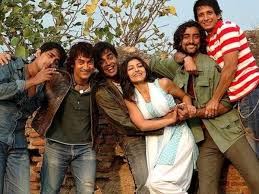
Mehra’s protagonists, an assorted bunch of collegians and post-college friends, are played with amazingly casual grace by Aamir Khan (DJ), Siddharth (Karan), Sharman Joshi (Sukhi), Kunal Kapoor (Aslam), and Soha Ali Khan (Sonia).
Into their world of endless fun and aimless aspirations comes a pretty and brainy British girl named Sue (the lovely and graceful debutant Alice Patten). Prompted by her colonist-grandfather’s diary, Sue wants to make a film on the life of the legendary Indian freedom fighters—you know, Bhagat Singh, Chandrashekhar Azad, the works.
And guess what? Sue wants to cast DJ and gang as the revolutionaries!
The guffaws and the giggles that follow Sue’s dreams fade away, as this youthful brigade of adrift dreamers gets down to the ritual of acquainting itself with Indian history.
Rang De Basanti dares to point fingers and tells us where we’ve gone wrong. It isn’t only a film about the education of a moorless generation, it’s also an outstandingly accomplished piece of cinema. Mehra proves himself an outstanding raconteur and technician. With the deft and diligent editor (P.S Bharathi) tailoring the past to merge fluently into the present, and Binod Pradhan’s camera capturing Delhi and its surroundings as a character rather than cities, Mehra’s job of bringing the past into the same line of vision as contemporary India is rendered inevitable and unforgettable.
Rang De Basanti is an extremely ambitious film. It tries to educate the generations in Independent India who have brought the country to its current crisis of moral and political corruption. But it never gets hysterical or polemical, thanks to Prasoon Joshi and Rensil D Silva’s conversational yet penetrating dialogues.
Mani Rathnam attempted the same theme in a different, less dramatic light in Yuva. Rakeysh Mehra goes many steps ahead. He blends historical events from the past (e.g., the massacre by Britishers at Jallianwala Bagh) with newspaper headlines (the MIG warplanes scam). The film-within-a-film format (earlier attempted in films as diverse in language and intent as Karel Reisz’s The French Lieutenant’s Woman and Mrinal Sen’s Akaler Sandhane) gives the narrative the texture of a life lived in layered luminosity.
Not for a second does Rakeysh Mehra falter in his vision. The story of today’s youth, their lack of connectivity with their past, and the prevalent moral degeneration of the nation, could quite easily have lapsed into a holier-than-thou jingoistc exposition.
The film works wonderfully and exceptionally as both a political parable and a spanking story on the Rang De Basanti scars of the times. In the fusion of fact and fiction, style and content, the film is both teasing and tempting. While you applaud the filmmaker’s immense stronghold over his storytelling, the characters never seem dwarfed by their ambience.
You come away, haunted and bewildered by the issues that Mehra raises without letting his story suffer in the process of linking the modern tale with history. You come away from Rang De Basanti enchanted by the natural verve of its songs and dances, its director’s flair creating fissures and feeling from within the characters rather than imposing creative authority from outside.
The ‘actors’ (if what the cast does can be described as acting!) mesh so well with each other that the volatile thematic strands(for instance, the friendship that grows between the rabid Hindu played by Atul Kulkarni and the liberal Muslim Kunal Kapoor) never bind down the narration.
The free-flowing enchantment induced by this film about the simmering discontent of a nation and a generation hurtling into damnation is so real and yet so surreal, you wonder if there can ever be a film so filled with indignant ideas and yet so calm and spacious in its storytelling.
In hundreds of ways, Mehra could’ve milked every frame for emotions. Where he could’ve opted for melodrama, he pulls back… and lets the tears flow only when the MIG pilot (Madhavan, in an endearing cameo) perishes. The song during the funeral, sung by Lata Mangeshkar, picturized on the mother (Waheeda Rehman), rips your hearts open.
There are interludes and visuals in Rang De Basanti, which shall remain alive forever. There may be better films. But there will never be another one quite like this one.
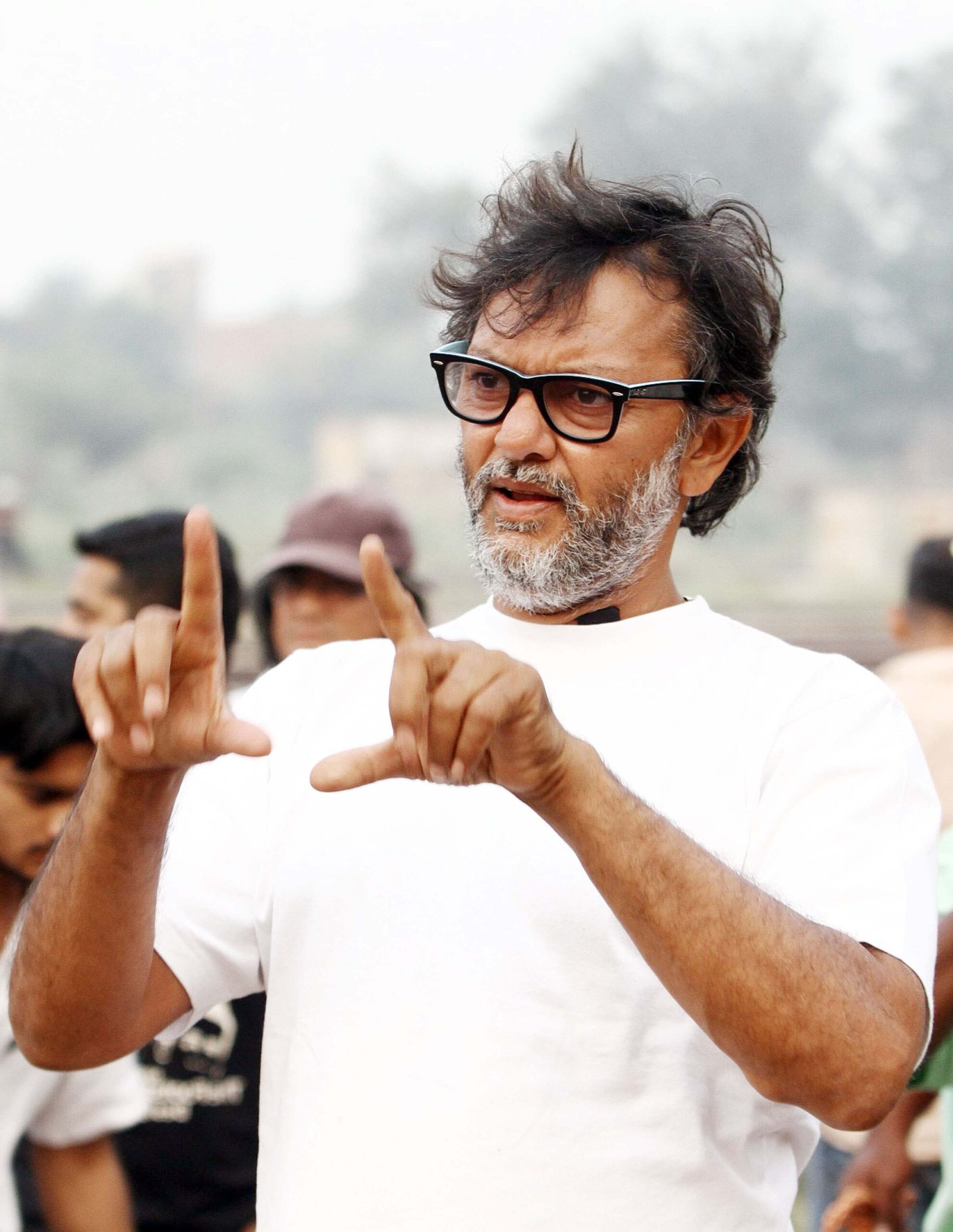
Looking back, Rakeysh Omprakash Mehra says, “Rang De Basanti(RDB) is a younger film. But I didn’t consciously choose a subject that would be more accessible to audiences than my first film Aks. I knew I had to make this film. Since Aks, my storytelling technique had improved. You learn from your past mistakes and new experiences. This time, I had the luxury of living with my script for four years. So many people joined me on the journey that was Rang De Basanti. It was no longer my film. When it was released, it became the audience’s film.”
Looking back at RDB, I am struck by how effective the entire cast is, and how miscast Aamir Khan was as the college brat. In fact, he was so over-age for the part that the director had to write in a dialogue explaining why his character, DJ, chooses to hang on to his campus days long after he has crossed his student days.
RDB came when patriotism was passé. There were 4-5 Bhagat Singh films that didn’t connect with the audience. Then there was Aamir Khan, a disaster Mangal Pandey. So any sign of patriotism in an Aamir Khan starrer read as a danger sign.
Rakeysh was determined to make the film. He explains, “It’s a collection of many circumstances. In school, I wanted to join the Air Force. It didn’t work out for me. In college in Delhi, I was predominantly a sportsman. It didn’t work out because I was from a lower-middle-class family. And the first priority was to bring money back into the family….As kids in Delhi on August 15, when we flew kites, we could hear India Gandhi speaking… On the other side, there were the patriotic songs on the loudspeaker…. ‘Ae mere watan’, ‘Mere desh ki dharti’… We were looking at the idea of our country through a kite….Films like Mother India, Do Bigha Zameen, Naya Daur which came on TV , touched all of us. This was the era when escapism hadn’t seeped into cinema or real life. That was the era I wanted to re-capture in RDB.”
Seven years ago, even before his first film Aks, Rakeysh wanted to make a film called Awaaz. There are shades of Awaaz in Rang De Basanti.
Recalls Rakeysh, “Awaaz was about a bunch of boys working in a garage, the haves and have-nots. I wanted to make it with Abhishek Bachchan. Then I wanted to make a film on the life of the revolutionaries. What I didn’t want to do was to shoot them with halos ….I wanted to shoot them as normal youngsters . I wanted to call it The Young Guns Of India.”
Initially, Rakeysh wanted to make a film on the life of Bhagat Singh. Then the race for Bhagat Singh films started. Several of Bhagat Singh bio-pics hit theatres one after another.
Rakeysh recalls, “Initially, I wanted to enter the race. Then I realized we were all insulting his memory. Attention was diverted by who would get into theatres first. I moved on…. I did a focus group in Delhi and Mumbai. I took a new story idea to youngsters between 17 and 23. Our survey showed that for our generation a relationship meant, ‘Let’s get married and make babies together.’ Not to this generation. The youngsters we spoke to were driven by ambition. And I didn’t even know how to get on the internet! Anyway, we then moved into surveying them about the country and the tri-colour. The borders of patriotism had blurred. Pagdi sambhal jatta was no more relevant. Not too many kids knew who Chandrashekhar Azad was. I told my writer Kamlesh Pandey there was no point in making a film about the freedom fighters. He insisted , reminded me of the passion that Manoj Kumar’s films used to incite. But that was a different era.”
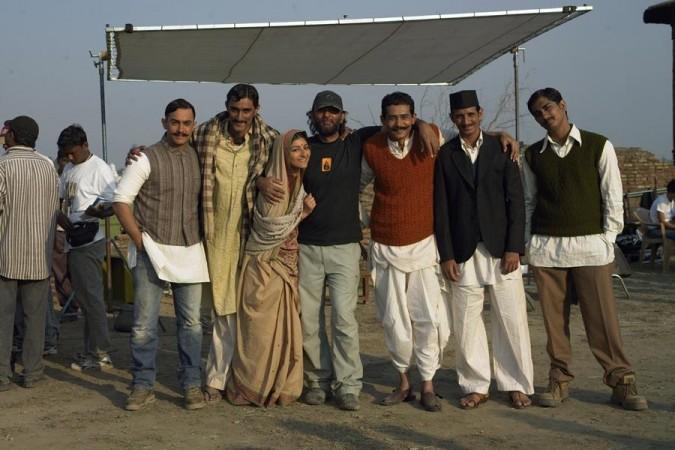
This , says Rakeysh, was when Rang De Basanti was born. “I sadly abandoned the original idea and hit on another idea of a British documentary filmmaker coming to India to make a film on the Indian armed revolution. She finds kids who are more western than her. Two lines… the past and present run together. They intersect. There are sparks. Then the rooftop scene where the line between past and present blurs when Soha Ali Khan asks her friends to kill the raksha mantri….Suddenly, the original idea was replaced by this new idea.”
RDB cost 25 crores to make. Everything except the jail scenes was shot on location
Rakesh is all praise for his cast. “Aamir didn’t dominate the film. And yet he has brought in everything required. The whole Punjabi accent for his Mona-Sardar character was his idea. There was an attraction between Siddharth’s and Soha’s characters. We couldn’t bring it into the forefront because of lack of space. In any case, love stories don’t have to have a happy ending. Today’s generation is very mature about love and its end.”
The film controversial ending where our heroes gun down corrupt politicians has been perceived as fascist.
Rationalizes Rakeysh, “Every story has to follow its own course. When heroes in a mythology enter the caves to fight the demons, they’ve to perish. Mani Ratnam’s Yuva didn’t work for me after the heroes went into the parliament…. What jolted the audience is that they love my heroes, and they don’t want them to die. Too bad. You love and lose the best people in your lives. It isn’t a heroic but a poetic ending. But they become heroes because they die. What I’m trying to say is, we got independence from the goras. But we got enslaved by our own. Now we’re killing each other. You’re from Bihar. You know what I mean. There can be no neat solution to the problems we face. Rang De Basanti is a conversation with the masses.”