

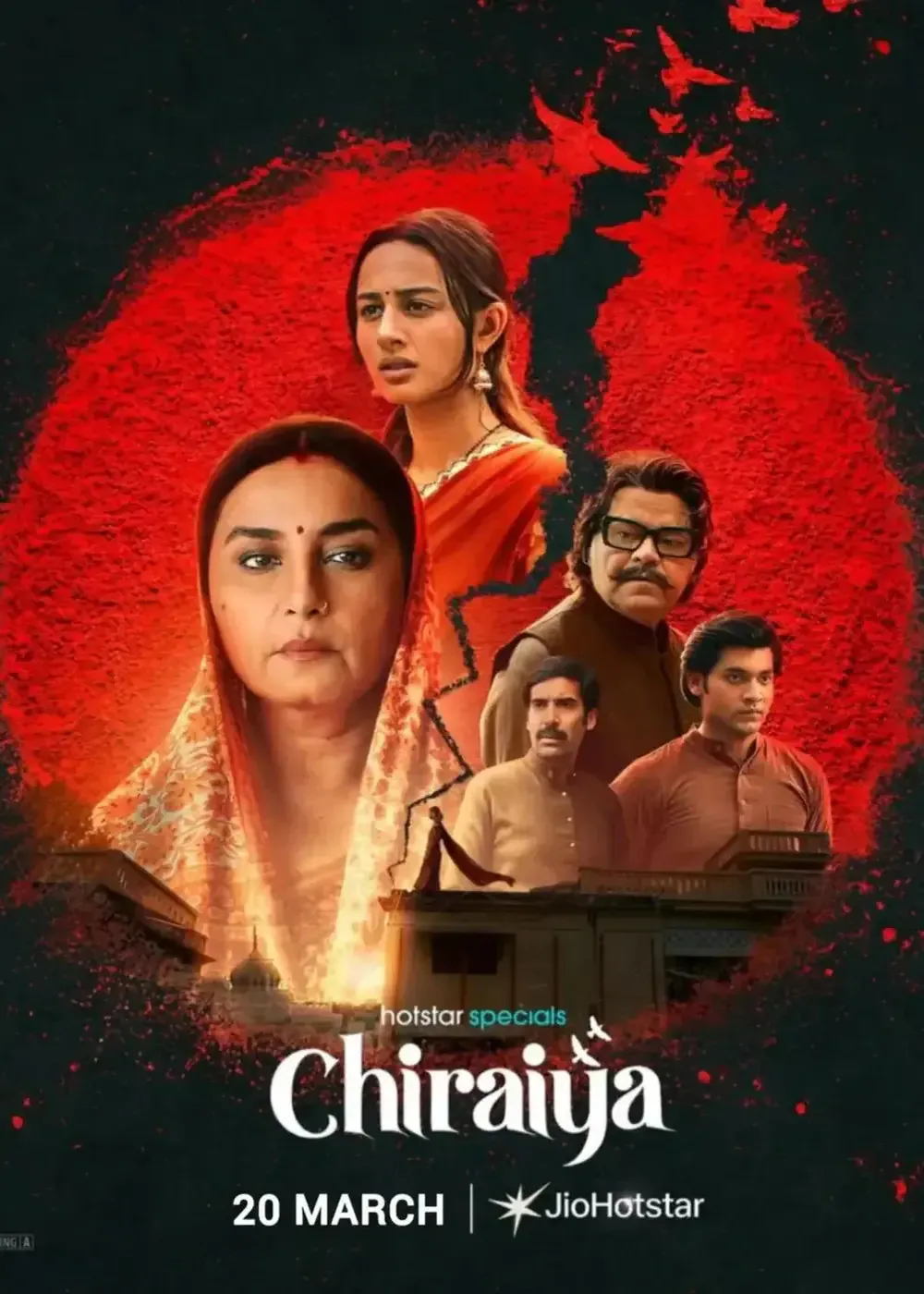
 Writer Divy Nidhi Sharma and director Sushant Shah needn’t have done this. I mean, why bother with a series on, ahem, marital rape when the law doesn’t recognize it as a crime? Then why bother?
But hang on. That’s precisely why we need Chiraiya. It is strong and powerful, filled with an old-worldly wisdom, and by and large, free of screechy preachiness.
In spite of its flaws (perfection, I always say, is boring on everyone and everything except Lata Mangeshkar), and in spite of the current mood of violent aggression in the cinema, Chiraiya leaves a deep impact. It is to-the-point and not afraid to speak out when needed…
…Just like its protagonist Kamlesh. The docile, sweet, all-purpose Bhabhi of a family in Lucknow who doesn’t know what marital rape and ‘consent’ mean… until they are applied to her young, impressionable, ostensibly woke sister-in-law Pooja (Prassana Bisht, eminently impactful).
It is a classic Mother India/Amba situation where the doting mother-figure Kamlesh turns against her ladla brother-in-law Arun (Siddharth Shaw, putting in a brave performance in a thankless role) when she comes to know he is not the sweet boy Kamlesh had nurtured. Not in the bedroom. Not with his wife.
Sharma’s writing dips into didacticism but never so deeply as to not be able to shake itself out of a smothering, self-congratulatory stupor. The storytelling is even and engrossing. The messaging is never over-punctuated.
And whatever the flaws, Divya Dutta, as Kamlesh, makes sure, like her character, to never let the foundation cave in. It is easy to take Divya for granted with a ‘she-is-always-good’ nonchalance. This is precisely what Kamlesh fights against. Don’t let your valued presence be taken for granted.
I did find some of the plot developments towards the end to be a wee wobbly. But the high points are so persuasive that it is easy to overlook the softer spots in the storytelling. Admirably, director Sushant Shah draws a fine balance between the intrinsic grisliness of the subject and the commitment to aesthetic palatableness.
Some horrific moments – especially the one where Pooja locks herself in the bathroom and disfigures her vagina to escape marital rape—are meant to shock. But the storytelling never crosses the line: an act of daring that the two sisters-in-law of a rigidly patriarchal family undertake because, as Kamlesh says, “When ladies are unsafe within the boundaries, they have no choice but to cross the line.”
The cast is uniformly effective. A special word for Faisal Rashid as Kamlesh’s supportive husband, who has one of the best lines in the series: “I can’t be a hero. But I can be a hero’s husband.”
Divya Dutta’s act of heroism as Kamlesh cannot be sidestepped. Chiraiya is the kind of work which has the power to change lives.