
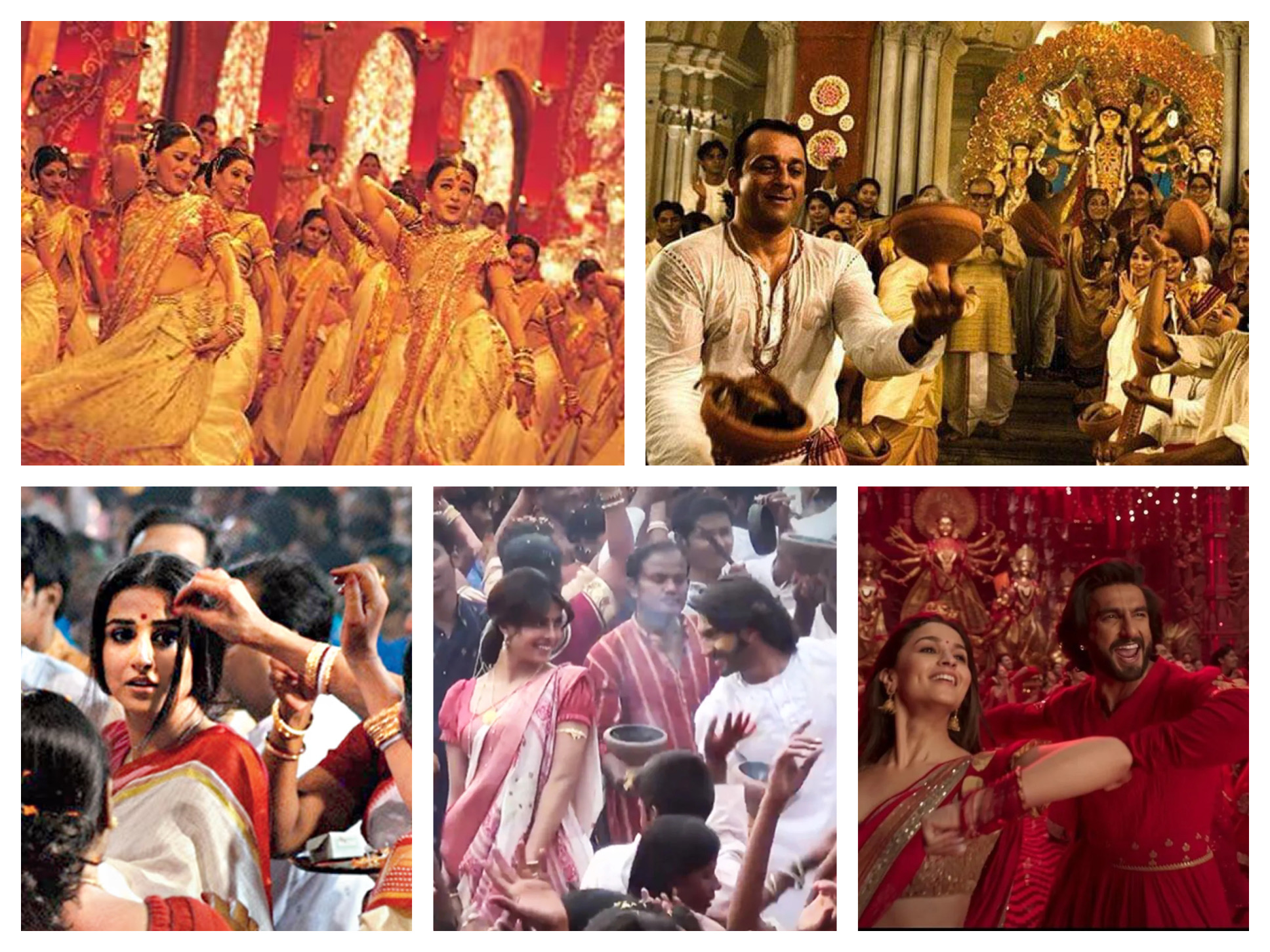
 Durga Puja has always held a special place in Bollywood cinema. Hindi filmmakers frequently use the festival’s vibrant visual grandeur, rich Bengali traditions, and powerful themes of the victory of good over evil as crucial backdrops for dramatic turning points, emotional high notes, and intense character confrontations.
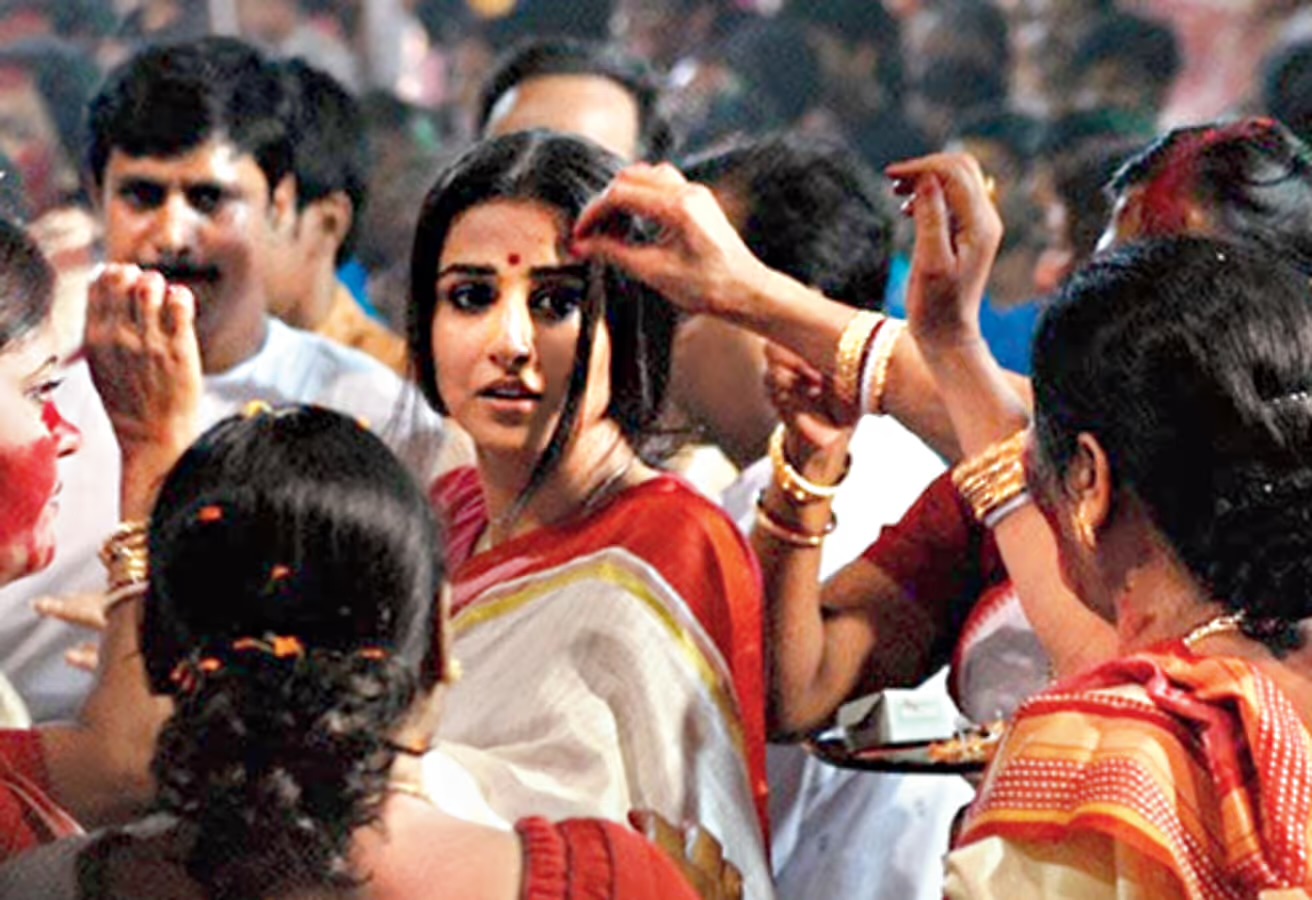
Kahaani in 2012 is perhaps the most iconic modern utilization of the festival. Set entirely in Kolkata during the lead-up to the festival, director Sujoy Ghosh uses the vibrant chaos of the final day (Vijay Dashami) as the perfect cover. Amidst the Sindoor Khela (smearing of vermilion) and traditional immersion processions, the pregnant protagonist (played by Vidya Balan) sheds her vulnerable disguise to avenge her husband’s murder. The sequence strongly evokes the mythological symbolism of Goddess Durga slaying the demon Mahishasura.
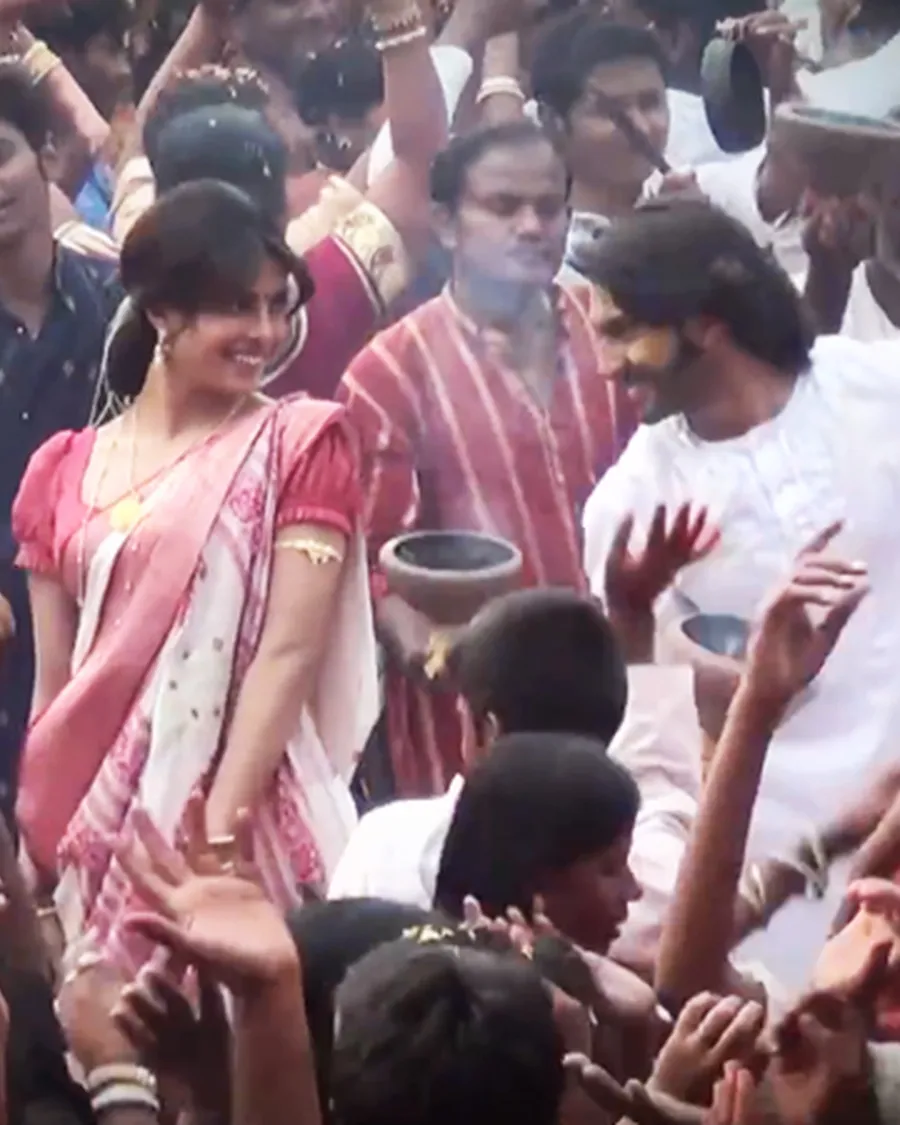
Gunday in 2014 is set in Kolkata. The visual grandeur of a massive Durga Puja pandal serves as a tragic, violent turning point for the film. Priyanka Chopra’s character uses the celebration to create a deliberate rift between the two lifelong friends, played by Ranveer Singh and Arjun Kapoor. The celebratory beats of the dhol contrast heavily with the underlying tension and betrayal.
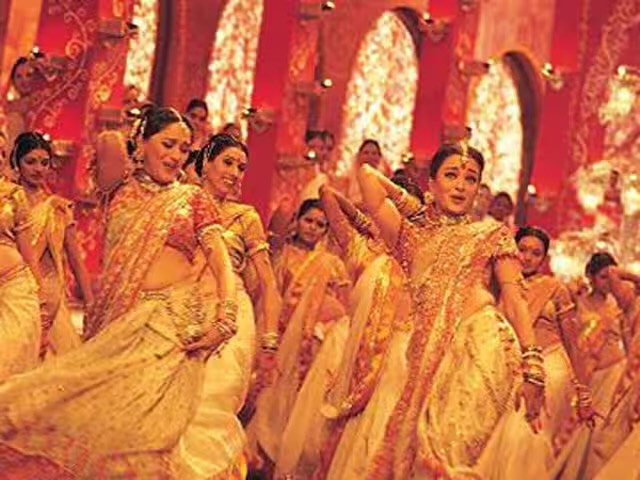
Sanjay Leela Bhansali’s Devdas in 2002 utilizes the festival to deliver one of Bollywood’s most celebrated dance sequences, “Dola Re Dola”. Parvati (Aishwarya Rai) invites the courtesan Chandramukhi (Madhuri Dixit) to her zamindar mansion’s grand Durga Puja celebrations. The two women dance with abandon before the deity, but the joyous celebration quickly pivots into tragedy when Chandramukhi’s true identity is publicly exposed, creating a major plot twist.
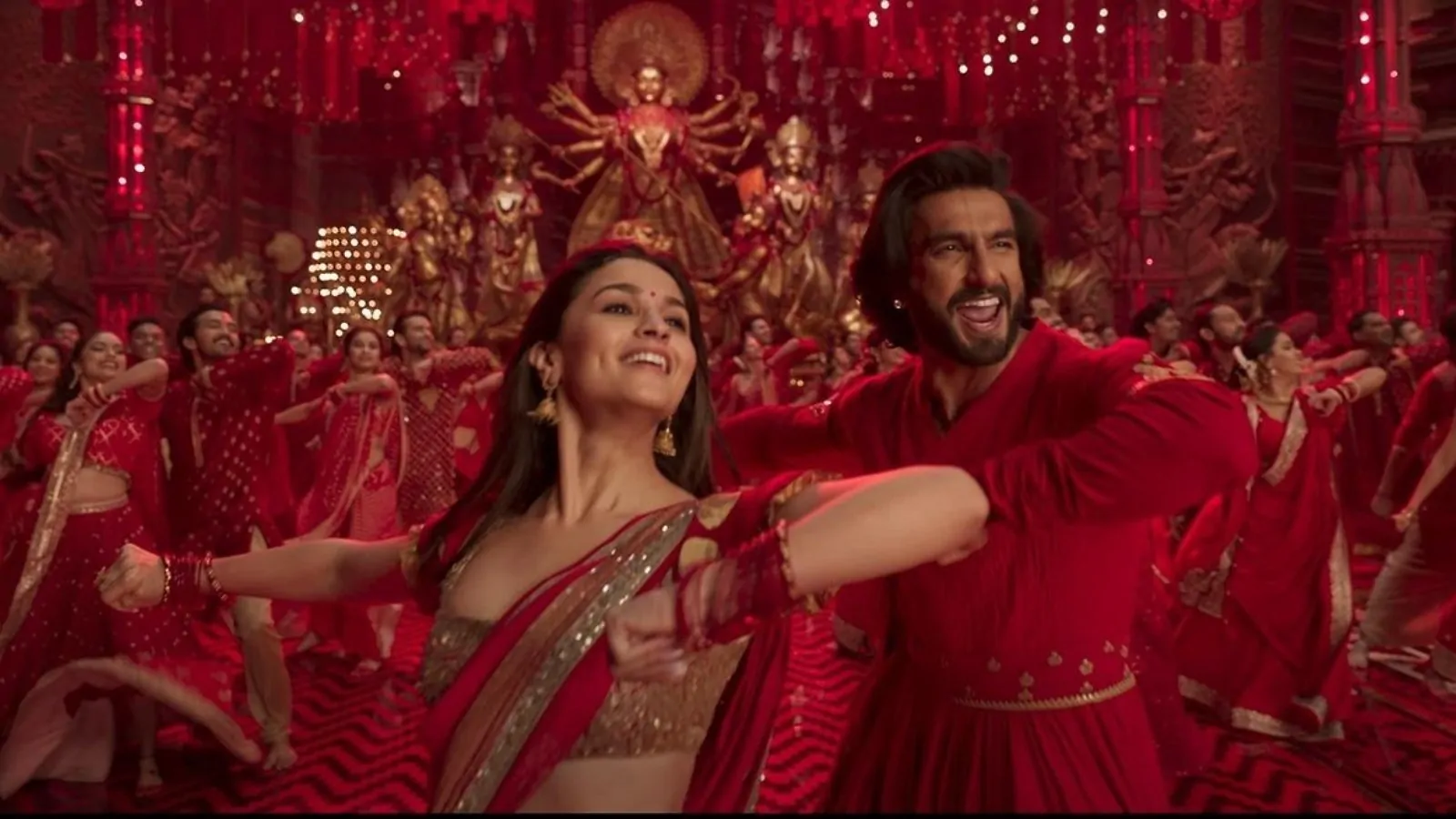
Karan Johar’s Rocky Aur Rani Kii Prem Kahaani in 2023 uses the opulence of Durga Puja to frame a massive cultural and ideological clash. Following a high-energy performance of “Dhindora Baje Re” by Rocky (Ranveer Singh) and Rani’s father (Tota Roy Choudhury) at a pandal, Rocky’s patriarchal family leaves in anger. Rani (Alia Bhatt) uses the moment to deliver a pointed, fiery monologue confronting their regressive mindset right in front of the deity.
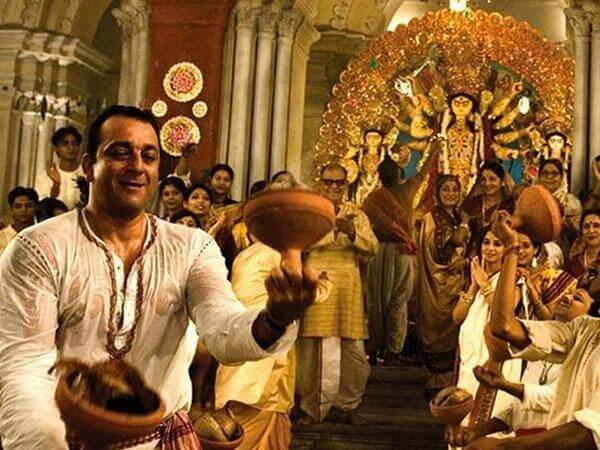
In Vidhu Vinod Chopra’s Parineeta, the Durga Puja festival acts as a recurring emotional catalyst in this adaptation of Sarat Chandra Chattopadhyay’s novella. It beautifully showcases the traditional Dhunuchi dance (dancing with smoking clay incense burners). Early on, the festival mirrors the blossoming love between Lolita (Vidya Balan) and Shekhar (Saif Ali Khan), but a later puja sequence uses an accidental spark from Girin’s (Sanjay Dutt) dhunuchi to trigger Shekhar’s mounting jealousy and possessiveness.
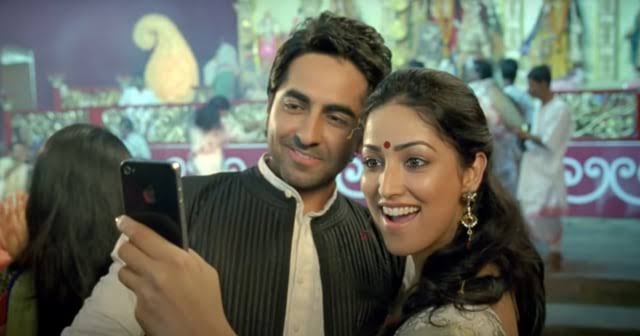
In Shoojit Sircar’s Vicky Donor, Yami Gautam’s Bengali character takes Ayushmann Khurrana’s Punjabi hero pandal-hopping in Delhi, using the festival to give him a peek into her heritage and bridging their cultural differences. In contrast, Lootera utilizes a more intimate, soulful 1950s rural Bengal setting, opening the film with the face of the Goddess Durga and using a traditional jatra (folk theatre) performance at a zamindar’s mansion to establish the relationship between the lead.
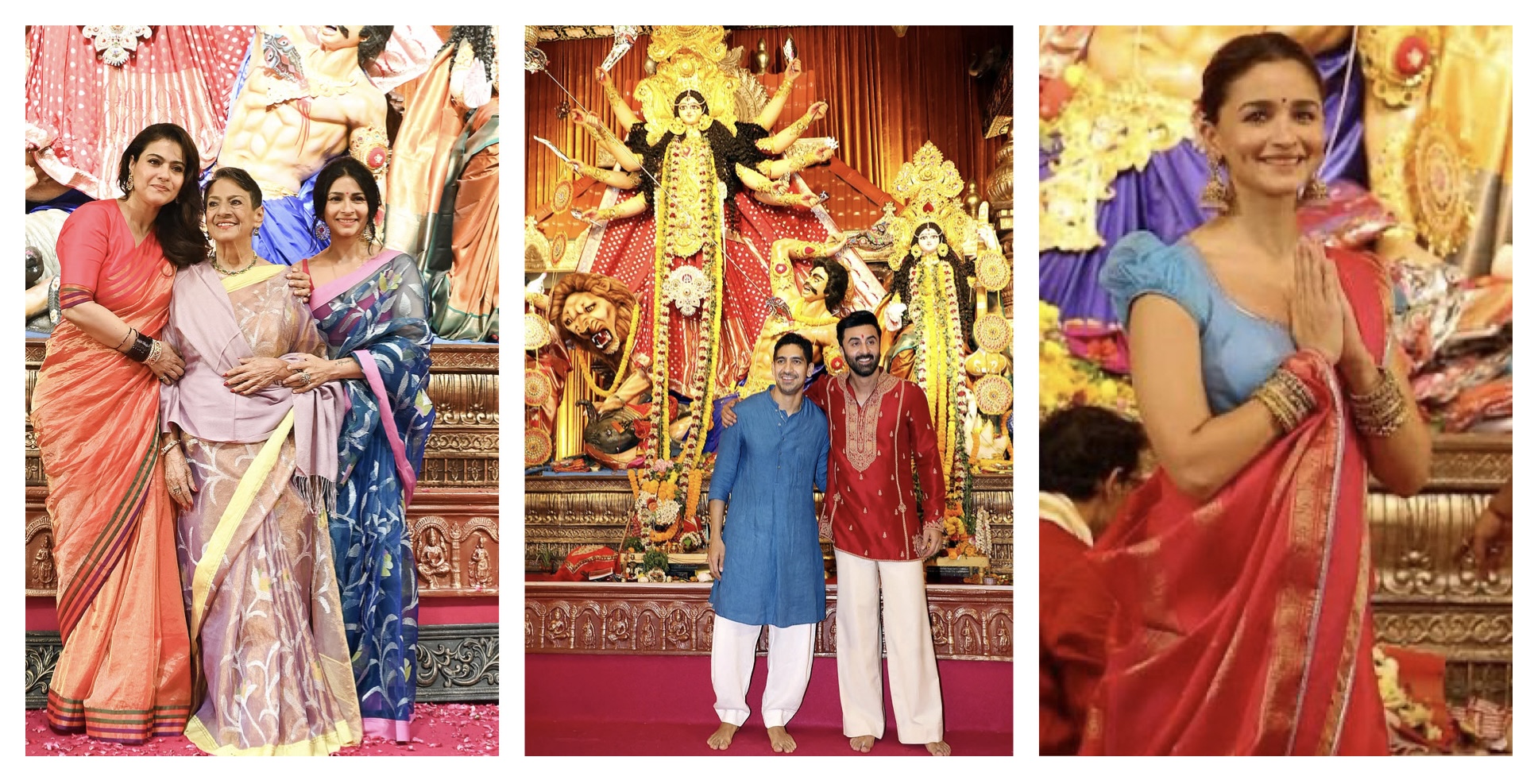
The relationship between Durga Puja and Bollywood thrives in two ways: the iconic cinematic portrayal of the festival on screen and the star-studded real-life celebrations in Mumbai, anchored primarily by the film industry’s prominent Bengali families.
The epicenter of Bollywood’s festive spirit is the North Bombay Sarbojanin Durga Puja. Founded in 1948 by legendary film mogul Sashadhar Mukherjee and his wife Satirani Mukerji, this historic festival has grown from a private gathering into a grand star-studded spectacle. Passed down through generations, it is hosted at a venue near SNDT Women’s University in Juhu, Mumbai.
Bollywood cousins Kajol, Rani Mukerji, and filmmaker Ayan Mukerji actively serve bhog, manage pandal duties, and participate in rituals like Sindoor Khela. The pandal draws continuous visits from major industry figures, including stars like Amitabh Bachchan, Alia Bhatt, Ranbir Kapoor, and Kiara Advani.