

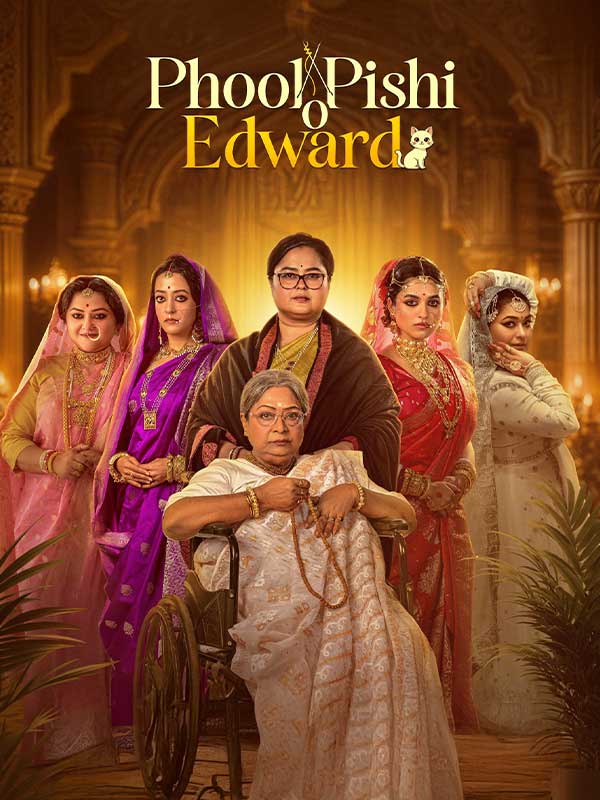
 Co-directors Shiboprosad Mukherjee and Nandita Roy have made a name in Bengali cinema for telling stories that are untold and would have remained so if the duo had not dared to venture into forbidden territories time after time.
Phool Pishi O Edward is so many things all at once, it is hard to jam it into a genre. Unless we place it into the land of the fable. There is deceptive distance in the mood and atmosphere. The Zamindari constructed through horse carriages, Kathak mujras, and sumptuous meals, is only a façade as the narrative opens wounds of oppression and patriarchy, which never heal. They never will.
The women in a sprawling, crumbling bungalow, seem like descendents from Guru Dutt’s Sahib Bibi Aur Ghulam, and I wish this film had been shot in the visceral vividness of the black-and-white format. Not that colour cinematography by Animesh Ghorui is deprived of evocativeness.
Almost every frame tells a story: we just have to look for it. The actors, all dressed in emotions that often lie too deep for tears and too wounded for laughter, yearn to have their say. The screenplay (Zinia Sen) could have done with a bit less out-reaching: too many characters and their yearnings jostle for our attention.
The film starts with a traditional wedding in which the bride-to-be Binita’s (Shyamoupti Mudly, impressively muted) aged groom passes away at the mandap. We soon realize that the groom at the intended wedding has rubbed all his family members the wrong way. As the decadent, debauched, evil, unrepentant Zamindar Manindra Chandra Nandy, Arjun Chakraborty is a stand-out performer. He is the sort of fiend we would never want to meet at a Mujra.
Sadly, the ladies of his household have nowhere to go, nowhere to hide from Manindra’s atrocity. While most of the beautiful ladies look suitably crushed and wistful, one woman who seems to have escaped from the feudal tyranny is the eponymous Phool Pishi (a spirited Sohini Sengupta). She is a self-appointed sleuth who knows her way around the haveli.
Why should she not? She grew up assailed by Manindra’s patriarchal diabolism.
Now Phool Pishi is back home, to add giggles to the grim household. Her sequences with the investigative cop Balamiki (Rajatava Dutta, belonging to the Robi Ghosh school of comedy) are gender-sparring matches where we get to feel the weight of the patriarchy at its lightest.
The film casts the nosy busybody Pishi as both the anchor and the comic relief. This kind of duality prevails in the film. The women are both the victims and the perpetrators, depending on the situation that they are put in.
This is the third of haveli of muscular muliebrity I’ve experienced in the past few weeks after The Shape Of Momo and Maa Bahen. The house of women in each case is unique, Phool Pishi O Edward the most emphatic of all.
The vast cast of veterans and youngsters merge effectively in a film which has so much to say, and says it with confidence and grace. The scene stealer is the cat, Edward. See the film to know why.