
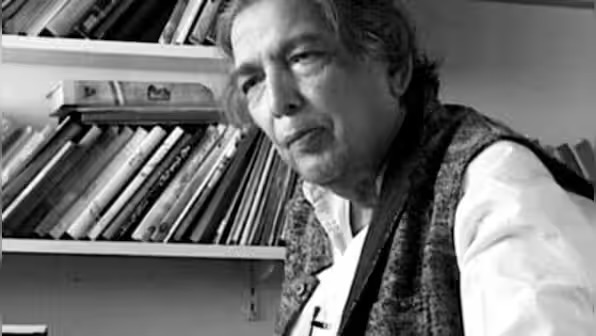
 “Waqt ne kiya kya haseen sitam/tum rahe na tum hum rahe na hum….” The poet who wrote these brilliant lines on life’s capricious tricks rewrote the rules of film lyrics. Kaifi Azmi’s lyrics for Hindi cinema endowed depth and beauty to a medium which had been progressively trifled and trivialized by pedestrian motivations.
Of course, Azmi had a creative, social, and political life far beyond cinema. Born circa 1919, Kaifi Saab was born into a feudal family in the Azamgarh district of Uttar Pradesh in a village called Mijwan. His original name was Akhtar Husain Rizvi. He was educated in Allahabad and Lucknow. As a child, he was sent by his parents to become a priest. But young Akhtar had other plans for his life.
At the age of 11, young Kaifi recited his first ghazal at a poetry session. In 1942, he joined the Quit India Movement against British Indians and became a full-fledged Marxist. He came to Mumbai in 1945, where he joined the Progressive Writers’ Association.
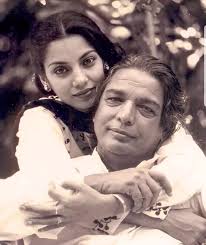
Shabana, who fondly thought of her father as “the handsomest man in the world,” remembers a stream of well-known intellectuals, poets, and musicians staying at her father’s house guests.
Film writing seemed more like a means of survival rather than a creative strategy in Kaifi Azmi’s career. His film lyrics specially for the cinema of Guru Dutt and Chetan Anand were incomparably lucid, proving that space could be made for true poetry in a vocation as populist as mainstream Hindi cinema. Lyrics like ‘Dekhi zamanein ki yaari bichde sabhi baari-baari’ and ‘Yeh duniya agar mil bhi jaaye to kya hai’ in Guru Dutt’s Kaagaz Ke Phool and Pyaasa, respectively, or the nationalist ‘Kar chalen hum fida jaan-o-tan saathiyon’ in Chetan Anand’s war epic Haqeeqat are so timeless as to represent the finest and most cherishable aspects of popular art.
Apart from writing some of the best words heard in film songs, Kaifi Azmi also wrote the script, dialogue, and lyrics for M.S Sathyu’s highly acclaimed Garam Hawa. In 1995, Kaifi Azmi made his acting debut in Saeed Mirza’s Naseem where Azmi played a grandfather watching the demolition of the Babri Masjid from his bed.
A poet who strayed into cinema, Kaifi Azmi’s words were so true to life, they seemed not to be poetry at all.