

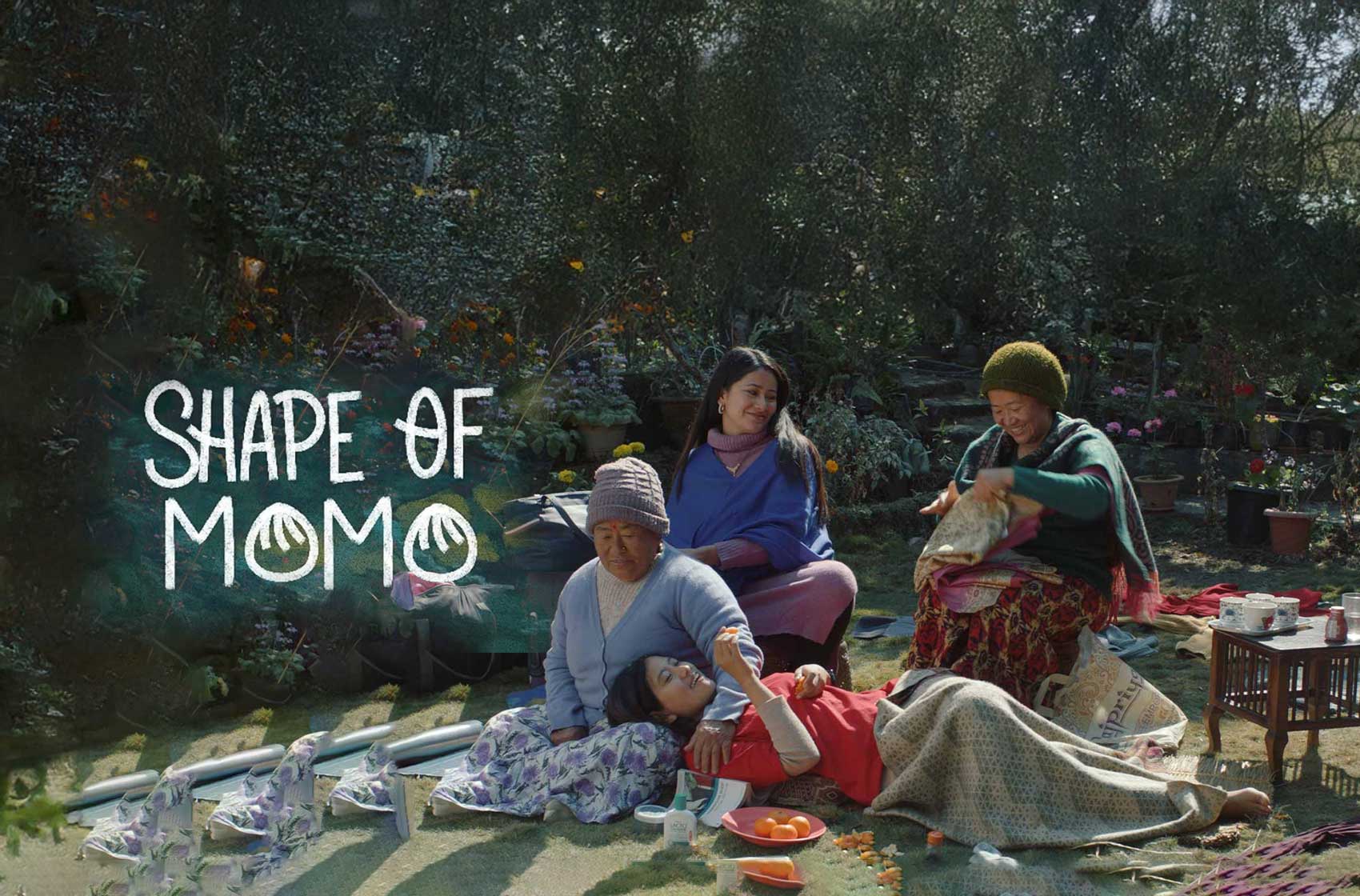
 Shape Of Momo about a family of women in solitary Sikkim struggling to find their voices, is a gem of debut for director Tibeny Rai who wastes no time in getting us to feel for her characters. The women do it on their own, thank you.
The theme of independent womanhood runs across the film , like a gentle stream with a strong current. The house of strong women living in the constant fear of extraneous attack reminded me of Gulzar’s wistful and nostalgic Namkeen . There too, in the scenic tranquility(Himachal in Gulzar’s film), an old woman and her two daughters lead an austere life, forever missing the musk of masculinity in their existence.
Shape Of Momo lacks the poetic quality of Namkeen, although there is a bit of pretentious poetry at the start when Bishnu (Gaumaya Gurung) has just returned home in Sikkim from a job in Delhi. She feels like an outsider in her grandmother’s home, mother, and a pregnant elder sister, Jinu(Shyama Shree Sherpa), and even more so outside her family home, where her urbane cynicism isolates the locals.
Here is where I had a problem with the otherwise-beautifully laid out screenplay. Bishnu’s arrogant insensitivity towards the ground workers and her sudden change of heart strike a ‘filmy’ note in a film that otherwise breaks the chains of cinematic expectancy, much like the hope of a male child suddenly turned around by a matriarchal wish.
Such twists of fate, of course , never intervene in Tibeny Rai’s cloistered world of matriarchal mutedness. The men are either missing or shadowy. Bishnu’s grandmother waits in vain for her son to take her away to Dubai. Bishnu’s pregnant sister handles all the nitty-gritty of her child’s delivery on her own with her sister’s help.
Bishnu develops a soft corner for a gender-sensitive property developer, Gyan (Rahu Mukhia). I am not very sure why Bishnu walks away from love . The aura of mystery sometimes stifles the storytelling. But then, there is so much here that is quietly compelling. The mountains and the streams are never a postcard. Cinematographer Archana Ghangrekar shoots Sikkim in hushed non-touristic colours. The actors are sincere, if not outstanding.
I don’t think anyone is in this for the encomium. Tibeny Rai has a story to tell. And she is no hurry to tell it. The pace is languid, almost lazy, as if there is plenty of time for the characters to reveal themselves . The storytelling is splendid when it is not selfconscious.A sequence like the one where the women making fart jokes on the dinner table seemed a bit too designed .
The whiff of wistfulness sometimes feel procured. But the deliberate moments don’t hamper the flow of natural emotions in a film where men are seen as protection and a threat. Every time the women in the family hear an intruder, they pretend the (non-existent) man of the house is asleep.It’s like the fake ‘Beware Of The Dog’ sign at the gate.
There are endless cups of tea, crunchy snacks, sunny conversations jostling in the narrative with symbolical thrusts: Bishnu, out for a jog in the fresh air, sees a woman jogging on her terrace. We get it.