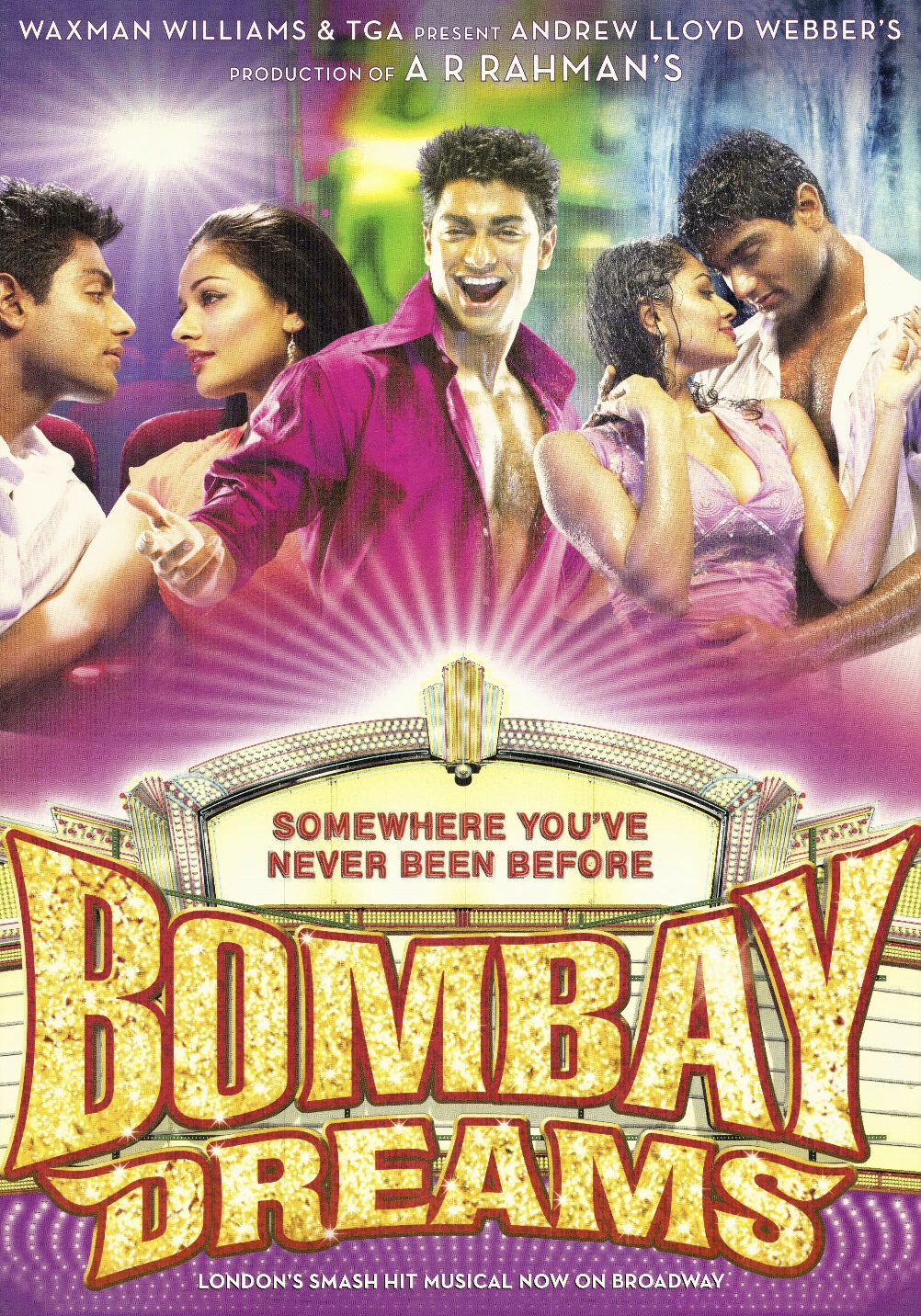
Director Shekhar Kapur took to Instagram to reveal the one-chance remark that launched the journey of Bombay Dreams, and we found it so fascinating that we wanted to share it with you. Bombay Dreams was the first ever “Bollywood” stage musical to play both the West End and Broadway in the early 2000s. What made it even rarer and more special was that it brought together two of the greatest composers ever: Sir Andrew Lloyd Webber as producer and AR Rahman, who composed the music.
It was just a chance, but it took wings – Shekhar Kapur wrote:
“Life has been one huge adventure. But how does adventure happen unless you actively open yourself to the adventure of life? And to open yourself to adventure, you have to fight the greatest human failing of all.
The addiction to certainty. The addiction to control
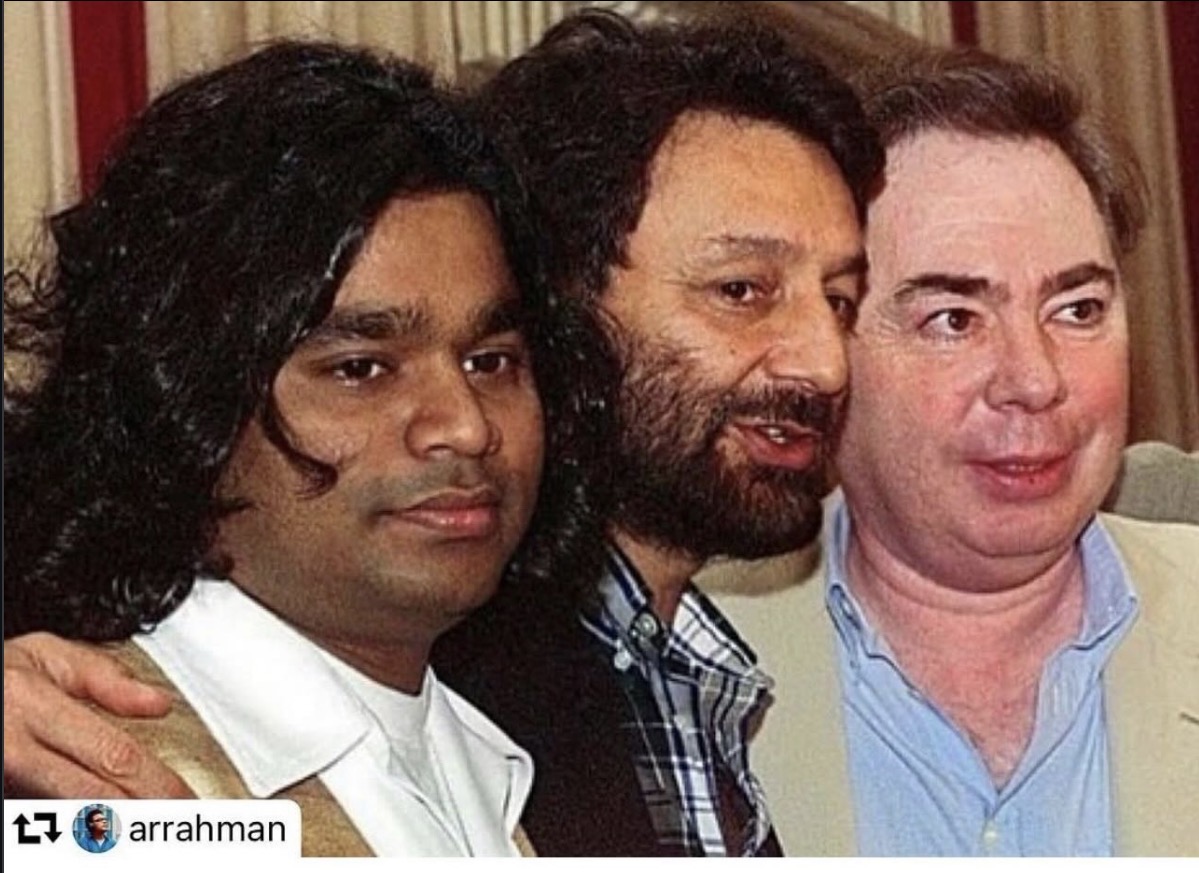
Bombay Dreams was born of one chance lunchtime remark by me to Andrew Lloyd Webber… out of which this picture was taken at the world announcement of the project… at a party in Mumbai’s iconic Taj Mahal Hotel… and where A R Rahman and Andrew Lloyd Webber played together on the same piano… creating amazing music on the go.
Andrew and I were speaking about the possibility of me directing Phantom of the Opera as an International Feature… when over lunch I mentioned another film I was working on.
And the genius that Lord Webber is, he immediately recognized the potential of that ‘Bollywood’ based story as the first modern Indian story on the West End in London.
…then gettting A R Rahman and Lord Andrew Lloyd Webber together is another adventure will write about later…
But that was seizing of ‘chance’ with just a ‘glimpse’ of an opportunity …
One chance remark… led to the first and very successful ‘Bollywood’ musical ever on the West End in London and in Broadway in New York ..
One chance remark!”

In response AR Rahman commented, “Saying just “Grateful “is not enough for what you had done… selfless unconditional respect and love ❤️.”
On his website Andrew Lloyd Webber also shares the story of his Bombay Dreams.

Image: AndrewLloydWebber.com
“I have been fascinated by what Westerners call, to most Indian film-makers’ indignation, Bollywood, for several years. It all began thus. About a decade ago on Saturday mornings, Channel 4 showed a selection of popular Hindi movies in a series which was called Movie Mahal. On one such Saturday one of these films was playing on my kitchen TV. I was cooking lunch when a song lured me away from the stoves.
“Three lines of gorgeous girls were dancing for a few seated blokes with turbans whilst one girl moved demurely and sang in an abnormally high chest voice. Very good this song was too. Unfortunately I forgot to write down the name of the movie. To this day I haven’t traced it. Increasingly I became interested in contemporary popular Indian music and the direction it was taking. Talvin Singh, in particular, struck me as introducing complex rhythms to a Western audience in a way that was accessible and totally couched in the sounds of today.
“A couple of years later I was introduced at lunch to the film Director Shekhar Kapur. Shekhar is best known for his Indian movie Bandit Queen and the drama Elizabeth starring Cate Blanchett as Good Queen Bess. Partly out of small talk, partly out of genuine curiosity I asked him about Bollywood. He told me that dozens of movie musicals were made in India in any one year.
“I was fascinated. How could I not be when he told me that on any one night in Britain more Asians will see a musical on the screen than will a London audience see one on the stage. So I mentioned the unknown song. Shekhar volunteered to find it. He sent me a couple of videos that he compiled of dozens of Bollywood’s greatest hits. I took the videos on holiday and chucked them on in the background whilst the kids were playing in the garden.

Image: AndrewLloydWebber.com
“I never found that song but I discovered something else. One in every five songs evinced a melody of pure gorgeousness. I would hear a complex rhythm or a level of musical invention on a single “drone” note that had me realise that I could be listening to something that I had always hoped would happen, the revitalisation of popular melody from somewhere far removed from Western Europe and America
“20 years ago I predicted that this would come about through the inevitable collapse of the Soviet Union. I argued that the land that had produced Tchaikovsky, Rachmaninov, Prokofiev, Shostakovich et al would produce modern versions of these great melodists again the moment the tin lid was removed from their society. I argued that once young people from Eastern Europe could freely produce their own music the West would get the musical shot in the arm that it so badly needed as its pop atrophied in a lard of “grooves”, high tech production and manufactured boy and girl bands. I was wrong. What emerged as a consequence of the Soviet Union’s collapse succeeded in lowering the tone of the Eurovision Song Contest still further.
After a couple of days, the music of one in every five Bollywood songs was hitting not just me but anyone who heard the stuff. There had to be a common denominator. This was their Composer, A R Rahman. One look on the net revealed that he was a phenomenon in Asia, where he’s known as the Asian Mozart. Rahman was born in 1966. His father was Hindi and a musician. Rahman himself converted to Islam as a result of a family tragedy. That is when he took his name. His scores have been composed for some of India’s most successful films including Dil Se and Lagaan, which was nominated for Best Foreign Film in the 2002 Oscars. With album sales of over 100 million, his albums have sold more than Britney Spears and Madonna combined. Soon my house was full of them. His awards in his homeland would cause the strongest mantelpiece to groan.
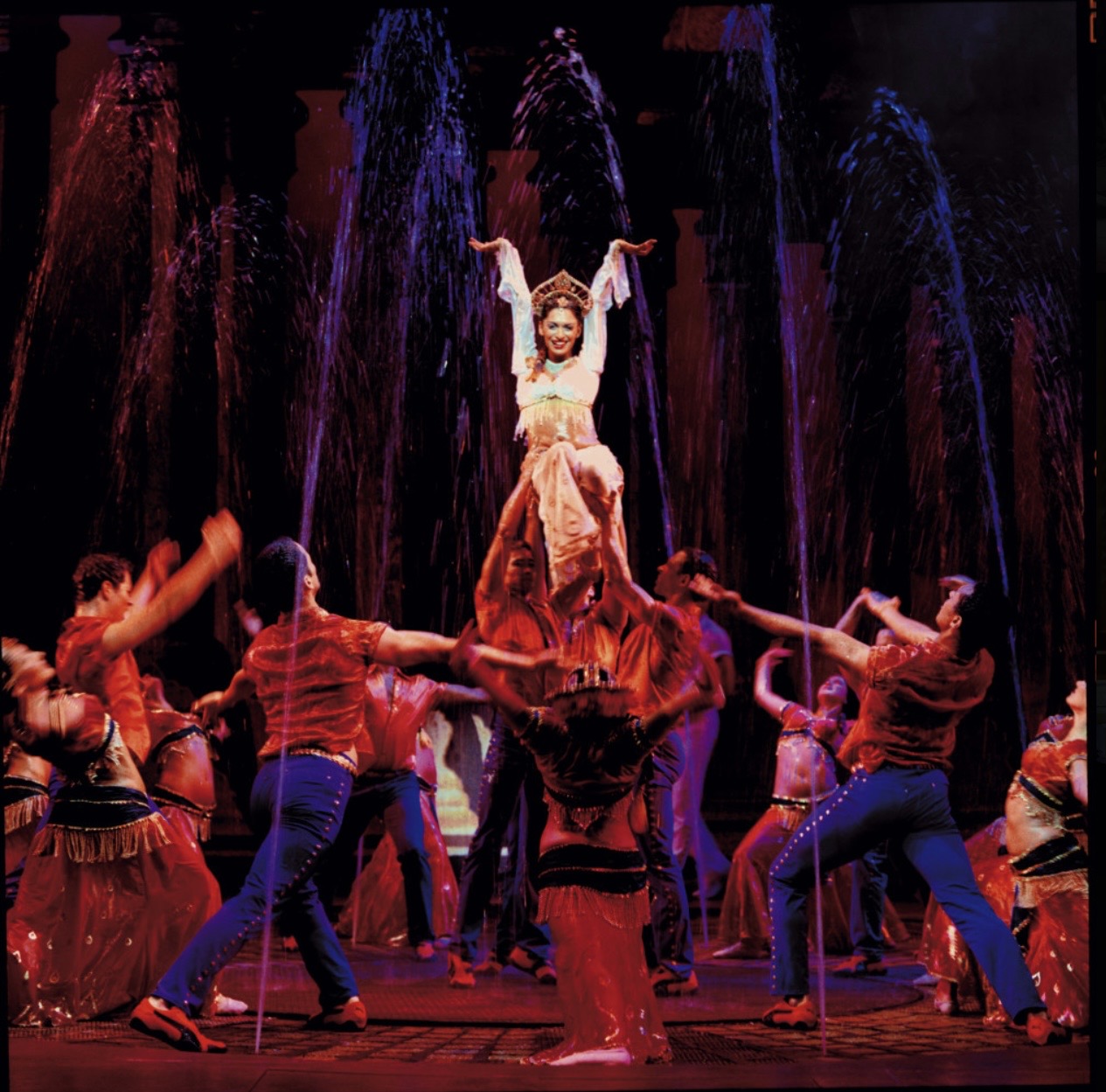
Image: AndrewLloydWebber.com
“I called Shekhar Kapur and asked if he could arrange that I meet him. Thus I found myself in Bombay and mobbed in the midst of a vast press conference organised by Shekhar to proclaim my interest in Rahman’s music. When I asked him if he would consider writing a stage musical, he was intrigued, if more than a little bemused. Once he had said yes he came to London. The second day that he was in town I walked with him the hundred yards from my office near the Ivy to the Palace Theatre. I swear he signed 10 autographs en route. By the time we left the theatre the bush telegraph had seemingly caused most of the Asian head waiters of Soho to be awaiting him outside the stage door.
“That was two years ago. Since then it has become my obsession to bring this melodic genius to the West End musical stage. I am proud to be introducing a composer to the West End who has this quote on his website “if a music artiste wants to blossom into a fully-fledged person, it’s not enough if he only knows classical music or if he’s well versed only in ragas and techniques. He should be interested in life and philosophy. In his personal life there should be, at least in some corner of his heart, a tinge of lingering sorrow.”