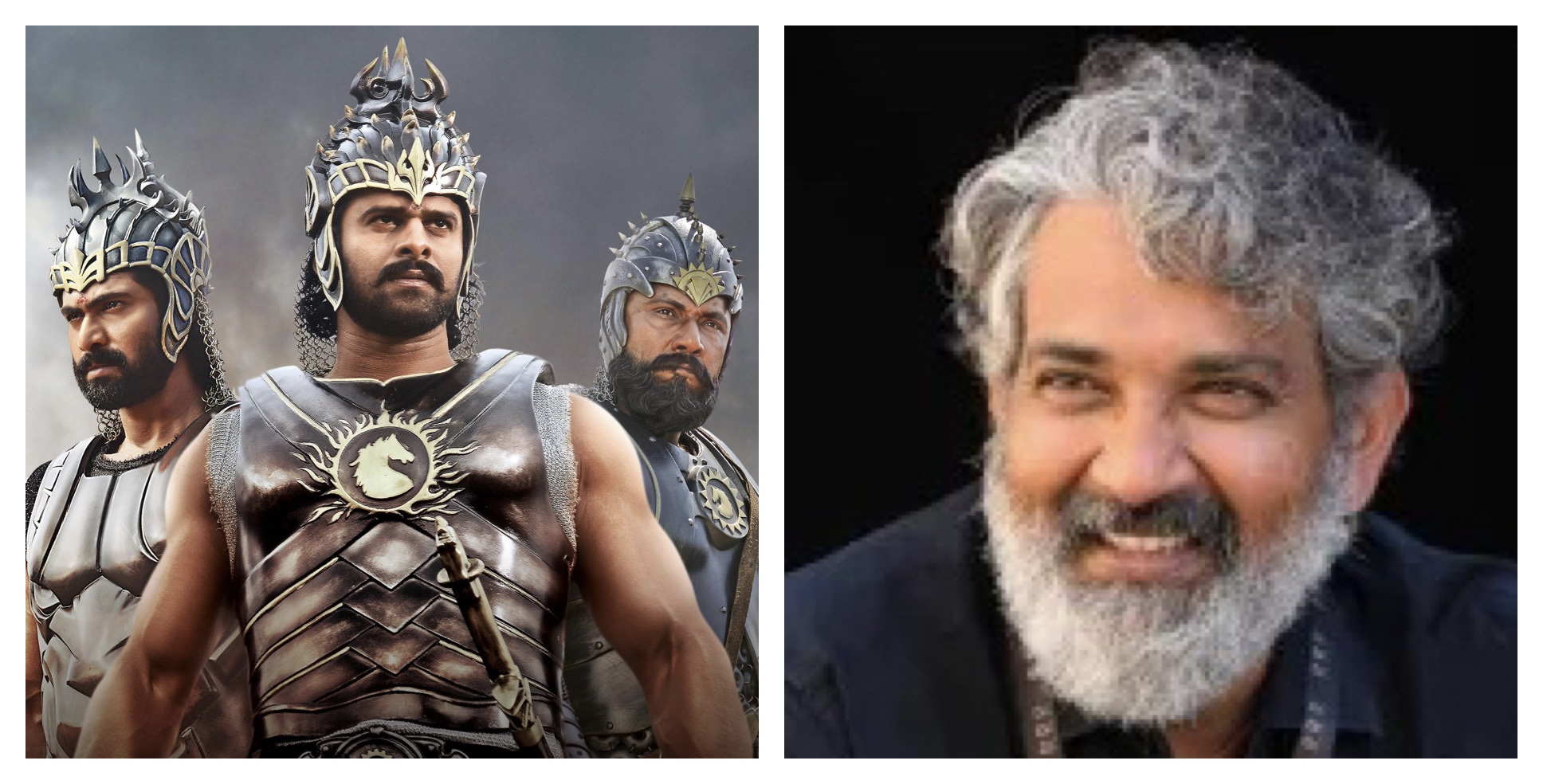
 Revisiting the epic Baahubali, Subhash K Jha, with insights into the making of the film from director S S Rajamouli, looks into what made this film so special.
On July 10, S S Rajamouli’s epoch-defying Baahubali: The Beginning turned eleven years old. Everything you thought would one day happen to Indian cinema finally happened … right there, right then.
So you thought our films can never compete with FX-driven films from Hollywood? Think again! S S Rajamouli, that man who created a hero out of a fly in Makhee, was back again to create the kind of spectacle which Indian cinema was hitherto financially and aesthetically unequipped to handle.
Baahubali, with its harvest of breathtaking images all shot in the great wide outdoors with furiously flowing rivers and vertiginous mountains, looked more marvelous than any movie created from the Marvel comics. It was a charming old-world fable told with the kind of flourish that made anything attempted before in the genre look feeble and unkempt.
S S Rajamouli’s command over the epic language was worthy of deep analysis. Yes, this movie maker loves the visual medium. He makes lingering love to the camera, nurturing nourishing and edifying every frame to the point where brilliancy is no longer a pursuit but a foregone conclusion. Baahubali with its pastiche of pristine images conveying courtly intrigue, political ambitions, sibling jealousy, virginal romance and filial bonding is so riddled with the luscious images, you stop counting the blessings after a while and just flow with the divine spirit of a creator who makes cinema situated in the empire of the epic not to show off but, to to let the audience know that the orbit of opulence still exists, just a hop, skip, and waltz away from the kingdom of the crass that mainstream Indian cinema seems to have adapted. Rajamouli structures an elemental tale with comic-book compulsions.
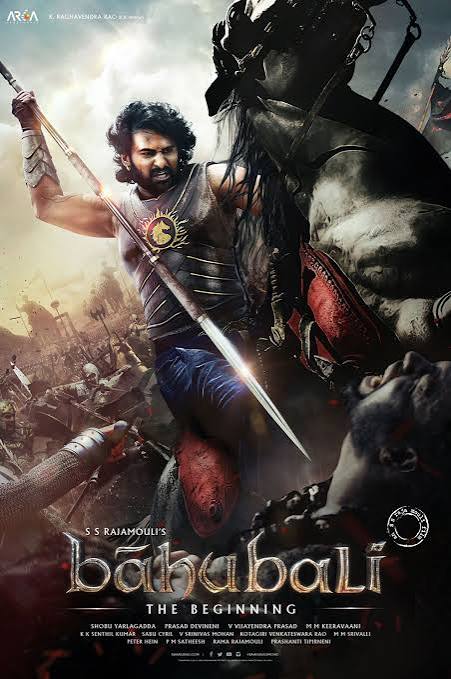
The film is flush with flamboyant visuals that take the fairy-tale narrative to a level of lucid expression never experienced in our cinema. It’s hard to see Baahubali as a ‘regional’ film. So elevated is its aesthetics and so steep is the director’s appetite for weaving fantasy and drama that we are left gaping at the narrative’s mastery over the language and grammar of mass-oriented filmmaking. To those inclined to view cinema about kings, queens, and other fairytale subjects as juvenile, Baahubali is an epic revelation. While retaining a core of innocence at the heart of the narrative, the director ignites a spark of scintillating sensuousness in every nook and corner of the film. Every frame is a work of art, thanks in no small measure to art director Sabu Cyril and cinematographer K K Senthil Kumar, who imbue every frame with sparkling sublimity. Not that the individual scenes stand out in a look-Maa-I-can-jump kind of bravado. While swinging from one astonishing optic experience to another, the audience is also treated to a drama of a doomed kingdom so filled with heroic valour and mythical villainy it would have been laughable were it not so lovable. Rajamouli’s love for grandiosity is enchanting and endearing. His hero Baahubali is royalty in exile. A rogue in the mountains whom you can’t help feeling warm towards, Prabhas plays the role with a compelling candour. Prabhas’ Baahubali is destined for royal greatness. But before he gets to his kingdom, Rajamouli takes us through an epic journey saturated with romance, drama, and a battle scene in the finale lasting more than 25 minutes, which makes 300 and Hercules look like glorified video games. It is no exaggeration to say Baahubali redefines the fantasy-adventure drama. It pushes the envelope so far, only the director’s stamp remains imprinted.
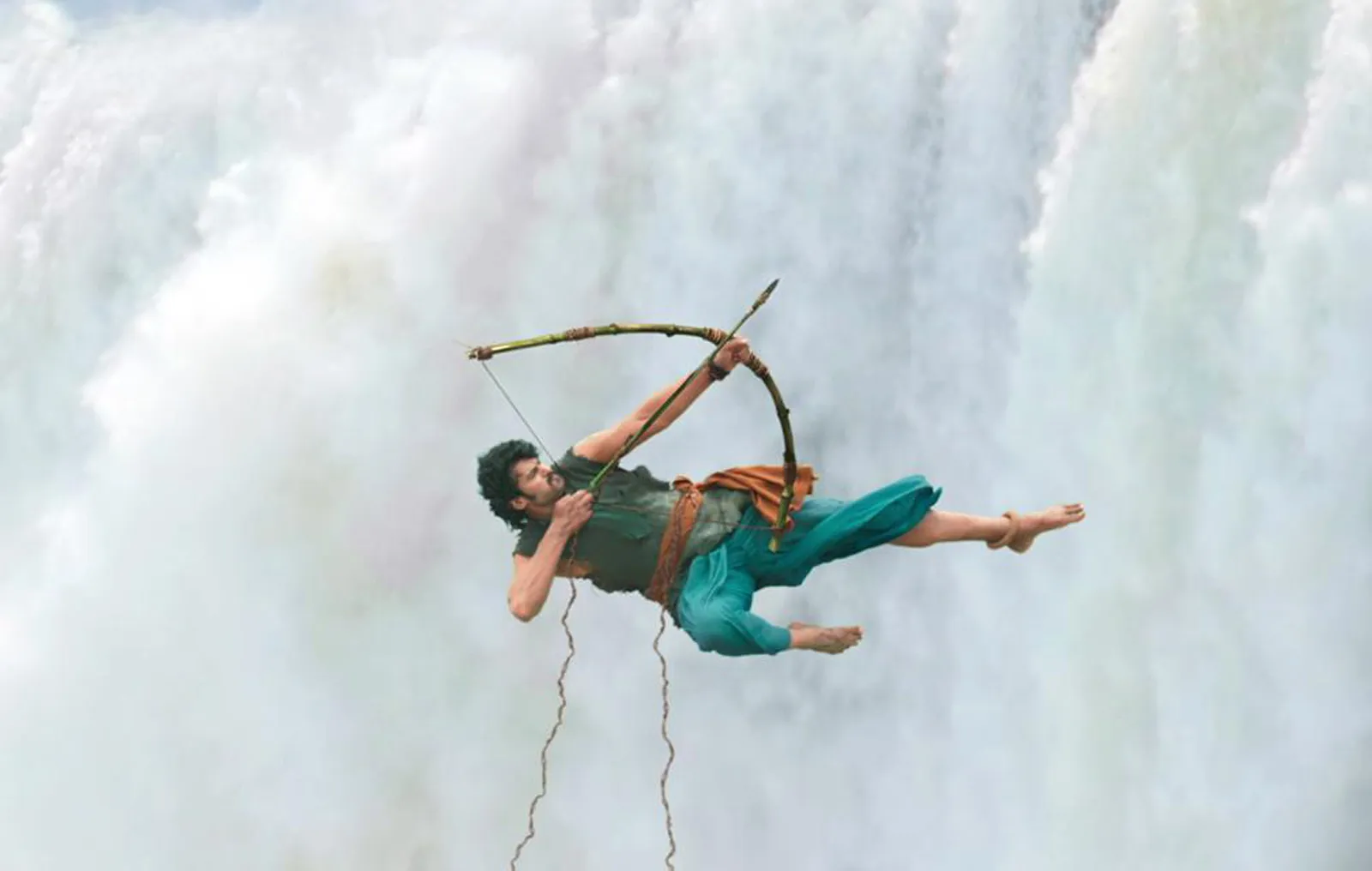
Rajamouli’s imagination is a playground of incredibly lofty images. In one romantic song, Prabhas shoots an arrow across rivers and mountains to make a ropeway to the top, where his fantasy woman (Tamannah, part warrior, part seductress) awaits. It is a moment that defines not only Rajamouli’s steep aesthetic value, it also brings to light the cogent connection between valour and courtship. Frequently the film selects sequences that spotlight the hero’s mythical dimensions while bringing to the table the kind of hearstopping narrative nubility amd nobility that constitute the highest level of kitschy art. Rajamouli could be faulted for generating opulence in a purely fantasy format. He doesn’t aspire to change the world. His morality is straight out of the Amar Chitra Katha comic books. Ek ttha raja , ek tthi rani…. And no one lives happily after until such time when the characters flush out their penchant for bitter battles. He added, “Amar Chitra Katha…Those comics, even today, transport me into those times. I have endless fantasies revolving around those stories set in the past. My excitement with that genre translates into my films.”
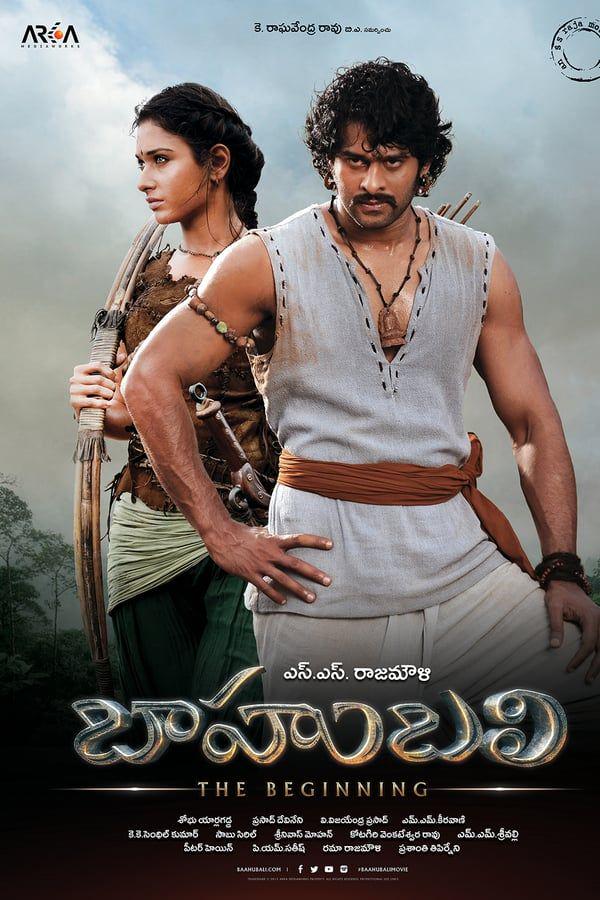
Baahubali presents the kind of luscious and lavish cinema that transports us into the era of courtly intrigue without any of the characters faking their old-world charm. Prabhas and Rana Daggubati, playing the main protagonists and antagonists, play off against each other without snarling and snapping in every frame. Paradoxically, while entering the world of larger-than-life heroics, Rajamouli succeeds in keeping the situations in the script remarkably restrained. Baahubali is not a film. It’s an event. Every frame whispers a saga of tasteful, reined-in aesthetics. The scale of visual grandeur seen in Baahubali is unprecedented.
Son of writer K V Vijayendra Prasad, who wrote Bajrangi Bhaijaan, S S Rajamouli is arguably the most successful filmmaker of the South with a string of Telugu blockbusters to his credit, including mega-hit Vikramarkurdu remade as Rowdy Rathod in Hindi. Producer Sanjay Bhansali wanted Rajamouli to direct Rowdy Rathod. Rajamouli declined due to his work in Telugu cinema.
Baahubali had to star the Telugu star Prabhas, and no one else. Rajamouli was committed to make his next film after Eega (Makkhi) with him. Rajamouli’s fascination with the theme of reincarnation started with Rakesh Roshan’s Karan Arjun.
Said Rajamouli, “I remember watching that film. For the first time, I openly laughed and wept during a film. Earlier, I was very reserved about my emotions. Karan Arjun opened up my emotions.”
Rajamouli told this writer he is very happy and proud to be known as a Telugu filmmaker. “I am glad to know my films make a pan-India impact. I see no linguistic impediment. But to make a film in Hindi would be an advantage.” He believes if your story is based on human emotions rather than sensibilities, it should do well across all regions and languages.
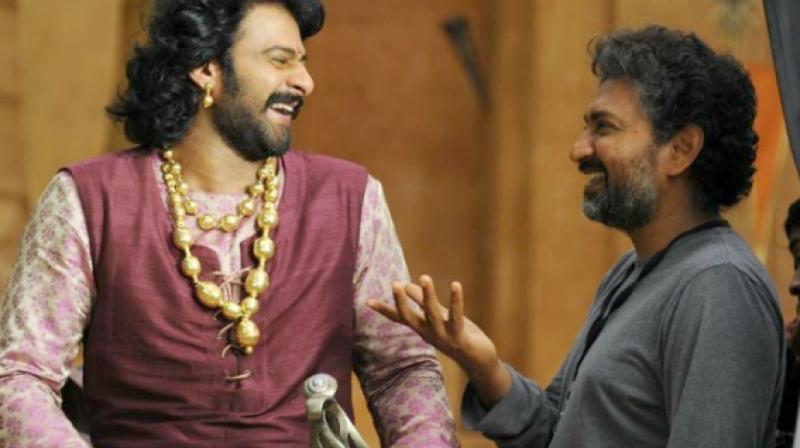
Prabhas, the leading man of Baahubali, spent two years of his life working on this one film. Says Rajamouli, “I needed an actor with whom I have a very good rapport. One who has faith in my way of handling the project. We worked before on Chathrapathi, and we clicked very well both on the creative and personal front. I needed a giant of a man with royalty personified, but with a tender heart to play Baahubali. At the start, I told him I’ll need one year of his dates exclusively. He smiled and said I’ll be needing two years and kept himself free for the whole period. I don’t think I could have done this with anyone else. Without him, this project wouldn’t have happened.”
Rajamouli’s favourite Bollywood director is Raj Kumar Hirani and his favourite Bollywood actor is Aamir Khan. He added, “Shri KV Reddy, the legendary Telugu film director who made the all-time classic Maya Bazar, is a huge inspiration. Mel Gibson and Ridley Scott are my all-time favourite directors.”
With a budget that’s a fraction of James Cameron’s Avatar, how did Rajamouli manage to create such an epic canvas? “My VfX Supervisor Srinivasa Mohan, Pete Draper of Makuta, Sanath of Firefly were highly talented, focussed and know every trick of the trade. Studios like Tau films and EFX Hyderabad and numerous other VFX studios based in Hyderabad joined the marathon. My DOP Sendhil is a master at achieving grandeur and his knowledge of Vfx is unparalleled. And Sabu Cyril- I don’t call him a production designer. He is a scientist. He is a problem solver. Costume Designers Rama, Prashanthi, Krishna had a tremendous grasp over colours and textures and practical sense of when to use what. With these technicians on board with the producer who had a vision, it wasn’t too difficult.”
Baahubali’s narrative style, the costumes and the setting suggest a deep affinity to the Indian mythological epics. Did Rajamouli set out to design a modern-day fable with visuals inspired by Hindu gods and their tale of valour? “I relate more to the tales of mythology and folklore than contemporary stories. Everything from the story to the emotions to the language to the look, is set in an ancient period. Yes, I AM always inspired by INDIAN stories, and it shows in my films.”
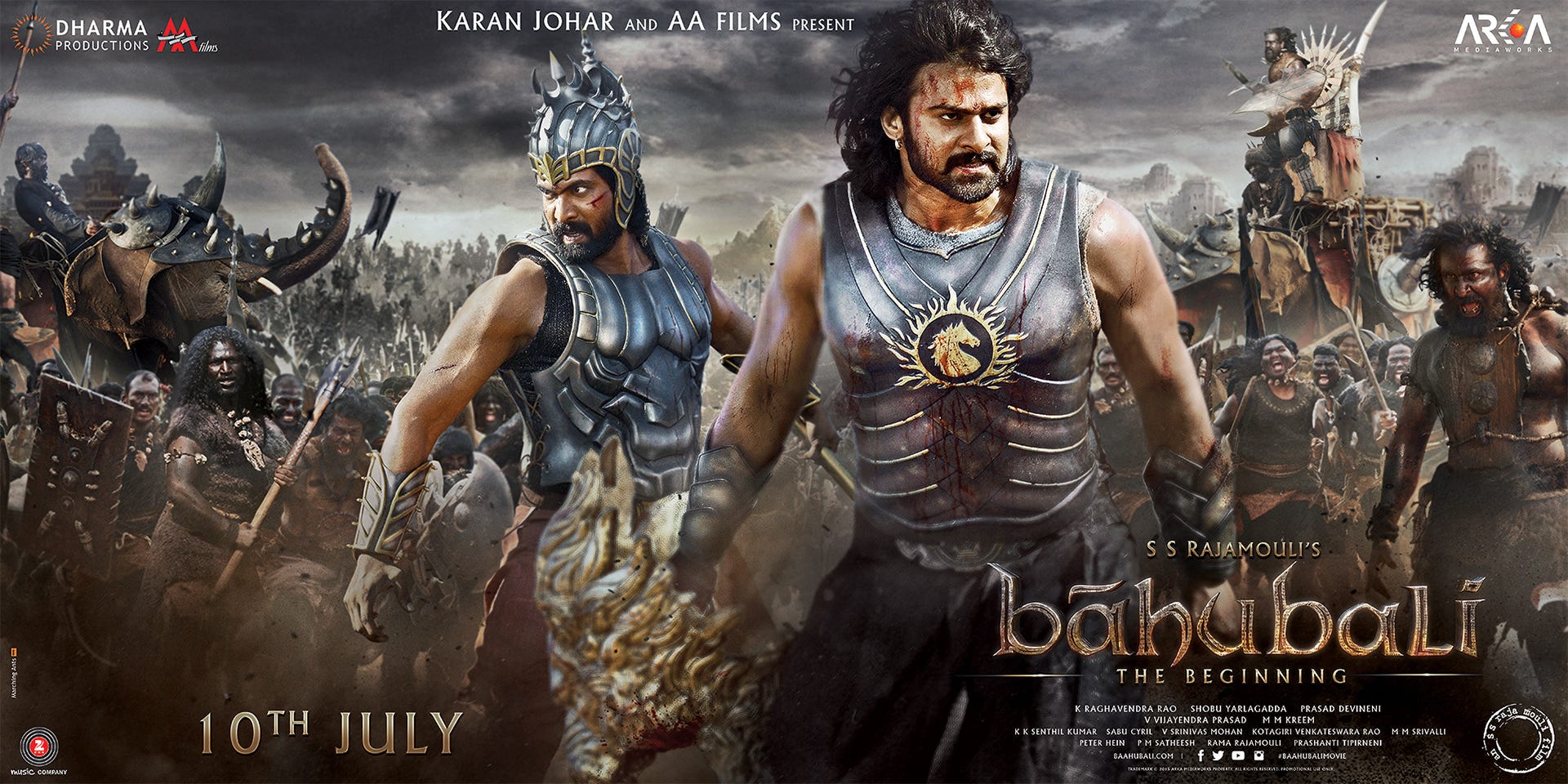
The war scene is almost half an hour long. Did Rajamouli consciously design the battle as a lengthy ode to the spirit of ancient valour and patriotism? “There were hundreds of versions of the war edit. We were constantly changing and rearranging to get the best out of hours and hours of footage. But I knew every single shot by heart. And the length is determined by the tactics and emotions on the battlefield rather than anything else.”
Analyzing the all-encompassing success of Baahubali, Rajamouli said, “At the heart of it, we had a fantastic story and powerful characters. My producer Shobu, all the technicians, and all the actors sincerely believed this to be a potential classic and worked towards achieving it. The film has some of the most stunning optical effects ever seen in cinema anywhere. We spent almost one year in pre- visualising the entire film. It is during this time that all of us had an idea about how the final should look. And we set about achieving it for the next two years. I don’t intellectualize my scenes and characters. Sometimes, as the scene starts developing, you feel that it is working. It is an instinctive thought. When I feel it, I don’t look too much into logistics. I go with my heart.“