
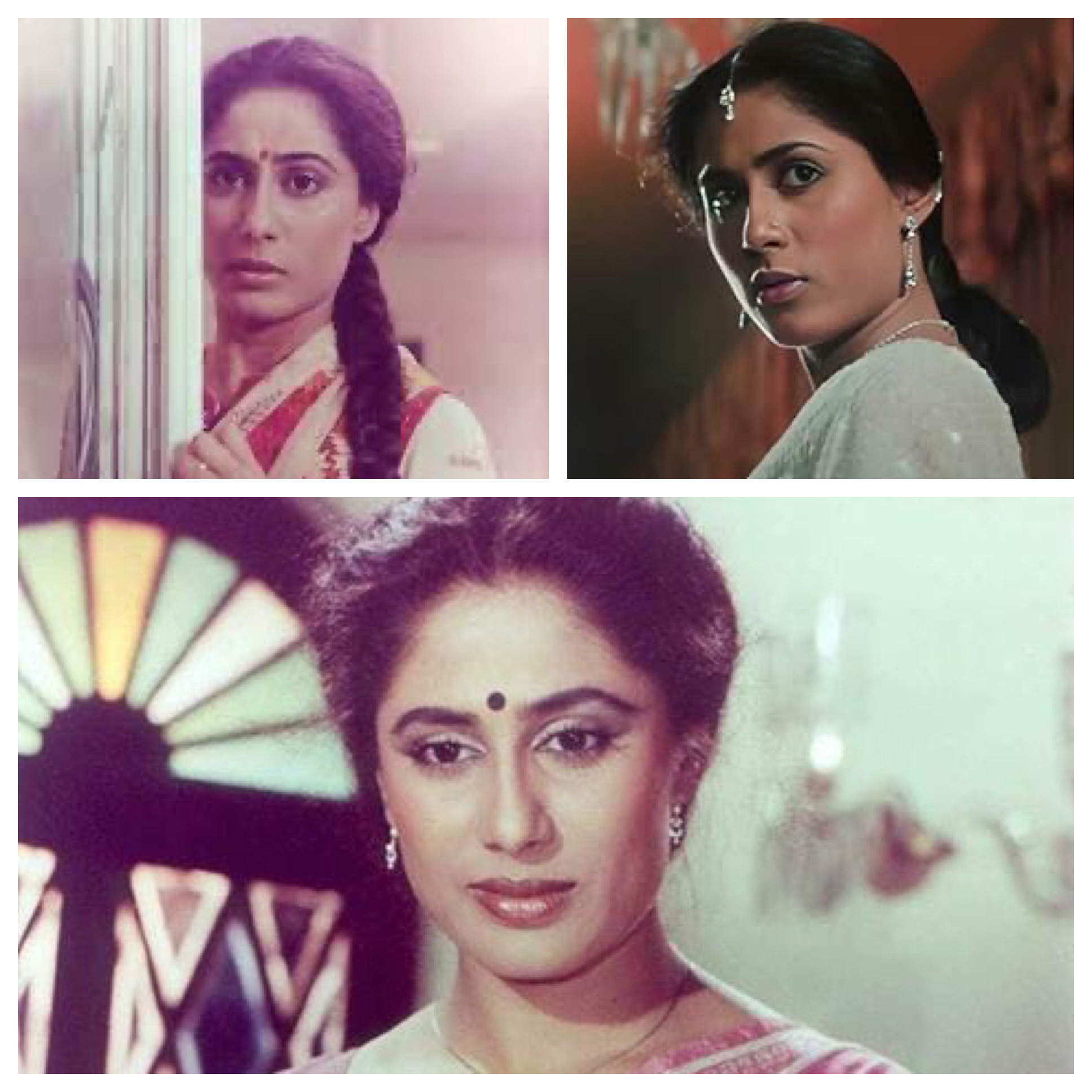
 On December 13, it’s going to be 40 years since we lost Smita Patil. Not a day passes without some ambitious filmmaker in some part of India mourning the irreplaceable loss of an acting colossus. The thing about Smita was, she never seemed to act! No matter how complex the role—and some of the characters she played were way over-the-top—Smita was perfectly at home. As her Christopher Columbus, Shyam Benegal, who discovered Smita as a Marathi newscaster on Doordarshan for the film Charandas Chor, said, there was a quality of transparency in her performances, as though she wasn’t aware of the camera’s presence. In a career spanning 15 years, Smita acted in 83 feature films in Hindi, Gujarati, Marathi, Kannada, Malayalam, and Bengali. For the 15 years that she lived on screen, she made Indian cinema her home . Perfectly comfortable, is how Smita seems in her best roles, though the same can’t be said about her fitful forays into commercial cinema. A look at Smita’s best roles and films.
1. Manthan (1976)
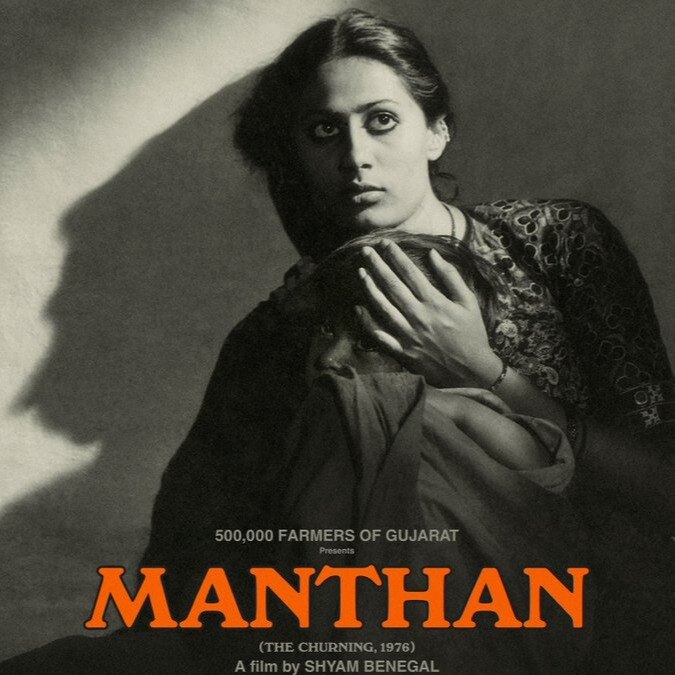
Shabana Azmi was to originally do the role while Smita was to be cast in what Shabana described as the “nondescript role” of Girish Karnad’s wife which Abha Dhulia finally played. But the director was “pissed off” with Shabana for some reason or the other. And Shabana had to wait for 23 years before she got the chance to sport a thick Gujarati accent in Vinay Shukla’s Godmother. I can’t say how Shabana would have played the progressive rustic woman in Manthan who encourages her sisters in the village to believe in Dr.V. Kurien’s milk co-operative scheme. Smita simply took over the part. Simply, and unforgettably. Her expressions of anguish, incomprehension, compassion, and rebellion as she grapples with ignorance, prejudice, and corruption among her village people and with her own growing feelings for the noble doctor (Girish Karnad) were spellbinding. Smita’s persona exudes the musk of sensuality.
2. Bhumika (1976)

Released within months of Manthan, Bhumika established Smita Patil’s inescapable dramatic power. Cast in the biographical role of the rebellious 1950s’ Marathi actress Hansa Wadkar, and based on Ms Wadkar’s autobiography Sangtye Aika, Bhumika saw both director Shyam Benegal, and Smita abandon the rural concerns of their earlier collaborations for a swim in the tides of tempestuous upheavals. The film makes extensive references to the films and music of the era. The atmospheric pressure is appropriately oppressive. But it is Smita Patil undergoing four different forms of oppression vis-à-vis the four men in her life—husband Keshav( played with sinister stealth and brilliance by Amol Palekar), the filmmaker Sunil (Naseeruddin Shah) , the co-star Rajan (Anant Nag), and the Zamindar (Amrish Puri)– who invents an ideological idiom for her character. Fascinating and disturbing , Bhumika is Smita’s single-most important work.
3. Sadgati (1981)
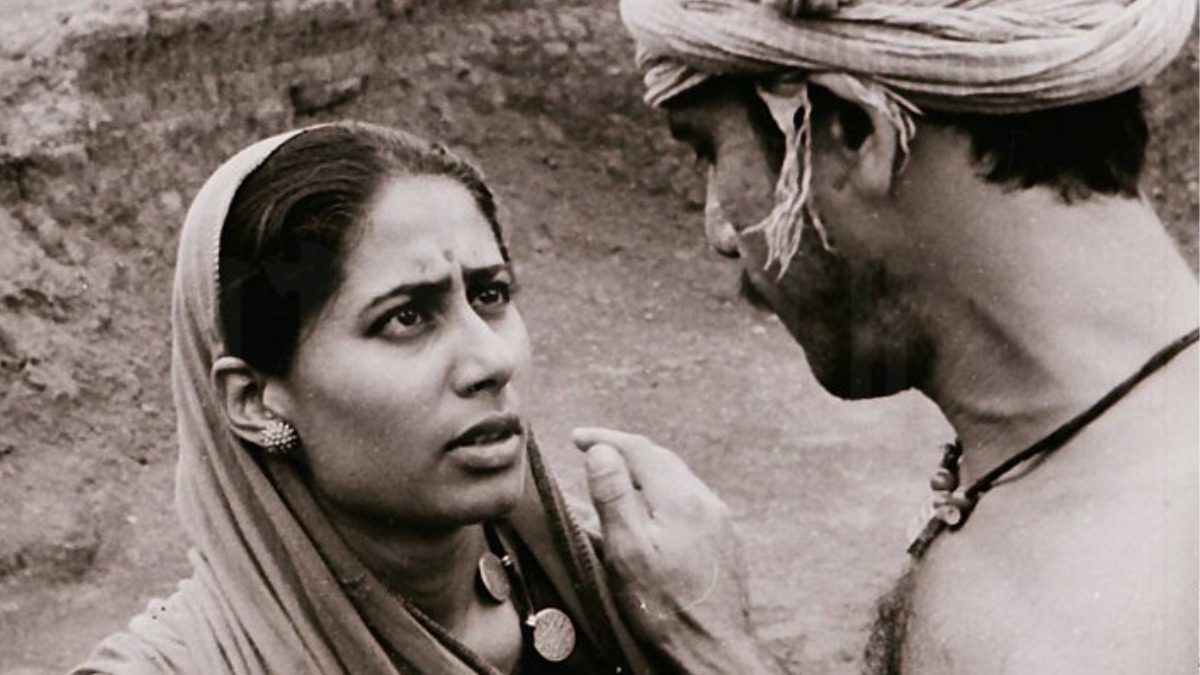
Bap Ray Baap! The terrifyingly layered intensity that Satyajit Ray brought into this tall telefilm left the other, bigger, brighter products on caste oppression like Gautam Ghose’s Paar looking inadequate. Made for Doordarshan by the mighty Ray , Sadgati featured Smita Patil as the wife of a Harijan peasant who’s worked to death by an upper-caste exploiter (Mohan Agashe). This was one of the many films that Smita did with Om Puri, where she was happy playing a strongly supportive part, e.g, Govind Nihalani’s Aakrosh and Ardh Satya. Adapted from a story by Hindi litterateur Premchand , Sadgati told its tale with a narrative economy that was ‘spill’ binding—no room for excesses, no space for humbug. And Smita’s performance when her screen-husband dies, was astonishing.
4. Subah/Umbartha (1981)
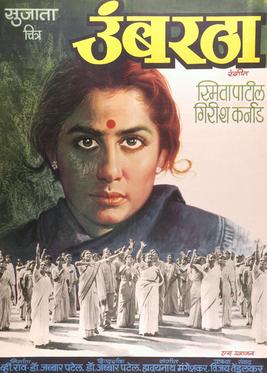
It’s a toss between Bhumika and Subah (Umabartha in Marathi). Which one stands out as the single Smita Patil classic? Jabbar Patel, who had directed the actress earlier in Saamna, cast Smita in the semi-autobiographical part of Sulabha, who challenges her husband’s morals as a lawyer, leaves home to look after a corrupt women’s ashram where she gives up her fight for self-assertion. The film’s remarkable statement on women’s issues caught the attention of feminists all over the world. Smita received her third National award (the first two were for Bhumika and Chakra) for her performance.
5. Chakra (1980)

Director Robin Dharmraj died soon after completing this film. Looking at the life of slumdwellers through the life of the indefatigably resilient Amma (Smita Patil), the film acquired some unwarranted notoriety when scenes showing Smita bathing under a public water tap were unnecessarily splashed in the posters, provoking Shashi Kapoor’s now-immortal comment on the National Award being given to actresses for “soaping their armpits”. But Smita does much more in Chakra. She lives every second of her character’s anguished life as she tries to keep her son (Ranjit Chowdhary) out of trouble. Many shots of the slums were taken on-location with hidden cameras, Smita walking around unrecognized among real slumdwellers. When it came to Smita, the camera didn’t count.
6. Bazaar (1982)

Writer Sagar Sarhadi (of Kabhi Kabhie fame) directed two films, both starring Smita Patil. One of Sarhadi’s films Tere Shaher Mein never got released. Bazaar was a scathing attack on the Gulf Sheikhs who ‘buy’ and marry underage girls in India. Smita was a woman torn between self-interest and womanly concern. Her lover (Bharat Kapoor) promises to marry her only if she finds a young, nubile bride (Supriya Pathak) for his rich Sheikh friend. Her conscience screaming in protest, Smita goes through the deal. Only to find she no longer wants the fruits of her success. A difficult and multi-dimensional part played with supreme sensitivity by Smita.
7. Arth (1984)
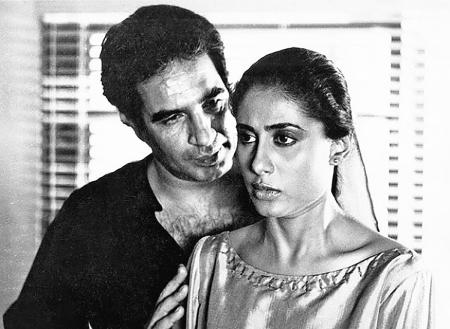
On release, all the sympathy, critical acclaim, and awards had gone to Shabana Azmi. And not undeservingly so. But look at Smita! As the clingy neurotic on-the-brink mistress who is consumed by the guilt and terror of losing her married lover (Kulbushan Kharbanda), Smita is scary in a sublime and sensuous kind of way. Her voice, always a receptacle of fathomless emotions, here becomes a mirror of her insecurities. One minute screaming hysterically, the next minute calmly telling her lover to get lost (“If you can do this to your wife, what guarantee is there that you won’t leave me as well?”). Smita Patil as Kavita is a poem with a messed-up metrical scheme. But somewhere the basic poeticality of the lines remains.
8. Tarang (1984)
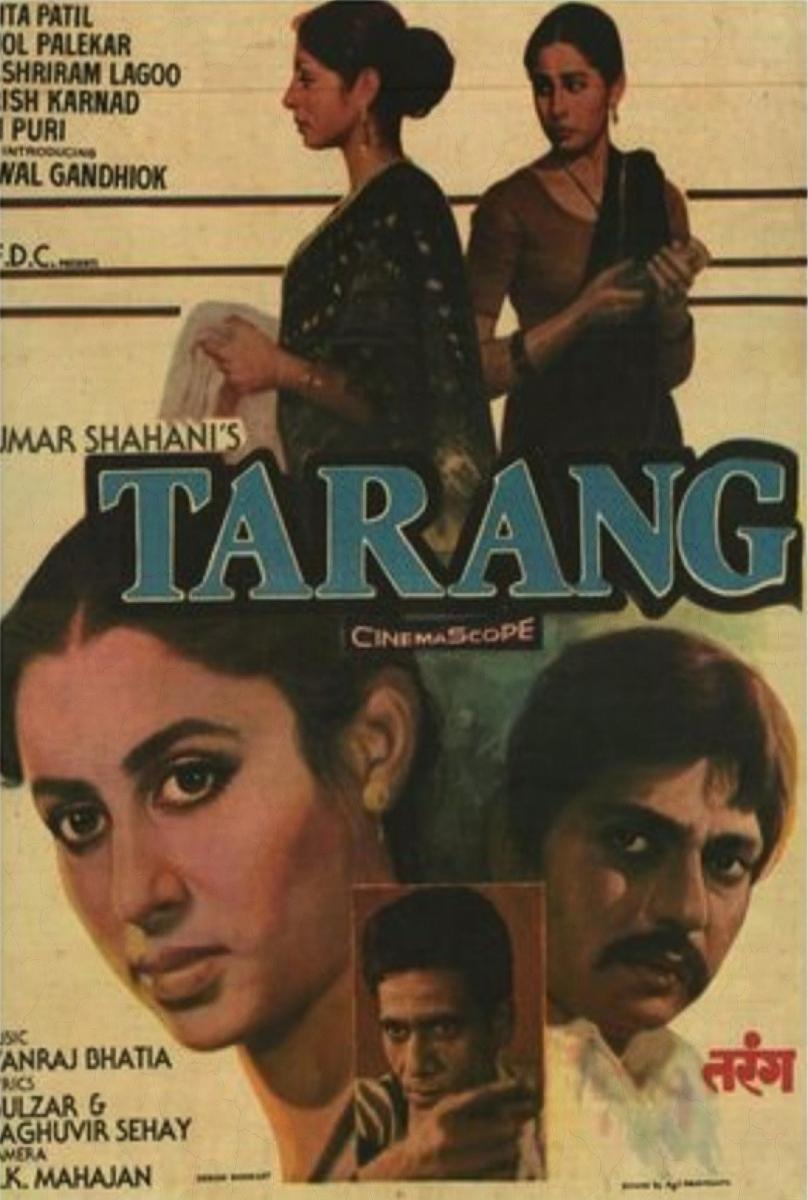
Effortlessly, Smita moved from the neurotic mistress to playing the champion of the exploited class who gets repeatedly exploited under a Capitalist system. In Kumar Shahani’s long and complex epic, Smita stood out with her inherently transparent personality. While every other character planned, plotted, and exploited others , Smita, as Janki, stood her ground, bringing a nurturing stability into every life she touched. In some ways, Janki was very close to the real Smita. Giving, loving, hungering for a chance to be loved back. But somehow missing the bus because the level of purity she craves to embrace isn’t obtainable in the world around her.
9. Chidambaram (1985)

Shot amidst the lush and layered green-scape of Kerala by the late G.Aravindan, Chidambaram is a lyrical tale of love, hatred, lust, and retribution. The synchronicity that the director achieves between Nature and his leading lady is perhaps unequalled by any other such synthesis in Indian cinema. Smita positively blooms under Shaji Karun’s cinematographic gaze. Don’t follow the story. Just go along with Smita’s lyrical journey .
10. Mirch Masala (1985)

Finally, there’s Smita as the spunky spice girl Sonbai in Ketan Mehta’s best film to date. If she was extraordinary in Mehta’s Gujarati folk tale, Bhavani Bhavai, five years earlier, how do we describe her articulate but uncluttered feminism in Mirch Masala? Except, as breathtaking? As Sonbai takes on the lecherous despot (Naseeruddin Shah), the character—and by extension—the actress becomes representative of all the oppressed classes in the world rising in revolt against the exploiter.
Sadly Smita’s later roles became progressively formulistic. The ‘strong’ woman act becomes self-limiting. Efforts to accommodate her natural talents under the artificial lights of commercial cinema were pretty much disastrous. We would rather remember her as one of the women in her neo-classic films who took on the system, and never seemed to remember that there was a camera recording her spunky movements.