
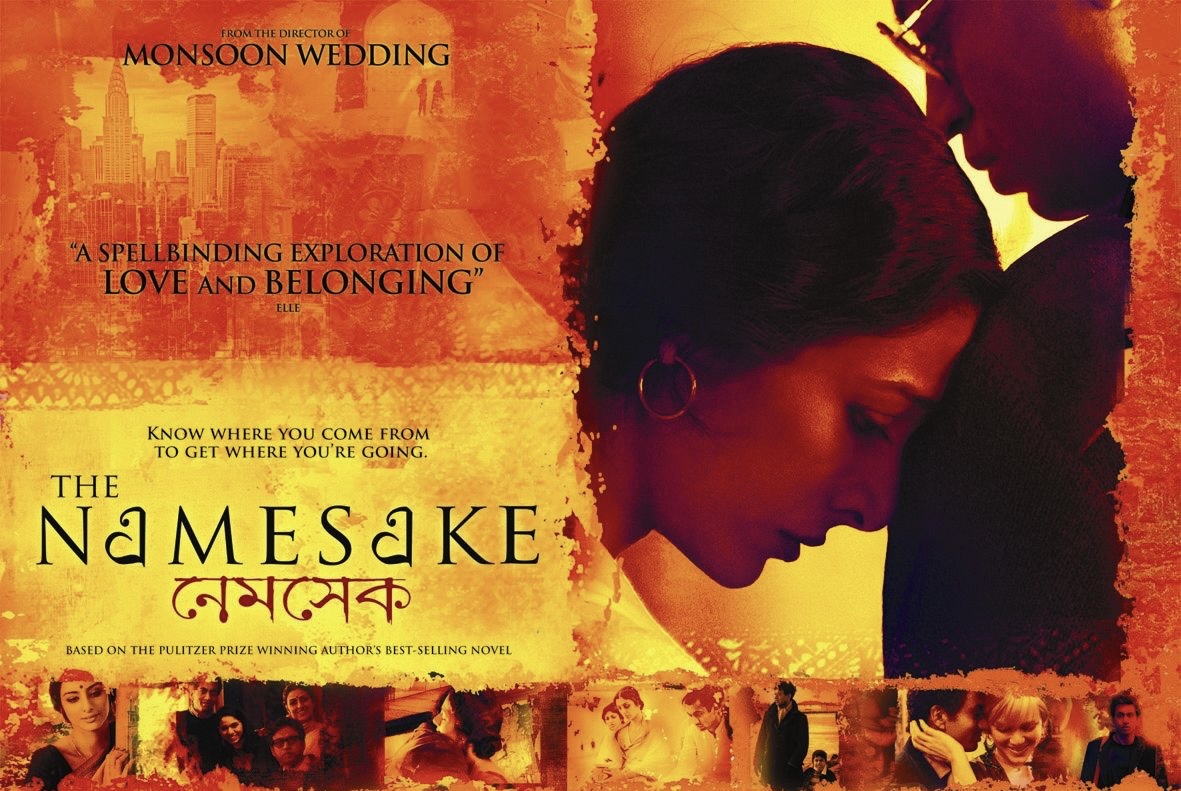
 In this new installment of his feature series This Day That Year, Subhash K Jha celebrates Mira Nair’s The Namesake which released in 2007 and featured the incredible cast of Kal Penn, Tabu, and Irrfan Khan.
Sometimes an absence is also a kind of presence. Take The Namesake. Irrfan Khan as Prof. Ashoke Ganguly suddenly dies, and for his wife, that leaves what looks like stretches of aching silences in the bereft Ashima’s life.
And yet, look at life’s ironies… the death of the patriarch in this dysfunctional Bengali family in New York triggers a mending and nurturing that culminates in a kind of healing that signifies a beginning born out of an end.
Mira Nair’s film is so tender at heart, you often forget these are actors enacting scenes from a well-known Pulitzer Prize-winning novel.
The actors lose their plumes so completely, we don’t even get the chance to be astonished by the subtle craft that underlines almost every moment in this mellow migratory drama.
The cross-generational conflict between a first-generation Bengali family in the US and their culturally confused kids is underpinned by a soft, hyphenated humour that propels the poignant plot without making the highlights of the Ganguly family’s journey from Kolkata to the US seem like an ostentatious migratory pilgrimage.
Mira Nair stays wedded to a muted emotional expression even in the strongest moments of drama. When Ashima, now a Bengali housewife fully acclimatized to the often-peculiar and savagely funny cultural contradictions of America, suddenly loses her husband, Nair takes her actress Tabu into the deserted but brightly lit streets of the US for her breakdown scene.
The changes in the climate are never underlined to punctuate the drama. Instead, Nair lets the snow and the sun swathe the film’s moistened canvas.
More than anything else, Mira Nair’s film is a homage to the apparently dwindling family ties in the strangely self-serving social structure of modern times, where self-gratification almost invariably outdistances the needs of the larger familial unit.
The cutting, often savagely satirical dialogues slice through the lives of these disoriented characters, defining their geo-political insolvency in scenes that accentuate the quirky ethnicity of a Bengali family ensconced in the American Dream.
Such is the lyrical simplicity of Mira’s storytelling that we are frequently left with a feeling that sequences should’ve gone a little further, a little deeper into the characters’ collective and individual predicament.
Yes, the endgame is slightly stifling in its celerity. The episode about Ashoke and Ashima’s son Gogol’s Bengali wife’s extra-marital affair with a French lover seems a trifled, hurried, and out of pace with the gentle swaying movements of the rest of the narration.
It’s almost as though time was running out on the people Mira has so lovingly carved into living entities on screen.
The sense of unhurried lives moving away from the breathless impulses of a civilization that has no patience with lyricism and literature imbues The Namesake with a feeling of prideful dramatic exploration, equally remarkable for what is said and what remains unsaid.
Scenes between Tabu and Irrfan are outstanding in their correct, unhastened manoeuvres signifying the long-term momentum of an arranged marriage culminating in a quiet, unstated love between the couple.
Both Irrfan and Tabu are exceptional. Irrfan replicates the body language and the spoken words of his Bengali NRI’s character less strenuously than Tabu. But her expressions of wifely devotion and motherly anguish are to die for. Here’s an actress who proves there’s more to acting than meets the eye.
Kal Penn, as the plot’s fulcrum of cultural displacement, gets the gait and the eventual poignancy of historical reclamation right. And so does the rest of the vast cast of seasoned and professional actors who get together to celebrate the rites and rhythms of cultural reclamation.
Suffused with a superbly sensuous supporting performances and steeped in an ethos of enormous cultural reverberations in The Namesake, the acutely lyrical camera takes us from the quiet streets of New York to the picture-postcard bustle of Kolkata, creating in the journey a passage into a world where hands reach out across colours and continents to caress the soul.