
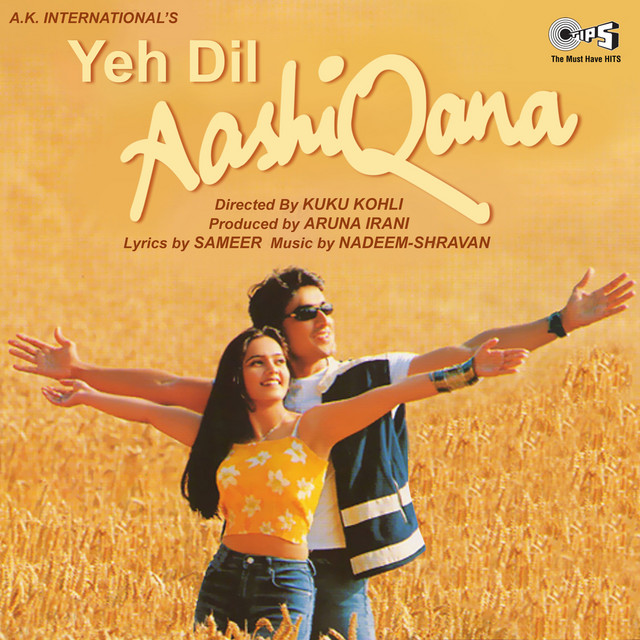
 Subhash K Jha turns the focus on 2002’s Yeh Dil Aashiqana, in a new edition of his This Day That Year series,
Treacle and terrorism isn’t an easy combination. Specially when the brains behind the concoction are hellbent on perpetrating mindless excitement to satiate the most primeval instincts among the audience.
Kuku Kohli, who introduced Ajay Devgan and Madhoo in another treacle-and-terrorism fare Phool Aur Kaante, returns to the same formula with a great deal of gusto but little aesthetic control or imaginative insight. The film starts predictably enough as yet another syrupy campus romance with the wannabee lovebirds bumping into each other, as crowds of extras posing as college students cheer ina raucous chorus. Really, it’s time for our educational system to protest against the desecration of academia in these campus romances.
Kohli takes the young lovers through verdant landscapes in Edinburgh to sing Nadeem-Shravan’s I-am-okay-you-are-okay love songs. But we’re seldom moved by the couple’s adolescent passion. The presentation suffers from congenital tackiness. When Hrithik Roshan paraded through London with a bevy of Anglo-Saxon beauties in Kabhi Khushi Kabhie Gham, it spelt charismatic star-power. Karan Nath, doing the same in Edinburgh, doesn’t work. He has neither the charm nor the talent to be a matinee idol.
Director Kohli tries hard to project his exuberant hero in a flattering light. The semi-debutant (he’s already done a quickly-forgotten film Paagalpan last year) gets to sing romance and later in the film, play the bratty superman who storms into a hijacked plane to rescue his girl Pooja (newcomer Jividha) thereby turning overnight into a national celebrity— an honour that Karan Nath is unlikely to experience in real life.
The hijacking episode in Kohli’s narrative is quite obviously an attempt to recreate the drama at Kandahar two years ago when an Indian Airlines flight had been swooped to an alien country. Kohli’s headlinish hiccups do nothing to the narrative except give the scriptwriter a chance to mesh meagre militancy into the jejune romance while the stunt co-ordinator gets a chance to do his own version of Hollywood’s hijack dramas like Air Force One and Con Air.
The hijacking drama is so clumsily staged it unintentionally becomes a comedy of terrors. It also gives our clenched-fisted, gritted-teethed hero a chance to mouth pseudo-patriotic jargon like “One lover from India is enough to wipe out the nation’s enemies” and “One jar of holy water is enough to wipe out enemies from the neighbouring country.” Yes, but what about the enemies within who exploit patriotic sentiments for a few hollers more?
The film formulizes and subverts the grim and very real issue of militancy by making it a platform for pulpy friction in the plot. The simmering plot’s anti-national caucus comprises of a goateed Aditya Pancholi (seen after quite a while) who plays a rhetoric spewing terrorist (obviously a Kashmiri militant), his Indian ally played by Rajat Bedi, and a fiercely uncouth terrorist confined in an Indian jail ( a la the other recent product of pulp patriotism Indian). These could be the conventional villains of an average potboiler, assuming dangerously political overtones for a touch of titillating topicality.
Kuku Kohli tries to put in a bit of everything for everyone in the audience. The gawky heroine struts around in abbreviated shorts on the college campus, and the hero pummels villains and sprouts bumper-sticker wisdom on patriotism. And as though these self-important creatures of twisted intentions aren’t laughable enough, there’s Johnny Lever as a hearing-impaired college professor whose deafness is loudly ridiculed by his students.
Sensitivity? Oh, Kohli practices his own peculiar brand of that. In case Muslim audiences feel isolated by the film’s constant evocation of Islamic aggression, the director inserts a Sufi Qawwali in the second half and shows his lead pair honouring a holy shrine before the pre-climactic chase breaks loose.
In all fairness, some of the action in the second half is fairly gripping. Audiences seemed pretty much taken up with the skidding wheels, roaring guns, and encircling helicopters. But the film is a huge hoax at its heart. The director cleverly and conveniently introduces elements of topicality into an average teenybopper romance and then sits back to watch the fires leaping into the frames.
All this would have been tolerable if the lead pair possessed any charm or talent. Karan Nath’s “second debut” is almost as disastrous as the first. He dimples debonairly into the camera but remains pretty much expressionless while all hell breaks loose around him. In comparison, Rajat Bedi, who plays the closet-terrorist, comes across as far more agile and camera-friendly. Newcomer Jividha is likely to remain a one-film wonder, unless some braveheart decides to give her a second chance like Karan Nath.
Production values are pretty much sub-standard. Only Nadeem-Shravan’s music perks up the pedestrian proceedings periodically. You might as well buy the music album and spare yourself the visual assault that this film subjects you to.