 Subhash K Jha, in this World Music Day special feature, celebrates Hindi film music, the composers, lyricists, and singers, and its impact around the world.
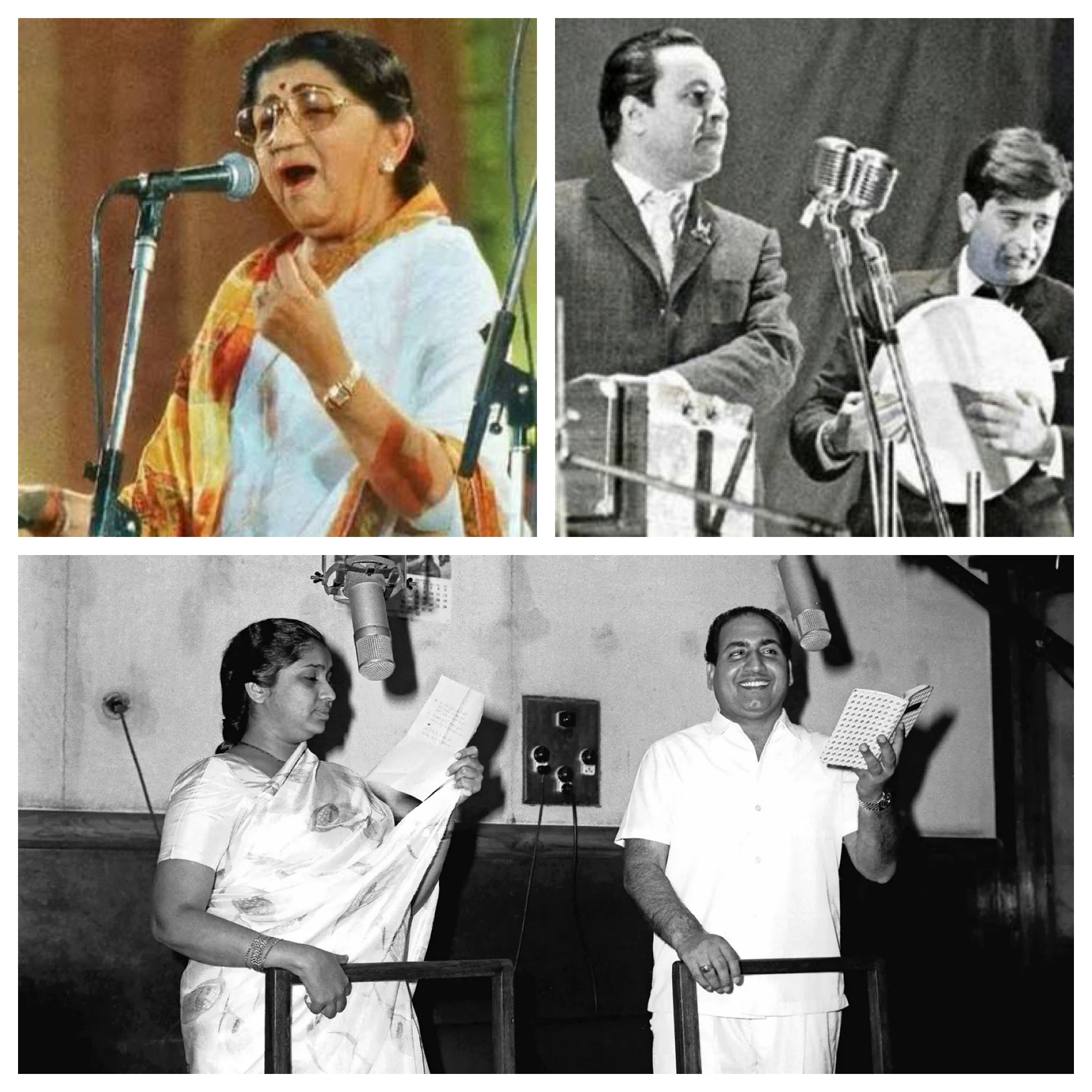
Awara hoon….When Mukesh sang these words for Raj Kapoor in the film Awara, no one had an inkling that the song, written by Kapoor’s favourite bard, Shailendra, would become anthemic.
From that day onwards, Raj Kapoor’s voice was Mukesh, so much so that fans of the screen idol did not like it when Mukesh ghost-voiced for other singers. ‘Awara hoon’ was a craze in the USSR. Rishi Kapoor recalled his father’s fans singing the song for him when he landed in Russia. ‘Awara hoon’ remains the best symbol of Indo-Russian affiliation.
Just as ‘Ae mere watan ke logon’ is forever the national song. Today when we hear Lataji sing poet Pradeep’s words on soldiers giving their lives for the country, visuals on the streets of waylaid youngsters , soldiers on a rampage, protesting against ‘Agnipath’ impinge on the intended beauty of the song. This is not the way it was meant to be, Ae mere watan ke logon.
The value of a truly great Hindi film song is that it binds all Indians in an unbreakable clasp. Who does not swoon to the monsoon when Lataji sings ‘O sajna barkha bahaar ayee’ from the film Parakh? Or bow in reverence when Lataji sings ‘Jyoti kalash chalke’.
The poet-wordsmith Gulzar saab told me, “When Lataji sings ‘Jyoti kalash chalke’ or ‘Allah tero naam,’ it is not relevant whether the listener is Hindu or Muslim. Even if you do not fully understand the words the emotions underlining the lyrics spread to the farthest corners of the human heart.”
In the 1950s, the renowned classical vocalist Pandit Jasraj was in Amritsar when he went to meet the classical genius Ustad Bade Ghulam Ali Khan, who was his God. When Pandit Jasraj got chatting, Bade Ghulam Ali Saab suddenly told the young man to keep quiet. He heard the sound of the young Lata Mangeshkar singing ‘Yeh zindagi usski ki hai’ from Anarkali. Bade Ghulam Ali Khan was enraptured. He finally said, ‘Kambhakt, kabhi besuri hoti hi nahin (the girl never sings off-key).’ That remark had the affection of a father and the envy of an artist.
Poet-lyricist Javed Akhtar says, “Hindi film songs define the Indian identity the world over. You know, Hindi film music is so deeply rooted to our life and culture… When I go to foreign countries and to very exclusive gatherings of NRIs who are deeply conscious of their status and position, they invariably lose their inhibitions once everyone starts singing songs. More than cinema, I think Indians all over the world are bonded by film songs. Film music outlives cinema. Today, we remember Lataji’s songs. But not the films they belong to.”
After Lataji’s ‘Allah tero naam ishwar tero naam’ from Hum Dono, ‘Man tarpat hari darshan ko aaj’ and ‘Oh duniya ke rakhwale’ from the 1952 musical film Baiju Bawra, are the most influential Bhajans from Hindi cinema. Both are sung by a Muslim (Mohammad Rafi), written by a Muslim (Shakeel Badayuni), and composed by a Muslim (Naushad).
No singer has captured the spirituality of the sacred with such sincerity as Rafi. “In the recording room, when we sang a song, we forgot who we were, where we came from, and which God we worshipped. We became one with the song,” Lataji once told me.
It is not so much Hindi cinema as the Hindi film song the defines the most melodious legacy of the Great Indian Dream.
When Asha Bhosle and Mukesh sang Sahir Ludhianvi’s ‘Woh subah kabhi toh aayegi’ in the film Phir Subah Hogi, they epitomized the hopes and dreams of every Indian in the post-Nehruvian era. When Rafi sang Sahir’s ‘Jihne naaz hai Hind par woh kahan hai’, he embodied the post-Nehruvian disillusionment of every Indian. When Lataji sang Shailendra’s ‘Aaj phir jeene ki tamanna hai aaj phi marne ka iraada hai,’ she voiced the hope of every Indian woman who has ever been shackled by a bad marriage.
When we are happy, we sing Mohammed Rafi’s ‘Aaj mausam bada beimaan hai’, when we are despondent, we sing Manna Dey’s ‘Pucho na kaise main rayan bitayee’. And when all else fails, we resort to Kishore Kumar’s ‘Zinda ek safar hai suhana yahan kal kya ho kisne jaana’.
We cannot move a limb without a song.