

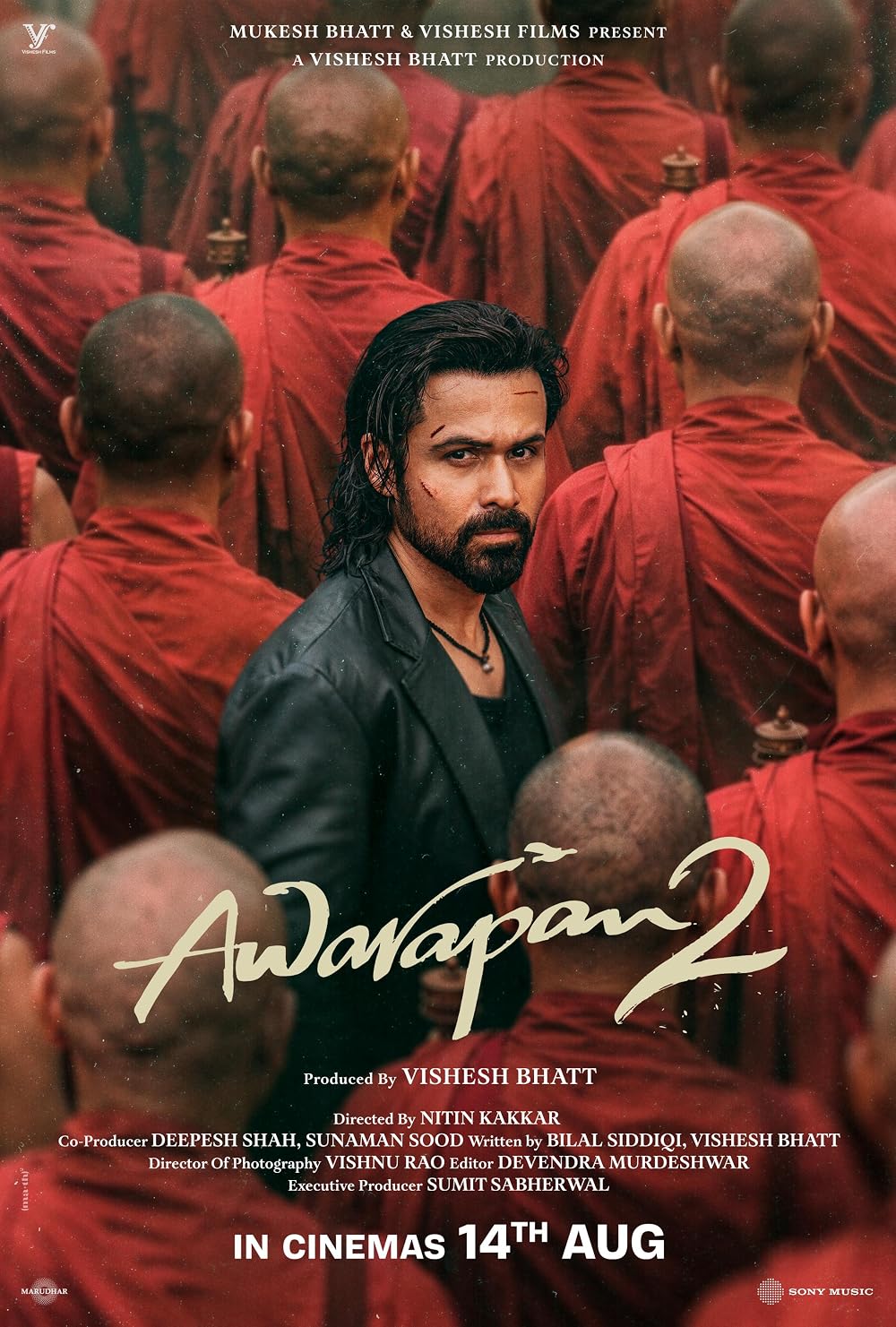
Director Nitin Kakkar—you would think—is not quite the helmer of such heightened hecticity. And you won’t be wrong. Kakkar struggles to give coherence to a stubbornly anarchic plot bristling with morally ambivalent, woefully underwritten characters, almost all of them of a criminal bent.
If they only exuded half the menace that they are meant to.
The film’s prologue has Shivum Pandit, played by a gritted-teethed, chronically enraged Emraan Hashmi, bonding with a little girl, Alia (Myra Shivan), whom Shivum found at a graveyard (emblematic that, as everyone we meet thereafter is morally dead).
This part of the film has a quality lacking in the rest of the film: genuine emotions. Once the plot shifts to Bangkok, the emotions are lost in transit. Nothing moves. In spite of the high-pitched wars and screeching cars, the characters appear emptied-out, compromised, listless to the point of seeming mannequined.
The only consistent quality in the film is Disha Patani’s cleavage. Sad that a girl of her beauty should be reduced to just a bust.
Being a masculine, macho, sweaty, dirty film about stakeouts and shootouts, you would think the woman characters are just props. Out pops Shabana Azmi as a ganglord named Nafisa. She has limited space and makes the best of it, chewing up every co-star in sight.
Shabana’s presence cannot justify all the sickening mayhem in the film. In one sequence, a little child is shot point-blank by the worst-played villain I’ve ever seen in any film in any language. Puran Gabbi resembles a dandy from the silent era, and plays out his evil with a synthesis of a smirk and a grimace. Why, he even gets to waltz while his screen sister, Disha Patani, plays the cello.
Why is Disha a cello player? Why not the violin (to go with the violence)? Why is she constantly displaying her cleavage? Is there a secret message to her display?
Are we missing something here? What the film misses constantly are emotional highs. Except for the gentle preamble (which seems to be shot by a different director), everyone, except Shabana Azmi, behaves like actors rejected at the auditions of Dhurandhar.
The violence is relentless. So is the asininity. Our hero Shivum is in Bangkok to find his missing surrogate daughter. However, the bloated midriff of the plot is just a pretext for shootings and rooftop trials of loyalty.
Amidst the addle-brained action, the screenwriters toss in a bit of Shakespearean patricide. A very fine Bengali actor, Barun Chanda, is killed by his own son. That’s the end of poor Barun’s role. I hope he was paid well.
It is also the beginning of nonstop bedlam and brutality designed to take on Hollywood films like Taken. But after the final shootout , I wondered. Do we really need this sort of senseless savagery specially when the direction is so wobbly that the characters look like they are rehearsing for a film much bigger than the one on the cards?