

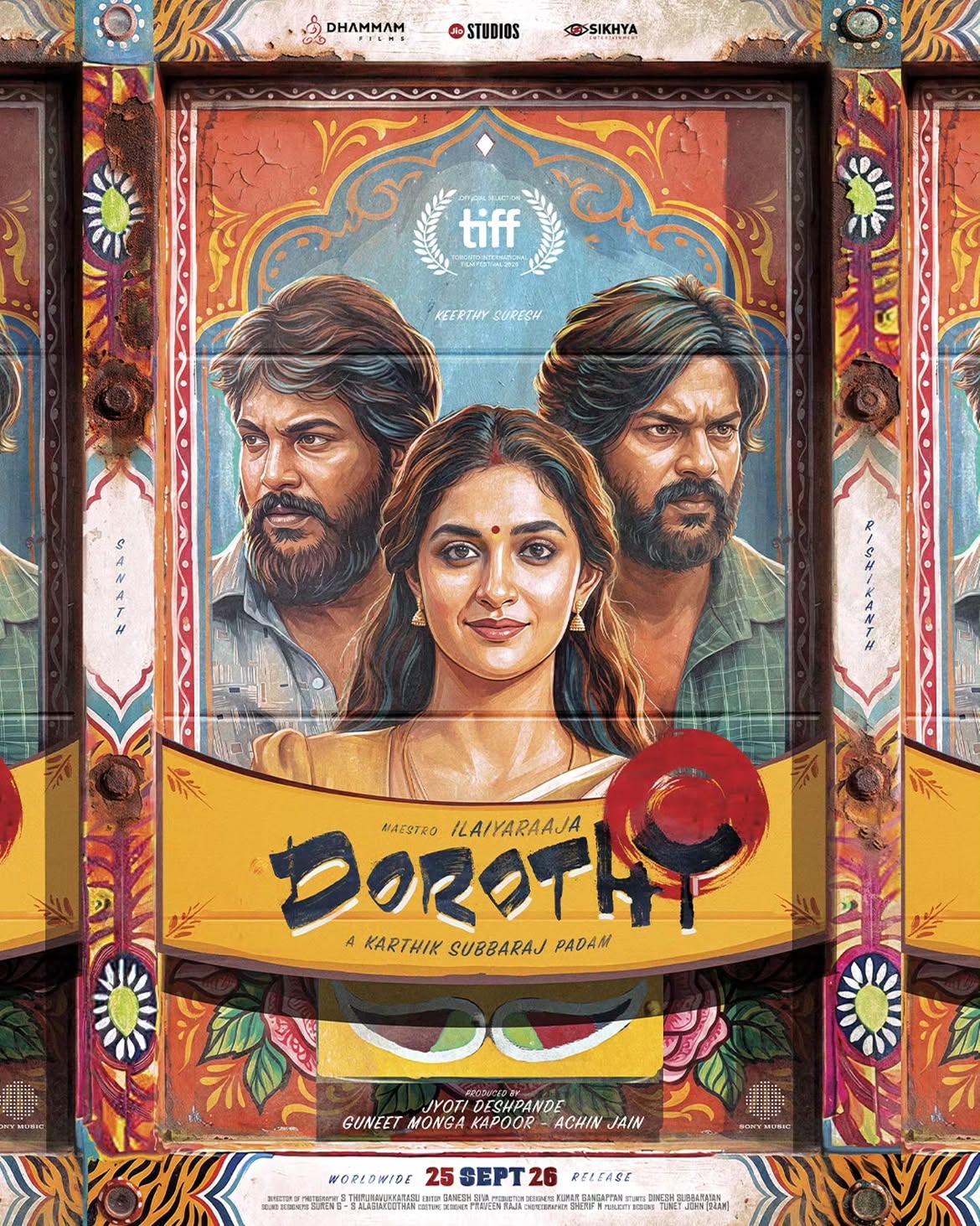
 In a week of vomit-inducing violence and sickening supernaturalism, Karthik Subbaraj’s Tamil film Dorothy is like a wave of fresh air.
Not that the humid, hectic, sweaty, patriarchal arrogance of Madurai captured by Tirru’s unflinching camera has even a whiff of freshness about it. This is a tightly-cordoned, throat-clutching, gut-ripping world of malevolent masculinity, so toxic, you will flinch at its truculent trajectory.
Outwardly, Dorothy gives us a world steeped in vileness, violence, and bloodshed. Women are dragged across muddy grounds and thrown into parched wells. Throats and guts are ripped open with ritualistic relish. These people enjoy the culture of grisly goonism.
In this world of unsparing violence live two boys, Subbu and Karthi. Subbu is from a family of proud gangsters. His father Veraiya (Muthukumar) whistles (rather than speak) his leery degenerate commands which has no boundaries: if a son brings dishonour to the family code he too must be decimated.
So far, so familiar. Dozens of Madurai-based films have haunted this vile universe. But here is the thing. Dorothy doesn’t do the expected. Karthik Subbaraj’s screenplay moves , no sways and slithers, in unexpected ways, drawing into the realm of tenderness in this feast of fury, like flower petals being showered during an animal sacrifice.
I’ve never seen rural ritualistic violence being so gracefully harpooned into something far, far more valuable, precious, and durable.
It is impossible to talk about what happens in Dorothy—so much does, I am still trying to process it all—without talking about, well, Dorothy. She is played by the very lovely Keerthy Suresh, whom we lately saw doing a lot of stuff unworthy of her. Here she is more a presence, a mollifying, edifying presence, onscreen for no more than thirty minutes. But like Rebecca in Daphne Du Maurier’s novel, Dorothy defines the very essence of the film; its core is captured by this woman who makes a lasting, lingering impression on Subbu.
Oh, I forgot. Subbu and his best friend Karthi are now grown up. They are now an active part of that world where killings prove manhood, where women are abused and often killed across caste lines for the sake of, that word again, honour.
And what, pray tell, is honour? Dorothy incessantly ploughs into the perversions of patriarchal politics in pursuit of a beauty and harmony that humankind craves in order to heal this wounded world.
Once Subbu comes out as a transgender, his world and the world that Karthik Subbaraj constructs so astutely and compassionately (nothing this director has done in the past had prepared us for this) gets softer, gentler, almost Arcadian, with eunuchs dancing euphorically.
By the time the intoxicating narrative reaches its ecstatic finale, we are looking at a world so far removed from the mayhem of Madurai, it almost seems to be an enrapturing incongruity.
Would this remarkable film have worked without the two principal players? Sananth’s Subbu and Rishikant’s Karthi are master-creations so vivid and real they seem to be inhabiting a world far removed from cinema. They play the characters as children of whimsy, moving to the rhythm of their own music.
Dorothy is that rare work of cinema that provokes and moves you , sometimes simultaneously. In a world growing increasingly intolerant of marginal communities, it tells us to just stop and think. Being a Dhurandhar is not about how many heads you sever, but how many wounds you heal.