

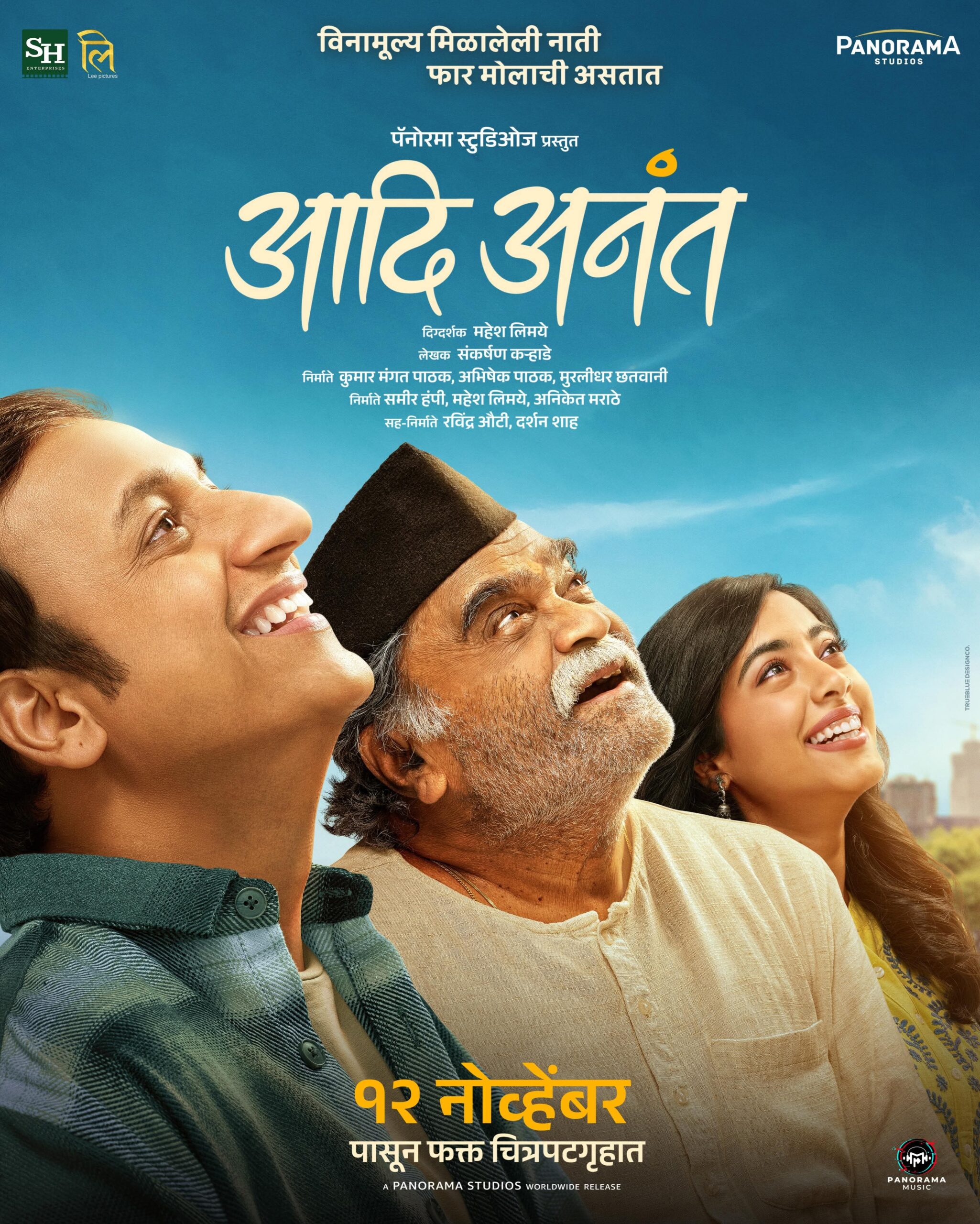
 It is no coincidence that there is only really one evil character in Mahesh Limaye’s new moving Marathi movie, and she is so mean, the character feels it belongs to another planet.
Aadi Anant is about a normal average down-to-‘worth’ hand-to-mouth Pune family put under tremendous stress through cruel circumstances, the kind that makes good people unkind. And Aditya (a sincere Sankarshan Karhade, who also wrote the film) is anything but unkind. But there comes a time in the life of these gentle people (who deserve much better) when Aaditya is so suffused in rage and frustration, that he actually raises his hand to hit his ‘Ajoba’ (grandfather).
It is a decisive moment in Aadi’s otherwise-tender unconditional bond with the old man. We instinctively know things will never be the same again between the two. It reminded me of Prabhash Chandra’s deeply meditative Alaav, where the son looking after his invalid mother erupts into a self-pitying rage.
It is a thankless job, and yes, there are bouts of rage at the sheer unremittingness of the son/grandson’s duties. Prabhadh Chandra captured in Alaav the terrifying isolation of the caregiver without pause or diversion. Alaav was not a film. It was not a documentary either.
Aadi Anant is far more pragmatic about what it wants to achieve. It targets itself as a family entertainer, though not as melodramatic and over-the-top as Mohan Kumar’s Avtaar (and there is no ungrateful progeny in Aadi Anant). Its perception of the caregiver-indisposed relationship is replete with emotional resonance that refurbishes, if not redefines, the familial space.
Indeed, Sankarshan Karhade’s writing is borderline brilliant. Karhade (who also sunlights as the young male lead, playing off Ashok Saraf with a quiet confidence) brings a muted efficacy to the dramatic moments, and the romantic moments with the absolutely likeable Gayatri (Sakhee Gokhale).
There is a delightful sequence where she agrees to marry him even without his asking. There is a spark even when the going gets dark. I found the initial portions trying too hard to make it light in a bid to balance off the gravity to come.
There was no need for that. The writing and the characters are so warmly empathetic; their emotions never need to be manipulated. Nor does the audience have to be pointed one way or another. We are one with the goings-on. They are known to us all, in one way or another. Without taking shortcuts, Aadi Anant gets us to the place of a sobering closure without any signs of breathlessness. This is not a small achievement.
Mahesh Limaye, known for shooting major hits like Dabangg, Natarang, and Mulshi Pattern, pulls off double duty as both director and director of photography alongside Tanmay Vanmali, with remarkable fluency. The camerawork emphasizes an intimate, old-world atmosphere inside the Bhalerao family home, using cluttered interiors to visually reflect the emotional baggage and stagnant time between the grandfather and grandson.