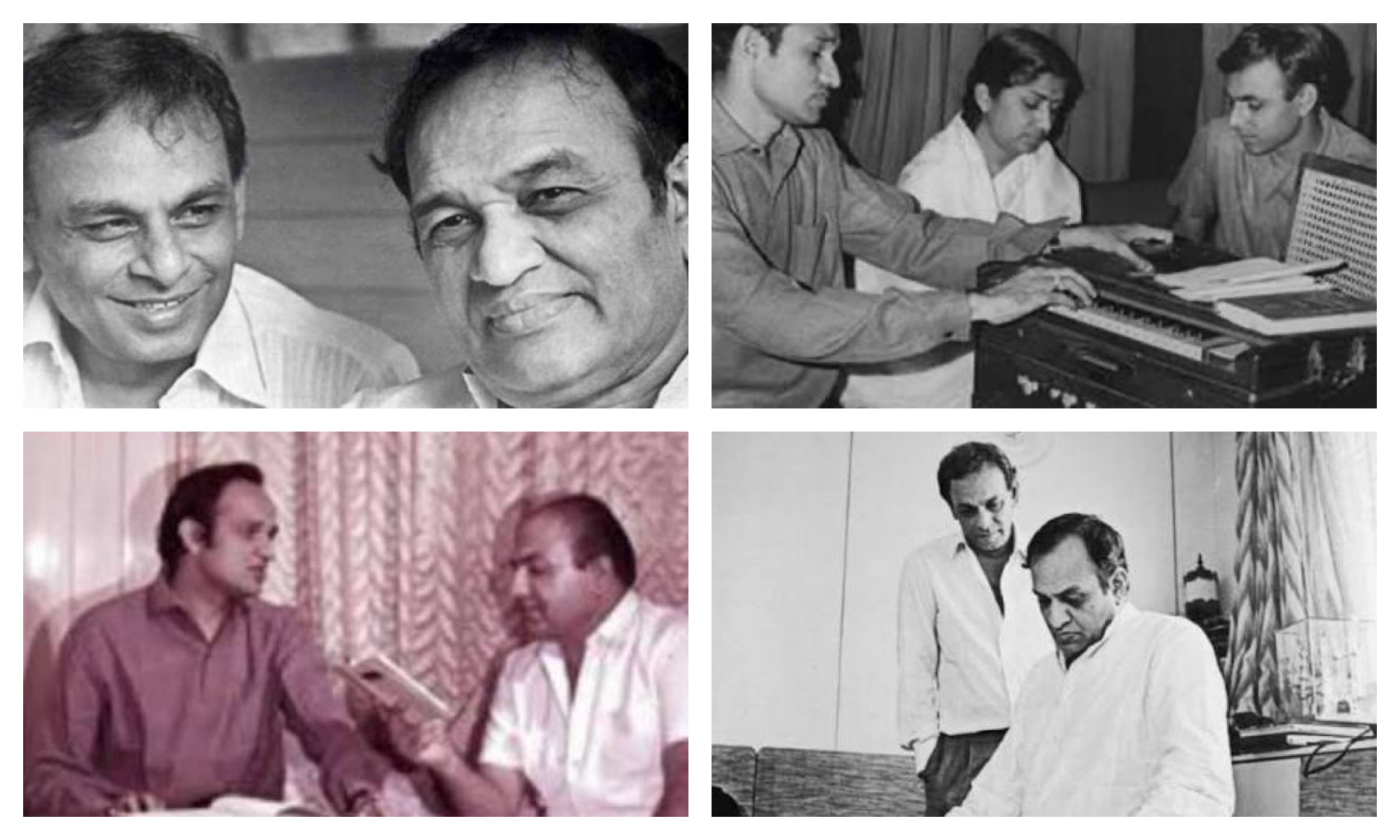
 It’s macabre providence that Kalyanji died within a week of Nazia Hassan. In a way, her ‘Aap jaisa koi’ muscled into K-A’s score in Feroz Khan’s Qurbani to change the face of Hindi film music and, by extension, the course of K-A’s career. Though the duo had several successes after Qurbani (including the epoch-making ‘Oye oye’ in Tridev), their heart was just not in the composing groove any longer. The best songs and scores by K-A came before Qurbani. My Top Tenner tries to tell the K-A story the way they would like it to be told. Straight from the heart. Direct to the lip. With no stopover at the hip. Hip-hop was never K-A’s scene, the Dum dum digas and Oye oyes notwithstanding. Soft simple melodies were always their forte. From Samrat Chandragupta in 1958 to the unreleased Kalinga, Kalyanji and his brother Anandji composed music for dozens of dan-dana-dan scores including such whammers as Bluff Master, Himalay Ki God Mein, Jab Jab Phool Khile, Johnny Mera Naam and Sachcha Jhutha. Here’s looking at you, Kalyanjibhai with lots of affectionate pride.
1. ‘Kasme waade pyar wafaa sab’: Upkar (1967)
The song that nobody wanted to sing because it was to be filmed on Pran, and who had ever heard of a villain singing a mournful song about life’s disillusionment? But Manoj Kumar insisted. Kalyanji-Anandji delivered. ‘Kasme waade’ is arguably the most astute melody K-A ever composed. What gave it ragged resonance was Manna Dey’s vocals. Reportedly, the soon-to-be-imperishable song was first offered to Kishore Kumar, who refused. Manna stepped in to save the Day. He didn’t sing too many of K-A’s tracks. But when he did, he created history in K-A’s career. Remember kYaari hai imaan mera’ in Zanjeer, which came six years later? That too was filmed on reformed villain Pran.
2. ‘Chod de sari duniya kissie ke liye’: Saraswatichandra (1968)
In a score that immortalized the K-A jodi, there were several scintillating jewels of the croon by Lata Mangeshkar and Mukesh. ‘Humnein apna sab kuch khoya’, ‘Chandan sa badan’, ‘Phool tumnein bheja hai khat mein’ and ‘Main to bhool chali babul ka des’ (the first fully fledged Garba song of Hindi cinema). But the one that really stood out was the Melody Queen’s solo about sublimating love for the sake of wordliness. Indeevar’s extraordinary lyrics were given a compositional correctness that K-A often applied to nominal effect in other songs. But here was a tune that you felt was perfect for the words. And when the Nightingale sang “Chand milta nahin sabko sansar mein hai diya hi bahut roshni ke liye”, our entire being lit up with pleasure and contentment. Saraswatichandra fetched K-A a richly deserved National award.
3. ‘Kabhi raat din hum dur the’: Aamne Saamne (1967)
Has anyone noticed? Whenever Lata Mangeshkar and Mohd Rafi came together for a K-A duet, they always sounded extra-dulcet? Example? ‘Bekhudi mein sanam uth gaye jo qadam’ in Haseena Maan Jayegi and this one in the Shashi Kapoor-Sharmila Tagore thriller. ‘Kabhi raat din hum door the’ possesses a certain kashish, as though the two singers were standing on a summit of feelings where the whole world appears beautiful and desirable. The love song never ceases to elate our senses. K-A’s calm poise washes over the serene words and the two singers rise to a gravity-defying scale of self-expression in the antaras. K-A seldom went that high.
4. ‘Koi jab tumhara hridaya tod de’: Purab Aur Pachchim (1970)
Mukesh sang a number of K-A’s most soulful solos, namely ‘Chandi ki deewar na todi’ in Vishwas, ‘Main to ek khwab hoon’ in Himalay Ki God Mein, ‘Khush raho har khushi hai tumhare liye’ in Suhaag Raat, and ‘Waqt karta jo wafaa’ in Dil Ne Pukara. But this East-into-West solo really took the ache. Neeraj’s words about a patient lover who would wait until her beloved has had her share of fun and folly,were exquisitely poetic. And Mukesh poured all his trembling splendour into this lyric of infinite love . This was the only song by Mukesh in Purab Aur Pachchim. The other film that K-A did for Bharat Kumar, Upkaar, also contained a semi-outstanding solo, ‘ Diwanon se yeh mat poocho’ by Mukesh. Even after composing such terrific chart-masala for Manoj Kumar’s first two films, K-A were subsequently dropped like cold potatoes in favour of the more saleable duo Laxmikant-Pyarelal, who served as K-A’s assistants in Himalay Ki God Mein and some other scores
5. ‘Tum humse milo hum tumse mile’: Mere Humsafar (1970)
Though it’s the Mukesh-Lata duet ‘Kissi rah ke kissi mod par’, which this film is known by, this Lata Mangeshkar solo is a prized catch in the throat. There was a genre of songs in the 60s known as the heartbreak-in-the-party number where the estranged hero or heroine expressed love’s anguish through a song sung at a crowded social evening. K-A’s ‘Waqt karta jo wafa’ and ‘Diwanon se yeh mat pocho’ by Mukesh are hiccuping examples. ‘Tum humse milo’ reverses the gender custom. Here it’s the girl telling her man why they can’t be together. The lyrics by Anand Bakshi are simple and straight. Lataji, of course, tells it like it is with piercing sweetness. Though K-A’s contribution to her oeuvre has never been widely acknowledged, this song is living proof of how much the duo adored the throat of the nation.
6. ‘Yeh samaa samaa hai yeh pyar ka’: Jab Jab Phool Khile (1965) Such sweet sensuality! For those who believed the Nightingale couldn’t ooze sensuous chemicals into her songs, here was a real revelation. Capturing the sighing solitude of a woman pining for her lover, ‘Yeh samaa’ never ceases to create a samaa of contentment. The tiptoeing seductiveness of Lataji’s rendition (paralleled only by R.D.Burman’s ‘Baahon mein chale aao’ in Anamika) never fails to thrill. ‘Jab Jab Phool Khile’ was one of the biggest hits of K-A’s career. Every number, from ‘ Ek ttha gul aur ek tthi bulbul’ to ‘Pardesiyon se na ankhiyan milana’ to ‘Na na karte pyar’ (the mukhda was lifted by Dharmesh Darshan in Dhadkan) was a gigantic success.
7. ‘Jeevan se bhari teri aankhen’: Safar (1970)
With the onslaught of the Rajesh Khanna wave came K-A’s opportunity to make winsome use of Kishore Kumar’s vocals. In Safar, Kishore sang two of his career’s finest solos. ‘Zindagi ka safar hai yeh kaisa safar’ and ‘Jeevan se bhari teri aankhen majboor karen jeenay ke liye’. Such artistic roundness, such complete concordance characterized these Kishore solos that we often wonder why K-A wasn’t around to make more music for Rajesh Khanna films. They did the ill-fated Maalik, though which demonstrated the duo’s skills at composing Bhajans, a skill that was very much on evidence in the Dilip Kumar starrer Gopi . Safar also contained two other solos Lata Mangeshkar’s tender and tuneful ‘Hum tthey jinke saharey’ and Manna Dey’s forceful boatman’s song ‘Nadiya chale chale re dhara’. But it was the two Kishore solos that held sway. Those jeevan se bhari eyes of Sharmila Tagore never fail to evince sighs. R-e-a-l-l-y romantic.
8. ‘Sukh ke sab saathi dukh mein a koi’: Gopi (1970)
K-A composed two outstanding Bhajans for Dilip Kumar in Gopi. The Mahendra Kapoor rendered ‘Ramchandra keh gaye siya se’ was based on a well-known Gujarati folk song. But the Rafi Bhajan was an original. Usually devotional numbers are strident, forceful, and high-pitched. ‘Sukh ke saathik was so soft we almost forgot it was a Bhajan. The lyrics seem to float in clear, transparent waters in search of hope beyond worldly betrayals. When Rafi sang “Meri binati suney to janoon, janoon tujhe hey ram, ram nahin to kar doonga sarey jag mein tujhe badnaam” the compositions dived and soared to convey the singer’s conflicted emotions. Very intricately designed, very with-it.
9.’Babul pyare’: Johnny Mera Naam (1970)
There was a fabulous Bhajan in this score ‘Niss din meera roye dard na jaane koi’ for which Lata Mangeshkar broke her pledge of singing Meera songs only for her brother. What would this Dev Anand blockbuster be without the blithe songs? The numbers were situational all the way: the getting-away-from-the-cops romantic masquerade of ‘O mere raja’, Padma Khanna’s anguished striptease in ‘Husn ke laakhon rang’… But the one that really grabs us by our hearts each time is ‘Babul pyare’ where Lataji’s voice seems to rise and embrace filial feelings with enormous empathy. She did sing some other memorable Babul songs for other composers, notably ‘Babul tere baahgon ni mein bulbul’ in Jheel Ke Uss Paar and ‘Sunio ji’ in Lekin. But ‘Babul pyare’ remains the most special song of that genre.
10. ‘Mera Jeevan Kora Kagaz’: Kora Kagaz (1974)
It took Kalyanji-Anandji seventeen long years to get to the Filmfare award. Among the stalwarts who competed every year, this duo’s music always seemed to fall below the edge of consent. Kora Kagaz and its hauntingly expressive title song pushed the envelope for the duo. Counted among the ten best solos that Kishoreda ever sang, ‘Mera jeevan kora kagaz’ is to Kalyanji-Anandji’s career what ‘Dost dost na raha’ was to Shankar-Jaikishan. It defined and energized their career to a summit of glory. Whenever there are moments of doubt regarding Kalyanji-Anandji’s place in music history, just play this song and listen to Kishore Kumar caress those quietly authoritative notes with parental pride. We are bound to feel a twinge of guilt and regret. Did we give the tuneful siblings as much as they deserved? Kalyanjibhai, main aapko sachi bolun? Hum bolega to bologe ke bolta hai.