 Stars often become synonymous with one role. Think of Nargis, and you are immediately reminded of her Radha in Mehboob Khan’s Mother India. Or think of Dilip Kumar, and the picture of Devdas driving himself into a state of drunken doom immediately comes to mind.
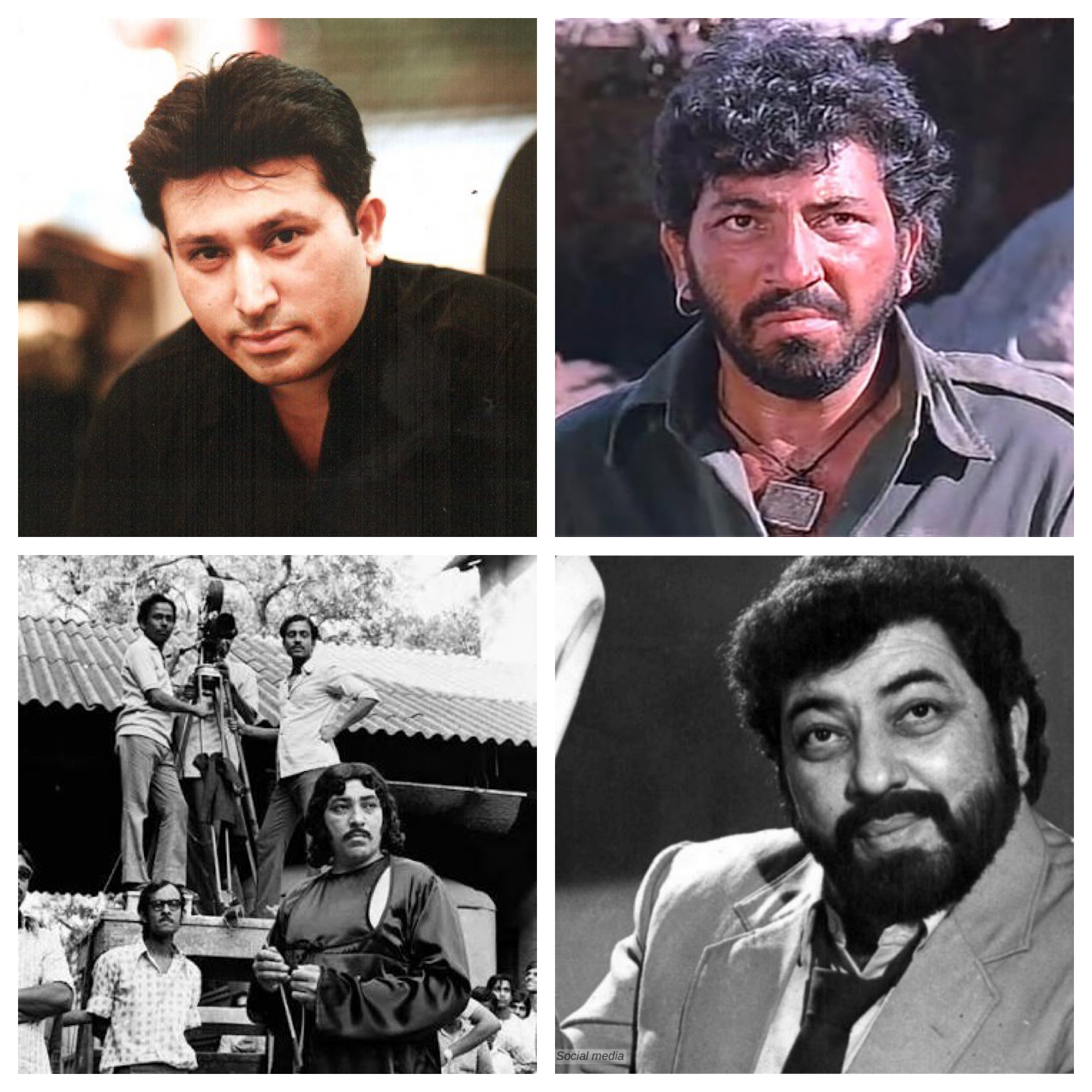
No actor in the history of cinema from any part of the world has been so closely associated with any one role as Amjad Khan with Gabbar Singh in Sholay. Though Amjad gave brilliant performances subsequently in Feroz Khan’s Qurbani, Gulzar’s Lekin, Prakash Mehra’s Muqaddar Ka Sikandar and Manmohan Desai’s Suhaag.it was Gabbar Singh with his Chambal “chaal” and “awadhi” slang that had the nation trapped in a terror zone for months and years.
Today, 51 years after its release, Sholay and Gabbar Singh still exemplify comicbook villainy laced with dread dynamism, brutality, and misogyny. And to think that Amjad nearly lost the role to Danny Denzongpa!
Sholay marked a culmination of ten years of struggle for Amjad Khan. A compulsive stage actor, Amjad was the second son of the versatile character actor Jayant (Amjad’s brother Imtiaz Khan is also an actor, seen lately in Mazhar Khan’s Gang). After years of struggle, Amjad was seen on screen for the first time in Chetan Anand’s Hindustan Ki Kasam as a Pakistani army general.
Sholay was signed on the day Amjad’s son Shadaab was born. The film made and unmade Amjad’s career. While it was a spectacular start to stardom, it was also a dead end. Where could Amjad go after Sholay? He struggled on, even directed two very stylish but unsuccessful films, Chor Police and Amir Aadmi Gharib Aadmi. But career dead ends and a near-fatal road accident in the mid-70s took their toll on Amjad’s career. He died brokenhearted of a fatal heart attack in 1993. Amjad was only 49! His son Shadaab, who made his debut opposite Rani Mukerji in Raja Ki Aayegi Baraat in 1997, continued his father’s struggle.
It is said that Amjad was quite a holy terror in his youth. Something like what Danny and Shatrughan Sinha were shown to be in Gulzar’s Mere Apne. Amjad put his wild days behind him the minute he stepped into movies. He was known among friends as a gentle giant, ceaselessly sipping on cups of chai (Amjad was a teetotaller), forever lending a helping hand to those who wanted it, constantly representing the film industry in social and cultural activities. Everyone in the industry was Amjadbhai’s friend. He was particularly close to Amitabh Bachchan. After Amjad’s accident, Amitabh was by his side constantly, nursing his friend back to health.
A tremendously versatile and underused actor, the post-Sholay summit in Amjad’s career came when he played the poetic Nawab Wajid Ali Shah in Satyajit Ray’s first and only Hindi film Shatranj Ke Khiladi. The performance, punctuated by pathos and poetry, was a piece de resistance. It showed critics that there was life after Sholay for Amjad.
But where were the opportunities? Apart from a few notable roles the Hindi commercial cinema couldn’t a find a suitable niche for this gentle giant. He struggled to make himself noticed and proved equally adequate in comedy (Qurbani, Love Story) and sinister roles (Muqaddar Ka Sikandar, Charas).
The tragedy of Amjad Khan is the tragedy of stereotyping in commercial Hindi cinema. If Gabbar Singh is the most immortal villain ever invented in Hindi cinema, why doesn’t Amjad Khan’s reputation match the most famous role that he played?