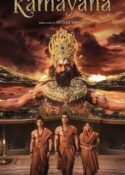
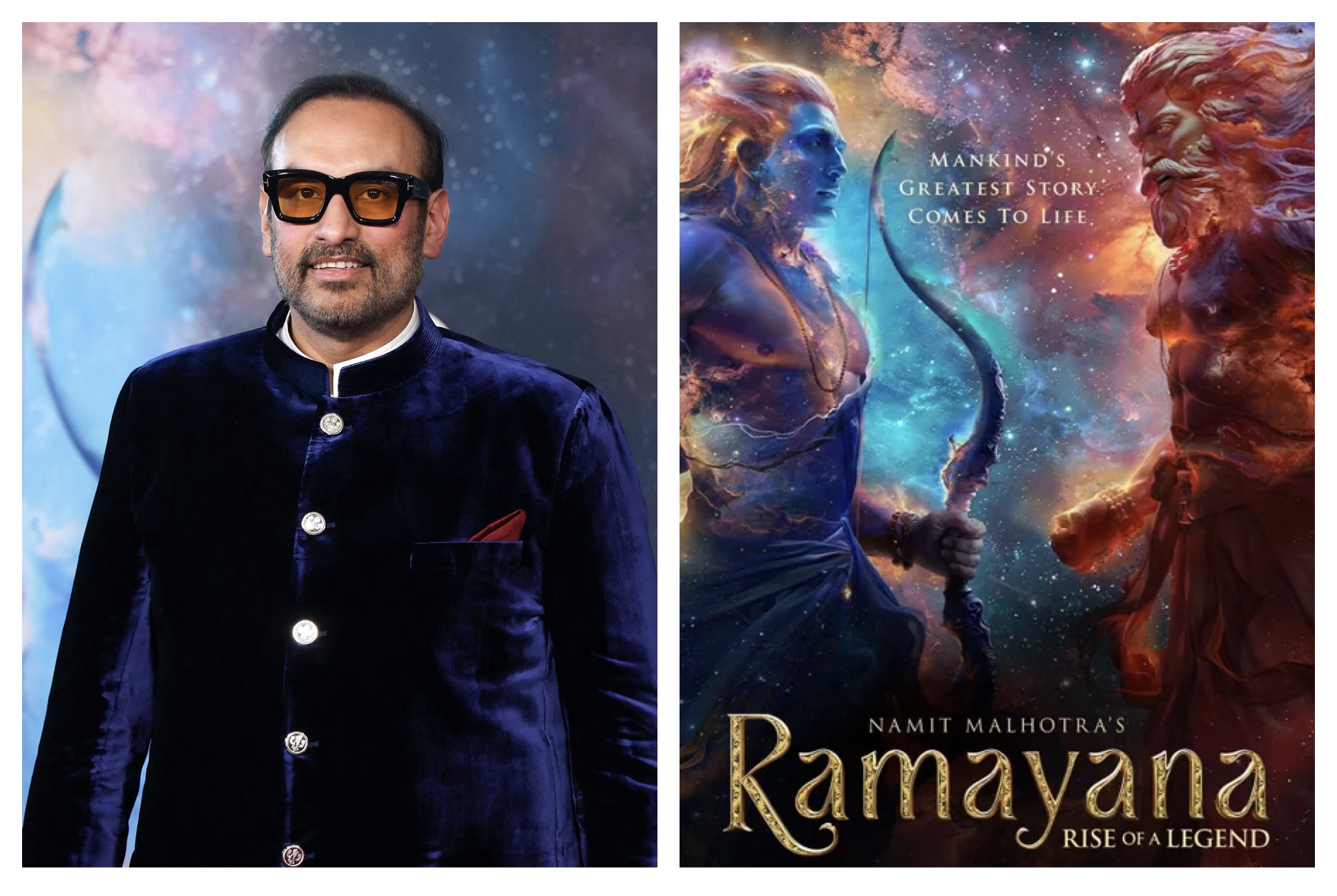
 Producer Namit Malhotra, who brought the mythological epic Ramayana to the big screen, spoke exclusively to Subhash K Jha about the making of the hit film. Delving into how he first embarked on the journey, the producer also talks about the incredible cast and what we can expect from Ramayana Part 2.
Your tapasya has finally paid off; how does it feel to see your Ramayana being received so well?
I think the first word that comes to my mind is gratitude. Because, you know, we have been carrying this responsibility for almost a decade. So to see it finally come to a place where the world is really appreciating it across the board is a very, very heartfelt.
To go back a bit, when and where did this junoon to do your own Ramayana come from?
I think it goes back almost ten years, when I had already been building my business in the West. And, as I was trying to build, buy companies in the US, Canada, UK, it just became more and more apparent to me that until we used the power of our storytelling and presented the greatest story of our culture, the perspective that the people have in our own industry will not change. Like Hollywood has no idea about the Indian film industry, the way the world works, how we are operating, and how we have such a deep history and legacy. And I also felt that the world saw some very… you know, like a lens of a Slumdog Millionaire or of a Lion or of a Gandhi where we were always the victim. And that is where I felt that we had to bring something that really presented Indian culture and Indians in a way that is very unique to the world, and why we are so, so that we don’t have to be fighting and we don’t have to create conflict and wars to take over the world. In fact, Ram Rajya is the way of the world, and that is something that is so deeply embedded in our own culture that we should be able to showcase that with confidence. And that is the origin of Ramayana, basically.
What is most astonishing is the scale of your ambition; were you not afraid that you may not be able to pull it off?
After spending thirty years in my entire career and having won so many Oscars for such big, massive films, of course, there is a massive sensitivity and responsibility. But, you know, as I have always said in my previous interviews also, if I was 21 years old, maybe it is a different responsibility versus when I am 50. If I don’t do it now, then when will we do it? Ultimately, we have to leverage our entire life’s learnings and experience to actually be able to present something at this scale. And if after all the learnings and training I have had of the world, if I don’t do it now, then when will I ever do it?
What kept you going with the project even when at times it seemed an impossible dream?
See, the moment you study the Ramayana, you appreciate the fact that Lord Ram himself has had a life that is full of obstacles. And his ability to win through every obstacle and every challenge has been the hallmark of his becoming a Maryada Purushottam. While none of us can become that, you know, and none of us want those challenges that he faced, but it also guides you in its own way that, you know, ultimately… All these challenges are nothing but the journey of life, and our ability to win through these obstacles is really the purpose of life. And so to me, the obstacles became almost like the journey of why the Ramayana is so revered and loved that in spite of all the obstacles he won, And I’m saying compared to that, we are not even 2% of what we have. So, you know, that acted as a big guiding light, honestly, in my life.
What do you have to say to the purists who say this is not the Ramayan the Valmiki wrote?
See, the honest fact is that none of the versions in of itself are complete on its own. Like, for example, if somebody said that we will make a Ramayana which will not have the Swayamvar or the Lakshman Rekha, which is non-existent in the Valmiki Ramayana also, people would take objection to it. That imagine I showed you a Ramayana today and it did not have the Swayamvar or did not have the Lakshman Rekha,you would be calling me and saying, how could you make the Ramayana without this? So the fact is that there are 300 versions of the Ramayana. What we have made is using the Valmiki Ramayana as the base. And we’ve also been able to take from the other Ramayanas that are equally celebrated and to make sure that we have something that feels much more natural and seamless in the flow. Because ultimately, we’re not making a documentary on Valmiki ji’s Ramayana. We’re not making a documentary on it. We’re making the Ramayana. And we have got to take what we believe are the best aspects of whatever is available in all the versions to bring something that our children and the next generation can experience.
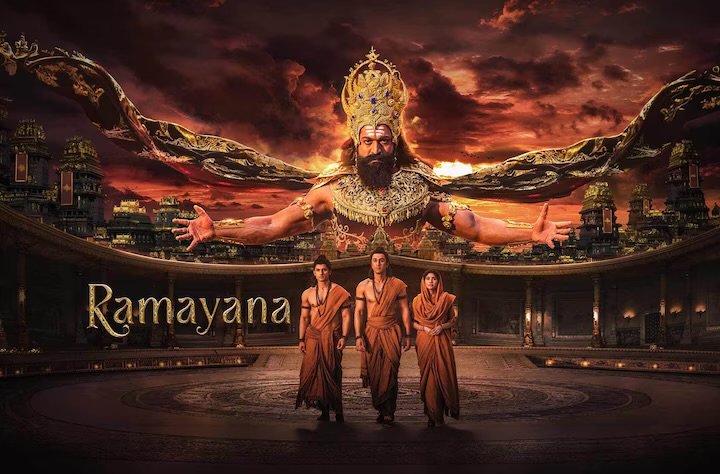
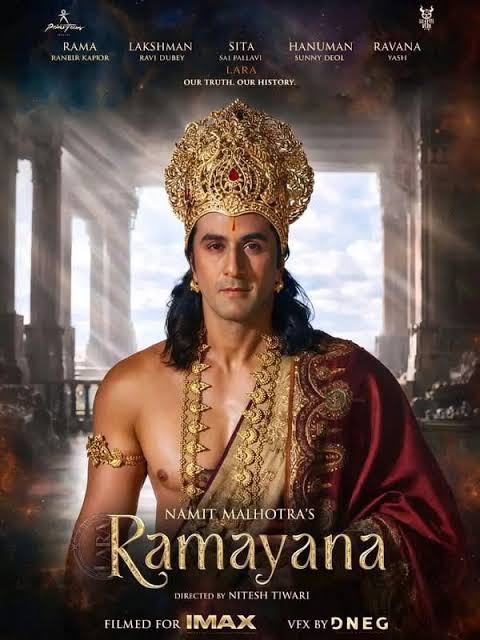
What made you choose Ranbir Kapoor, Sai Pallavi and Yash for the principal parts?
I think, to be honest, the first thing that we were looking for were actors who are to be brilliant actors in themselves. Second, we have to look at the description and the physicality and the emotion that they can portray in each of these characters. And if you see the way Yash comes as Ravan and he owns the screen, because Ravan was such a powerful character that nobody better than Yash could have done that. Similarly, the simplicity of Ma Sita, in the way Sai Pallavi is an actor herself first, and her ability to then completely immerse herself as Ma Sita, was such a natural delivery. And then Ranbir, you know, being the finest actor of this generation that every actor in the country will validate that Ranbir is the finest actor. His ability to use restraint and bring that emotion is second to none. You know, if you just think about it, who else could have done justice to the role of each of these characters better than the people who are on it? So I think it’s our good fortune that these actors actually took on that and stepped up and took on that, because it’s a big responsibility and risk for them also to take when they play such iconic characters. And I’m so glad that they did it and the results are there for the world to see.
Now that you have pulled off this seemingly impossible feat, what next?
Part two. We have to still finish the Ramayana. What you have seen is literally the… initial, like what we have shown you is the introduction to the Ramayana. The main conflict and the main story is still to come. So let’s put our hands together for that. That’s the most important part of what still remains to come. And that is really going to take up all our time and effort for the next two years.