
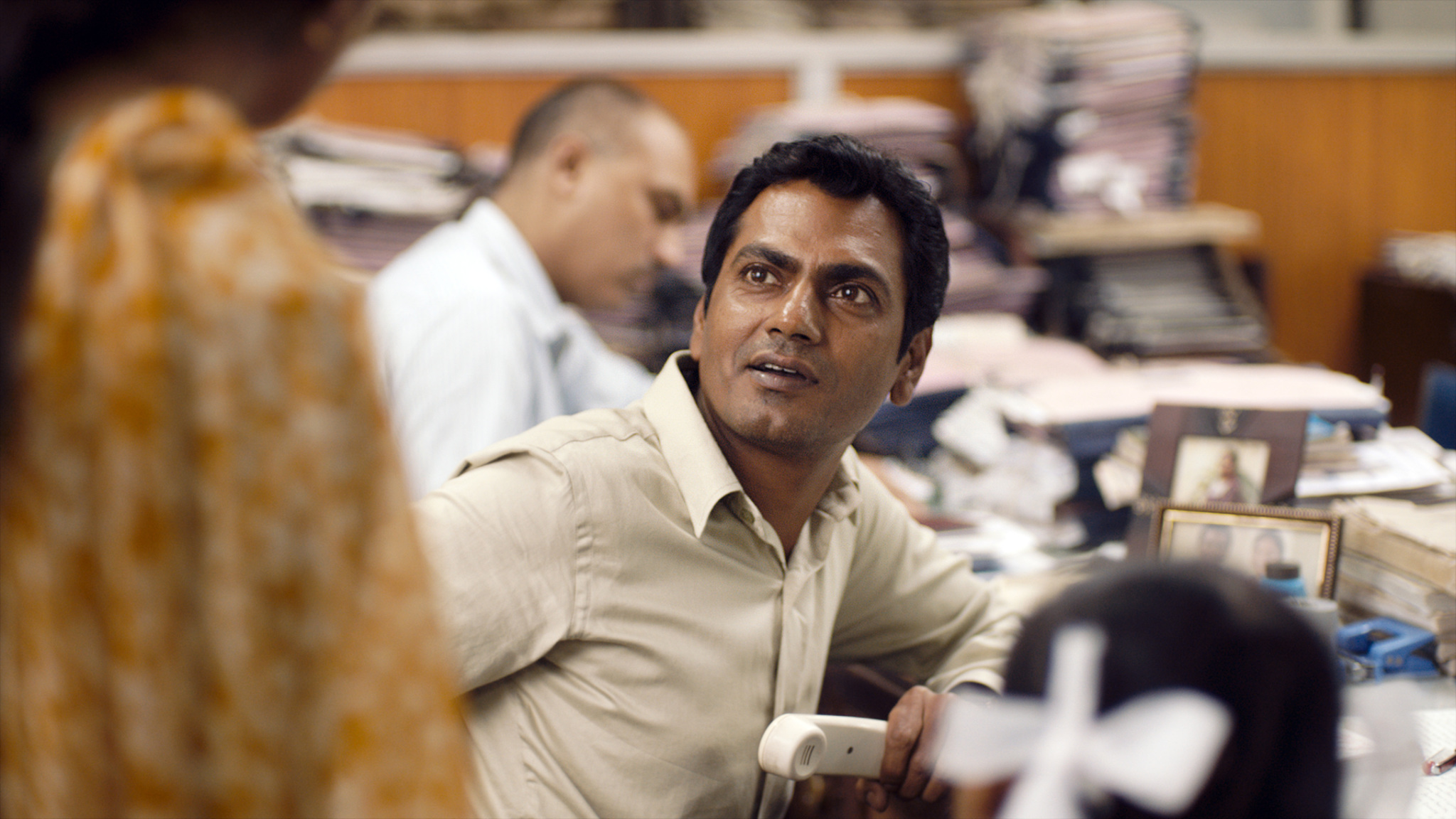
 In The Lunchbox, released on September 20, 2013 debutant director Ritesh Batra does not seek easy escape routes for his characters’ destiny of drudgery. The film is set in the heart of Mumbai city where everyone is busy making a living…or just trying to live. Rightaway, this extraordinary film catches your attention with the way the sounds and the relentless rhythm of that City That Never Sleeps are captured and put on screen. While remaining purely cinematic there is something completely ‘non-cinematic’ about The Lunchbox. It is stripped-down of all affectations.
The secrets of lonely hearts are not laid bare through conventional cinematic devices—the use of background is so sparing that you often end up listening to the music inherent in everyday routine: the way the trains move in the sweltering afternoons, the sound of auto-rickshaws bustling through bylanes, the sizzle of onions frying in a suburban kitchen, the sound of the television playing as a nucleur family of three lonely people have dinner in deathly silence.
Thirteen years after its release, The Lunchbox continues to be remembered for its understated storytelling and deeply human characters. Among them, Nawazuddin Siddiqui’s Shaikh stood out for bringing warmth, humour, and vulnerability to the film. Looking back at the making of the character, Nawazuddin revealed how a real-life friend and his way of hiding pain became a key reference point while portraying some of Shaikh’s most emotional scenes with legendary Irrfan Khan.

Recalls Nawaz, “Actually, I had a friend. I was very attached to him and had been for many years. There were a lot of disappointments in his life, which he used to share with me. So once, his mother’s letter had come. I think this was ten or fifteen years ago, maybe fifteen or sixteen years ago. We were both sitting together, and his mother’s letter arrived. He was reading it. His mother had some problem with her leg, she had hurt it somehow. So that was written in the letter. He was reading it out to me. And the way he used to speak was like that itself. It was very comic, but there was sadness somewhere inside him. But from the outside, he looked very normal.”
The actor drew from this deeply personal memory to capture the contrast between Shaikh’s outwardly comic manner and the emotions he keeps hidden underneath. For Nawazuddin, the challenge was to make the character’s pain felt without allowing it to become visible through conventional expressions.
“While doing this scene, I tried to remember that, Nawaz, however much you can cry from inside, whatever you can cry, I had memorised that. He was in my mind. Mukesh was in my mind. His tragedy was there in my mind. I thought I would do it exactly like he did, in exactly the same way. And trust me, I was crying at that moment. But this was my condition to myself: I would not bring it into my eyes, I would not bring it onto my face. There should be no such expression on my face. Otherwise, that would be a very big defeat for the character. I would not bring it out anywhere.”