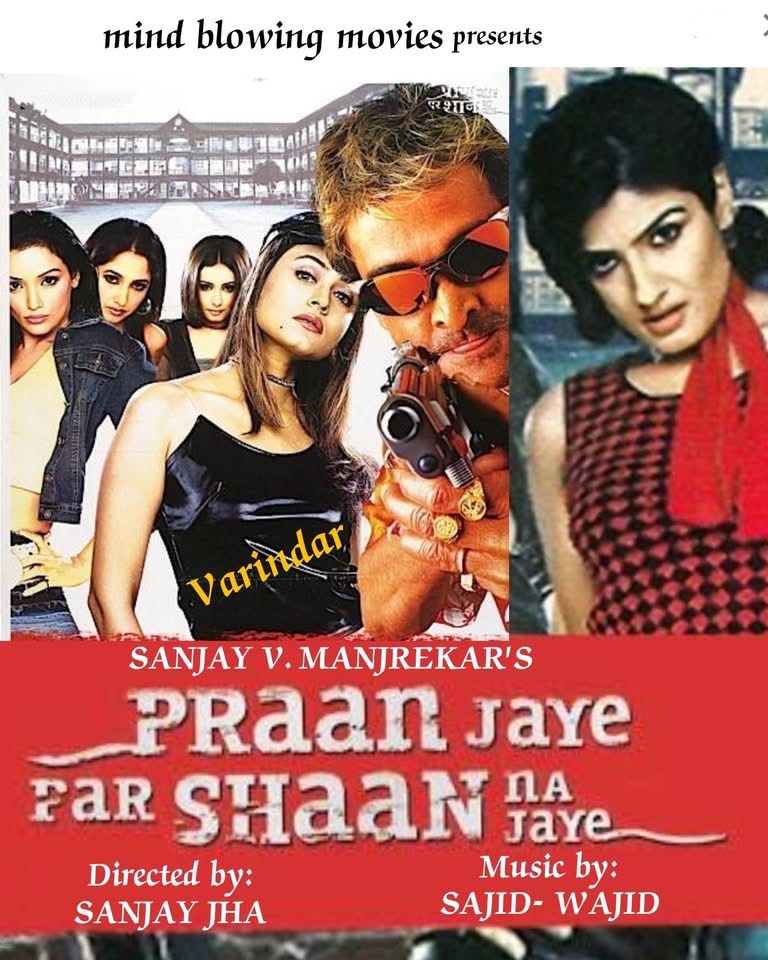
 Subhash K Jha looks back at Praan Jaye Par Shaan Na Jaye, which released in 2003 in a new installment of This Day That Year.
A chawl. A way of life. A sub-culture that houses dreams and nightmares of thousands of lower middleclass citizens in Mumbai. Sanjay Jha’s directorial debut takes us into the heart of darkness, to look at life without rose-tinted glasses. The opening credits where the film’s producer Mahesh Manjrekar dances (prances?) with Sushmita Sen sets the mood for this wacky workingclass tragedy.
Part-spoof, part-documentary, episodic and yet yoked at the gut-level by the intense satirical commitment to the giggles and gasps of the grassroots people, Praan Jaye Par Shaan Na Jaye , released on 2 May, 2003, is one of the most original Hindi–language films in recent times—if Hindi is the language that these melee of jostling, jabbering suffering and surviving characters speak.
The spoken word in Praan… is so vibrant and alive, it seems rather sad to hear the characters’ tongue being robbed of its native colourfulness. But the film survives the censorial scissors, just like the characters who survive the stomp of fate and the wack of destiny.
The story of survivors wrapped in the rituals of survival is a marvel of tragi-comic edification. As a writer and director Jha seems to love the cliched conventions of mainstream films as much as he abhors their stagnating effect on the growth of our cinematic culture. The love-hate relationship between the thinking moviegoer and mainstream cinema translates into a titillating mass of images that tease and edify the viewers’ appetite for aesthetic gratification.
Sanjay Jha treats the characters both as cinematic casualties and creatures who can stare at their own lives beyond the glitzy non-realism of mainstream cinema.
The characters are memorably vivid. The gallery of women , splendid in their spunk, range from the ravishing to the strange. Sometimes they are strange because of their ravishing resilience and relentless regard for life’s vicissitudes. It’s hard to segregate these women into reviewable sections . Their lives overlap in ways that make theoretical definition seem redundant.
If Sheela (a duly deglamorized Shweta Menon) is the wife of the bullying boorish wastrel (Sayaji Shinde) who insists on raping her every night in the presence of her harried parents (Shivaji Satam and Swati Chitnis) , then Dulari (Divya Dutta) is the street-smart woman fending for her children, a bullying mother-in-law and a perpetually drunk husband who has sexual intercourse with her while she tells him about her day’s hardships in bed.
Orgasm is the birthright of the men in this world of mundane and monstrous deprivations. Laughter isn’t just a medicine, it’s a life-saving drug , an addictive antidote to the incessant hammering from life. Jha doesn’t soften the blow. The characters are constantly subjected to a climate of cruelty that makes us cringe in horror.
There’s Suman (Rinke Khanna) struggling to keep her old parents sane after the son of family is dragged away by the cops. Sounds familiar? Praan… offers the discomfort of the familiar in a strange and exciting filmy-realistic mode.
Soundarya (Diya Mirza) is the ugly duckling who’s transformed into a swan by the male gaze of Aman (Aman Verma) the benefactor and heroic messiah who comes to the chawl in a whirl of generosity only to betray the trusting chawl-dwellers by turning out to be a cohort of the Satanic builder Pravin Seth (Sachin Khedekar, in a delicious deflection from his angelic image).
Shades of Hrishikesh Mukherjee’s Namak Haraam? You got it! The filmy connections never leave the narration . At various points in the storytelling the director spoofs other Bachchan classics like Deewaar and Sholay. But he’s most comfortable just letting the characters be.
The people who inhabit this disturbing twilight zone of the gasp and the groan evolve through their own travails, never buckling under hardships, maintaining a dignity within the most humiliating circumstances. There’re many memorable moments in the film, all to do with the documentary rather than the filmy aspect of the bizarre narration. Most memorable is the sequence where the incensed chawl-wallahs insist on evicting the smalltime actress Mona (Namrata Shirodkar) for practising prostitution. After fighting for her right to remain within the chawl’s social ambit, Dulari whispers, “At least you’ve the right to say yes or no to sex. We wives don’t even have a say in the matter.”
It’s a moment of great poignancy brought to fabulous fruition by Divya Dutta’s moist-and-moving performance. Whether doing the audaciously graphic love making scene (which makes Raakhee’s singing-during-clinical-intercourse in Paroma look like child’s play) or giving flesh and blood to her other dramatic moments, Divya proves to be the surprise packed in the ensemble cast of brilliant players.
Raveena Tandon is the comedienne of the show. And what a wonderfuly wacked-out character she has made her Laxmi into! A housewife pining to be a mother, Laxmi turns herself into a self-annointed goddess and tourist attraction to collect funds for her gynaecological operation.
The whole process of mystifying the desperation of poverty is brilliantly satirized.
While doing so the film takes digs at the whole ethos of godliness and the fraudulency that surrounds organized religion.
The third and perhaps most memorable performance comes from Vijay Raaz, that Ram Gopal Verma discovery who was the epitome of comic irony in Monsoon Wedding. Here he’s the wry raconteur, the sutradhar who has alchemized his bitterness into numbing cynicism. When Vijay Raaz narrates the story of how he lost his wife and child in a terrorist explosion, the actor’s voice alone conveys the epic enormity of the tragedy.
In many ways Vijay Raaz holds the zigzagging narration together. Everyone from Diya Mirza to Sachin Khedekar gets into the spirit and mood of the film. No actor seems to have strolled in from outside the handsomely designed chawl except Aman Verma . He’s too “filmy” to belong. Verma is in character . Like Rajesh Khanna in Hrishikesh Mukherjee’s Namak Haraam, Verma is the archetypal intruder trying to become one with the milieu that he’s come to infiltrate and betray.
Finally, Aman Verma is betrayed by life. As he lies dying like Amitabh Bachchan in Sholay a half-smile half-scowl creeps up on the viewer’s face. What on earth is this???!!! We’ve never seen anything quite like Praan Jaye Par Shaan Na Jaye before. It ‘s a film and yet too authentic to be one. It’s not documentary and yet not filmy enough to be cinema. Caught in a no-man’s land between grit and skit, the audience creaks forward with the narrative’s well-oiled fusion of fable and fact, trying to pretend that every time a character says “Jhandu” he doesn’t mean the cussword in Hindi that rhymes with it.