
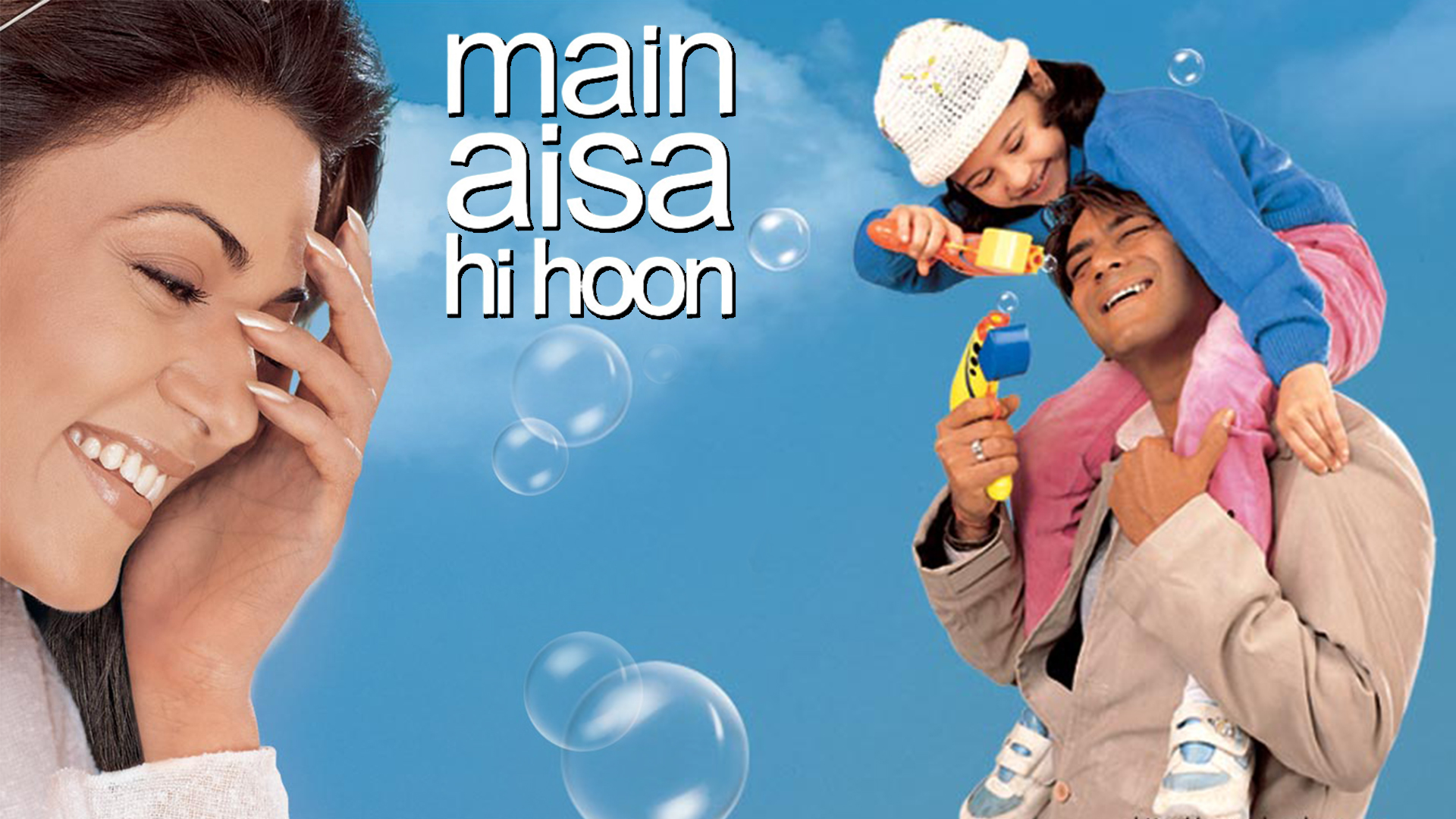
 Subhash K Jha, in a new installment of This Day That Year, revisits the 2005 drama Main Aisa Hi Hoon, which starred Ajay Devgn, along with Sushmita Sen, Esha Deol and Anupam Kher.
This was the unofficial Hindi remake of the Sean Penn starrer I Am Sam. To imagine a superhero like Ajay Devgan who has played the most valorous heroes, including Bhagat Singh, to be transformed to a wimpy, whining, flustered, and childlike man fighting a messy custody battle for his precious daughter is a sure sign of Hindi cinema’s maturity.
Writer Bhavani Iyer, who earlier that year in 2005 scripted the historic Black, borrows several elements from Bhansali’s classic. These are welded into Jessie Nelson’s I Am Sam , where Sean Penn played the same role. The result is often gratifying, heart-warming and positively rewarding, if only director Harry Baweja hadn’t exposed his mainstream motivations so nakedly at critical junctures of the film.
The commercial considerations notwithstanding, Main Aisa Hi Hoon has many remarkable features. Ajay, of course, does the most heroic thing in his career by playing a child-man. The shuffle, giggle, and joyous clap deserve applause. But it’s the women who thunder sure-footedly across the deftly thought, often tediously written screenplay.
From the little girl Rucha, who plays the autistic man’s sensitive child, pretending to be under-literate only so that her special father doesn’t feel inadequate, to Lilette Dubey as the father-child’s landlady and guardian angel… they’re all beautifully written and portrayed. The two female protagonists who walk into Neel’s life also provide enormously interesting insights into the working methods of the contemporary Indian woman’s character in Hindi films.
Esha Deol, as the fey, unstable, nomadic, and maladjusted Maya, is a mix of Zeenat Aman in Hare Rama Hare Krishna and Anooradha Patel in Ijaazat.
Playing this zonked-out character, Esha Deol comes into her own as an actress. Her faraway looks of pain, anger, neglect, and insecurity remain with you long after the film. Yup, she too has matured along with Hindi cinema.
But it’s Sushmita Sen who holds the plot’s often-doddering head up high. As the single mother and lawyer always on the edge, she imparts an amazing grace to her part and to the film. The nuances she brings to her predominantly stereotypical character of a uni-focussed working woman are liable to be missed in a cursory viewing.
This is a truly great actress at work. In a five-minute single-shot when Sushmita expresses her character’s pain and loneliness to Ajay, she blows the screen apart with a majestic catharsis.
Regrettably, director Baweja ruins the brilliant sequence by compounding it with a typical pamper-the-sulking-heroine song on the guitar that belongs to the early 1970s and ‘Yaadon Ki Baraat’ rather than a film about autism, single parenting and paternity rights.
The crucial custody conflict in the courtroom is reduced to a head-splitting exercise in camera conceit, with the frames moving in dizzying motions, apparently to convey the hero’s mental state.
What was cinematographer Ayananka Bose thinking while using camera work like a heaving, lurching crane? And what was dialogue writer Anurag Kashyap (known for his hard-hitting diatribes) doing penning schmaltzy lines that seem to be picked up from greeting cards? And what/were the writer and director thinking when, in a last-minute bid for a ‘neat’ ending, they manipulated a marriage for the mentally challenged father? Isn’t this going a little too far?
While Harry Baweja needs to be congratulated for his gutsy theme and characterizations, the movement of the plot is far from even. In fact, some of the later compromises are positively odd.
But you can’t help smiling at the film’s limpid lunges at heart-warming scenes. The father-daughter sequences as well as Ajay’s courtship of Esha are unconditionally endearing. So’s that sequence where the hard-boiled lawyer lands up at Neel’s place of work to apologise and take up his case. The autistic hero of this unusual mainstream film has the brain of a seven-year-old. But, by Jove, Hindi cinema sure has come of age, at least to some extent.