

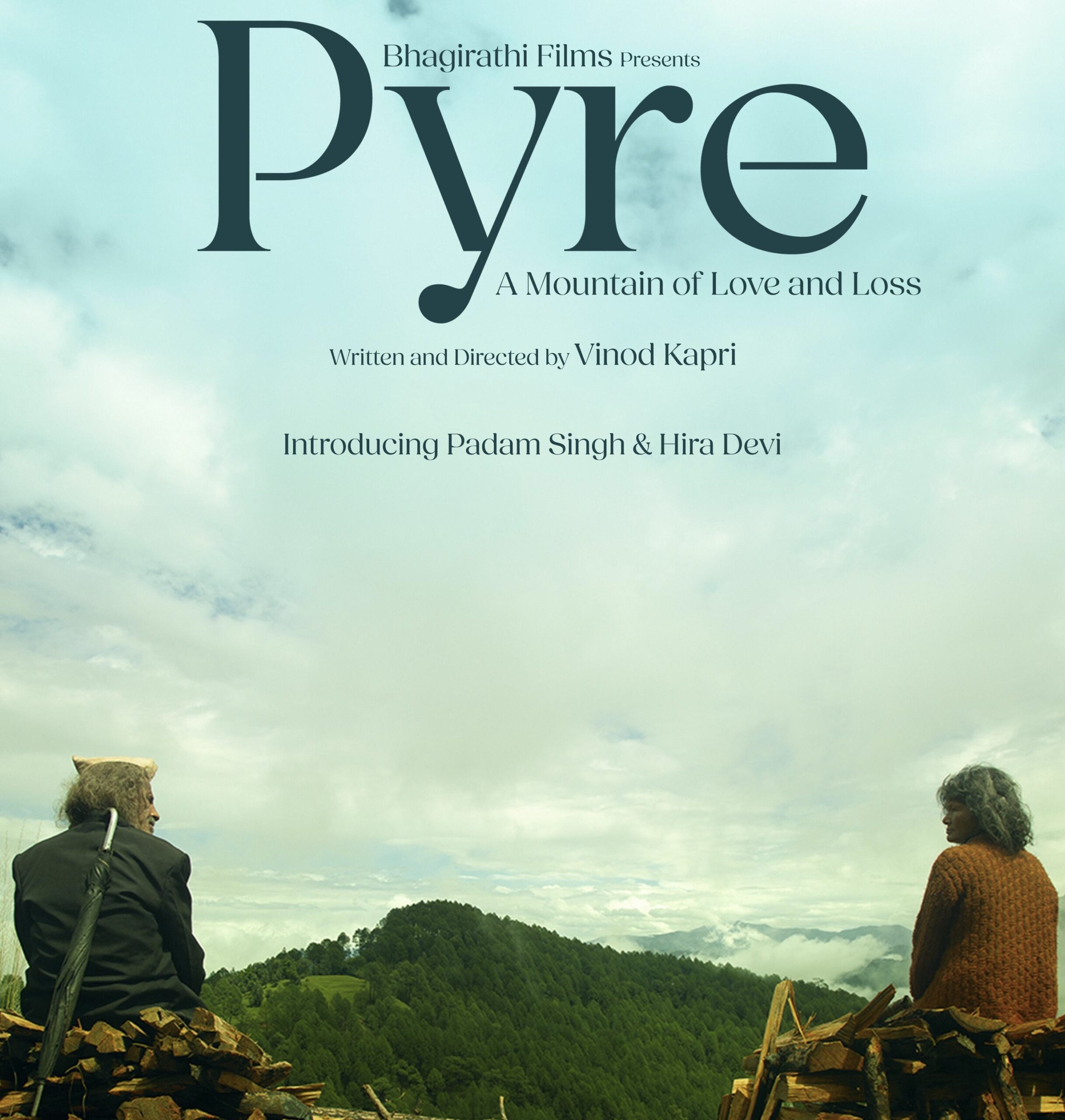
 It’s not easy to laugh in the face of death. Vinod Kapri’s old, decrepit, fading protagonists in Pyre find humour in their bouts of spousal skirmishes. Which is a blessing, for them and for us the audience which watches this wondrous cinema on living in despair and dying with dignity.
Vinod Kapri’s Pyre is a miraculous achievement. Without dumbing down the discourse on age-old abandonment and desolation(imagine Jaamini in Mrinal Sen’s Khandhar getting married, and getting old with her husband in the ruins), Kapri gets into the skin of solitude, and finds flickers of hope even when there is nothing to cling to except those slimy surfaces of rocks that have stood the test of time.
Without further ado, let’s make one fact clear: Pyre is no ordinary cinematic achievement. Its exploration of the deepest recesses of desolation is ignited and inflamed by a core of wisdom that seldom comes easily to filmmakers: life is merely a transitional phase into death. This awareness, consciousness of the transience of life, actuates Vinod Kapri’s narrative, gives it an inner life and thrust which almost seem to mock the tranquillity of the surface.
This brings us to Kumao. The green wilderness, the haunting stillness, speaks to us in a language we’ve seldom stopped to hear. It is like an entire new cinematic language opening up in front of our eyes. And ears.
Manas Bhattacharyya’s camera misses nothing. And yet gives away nothing. The mystery of the mountains is never compromised. Nature becomes a silent ally to the protagonists, as they grapple to come to terms with their imminent aloneness in a world that is gradually fading into nothingness.
Kapri doesn’t stop the couple’s slide into nihility: he celebrates it. The director’s love for silences is matched by his reverence for his frail but unvanquished protagonist. It is a stroke of luck for Kapri’s vision that the couple is played by two ‘non-actors’ .And by non-actors we mean individuals who are so close to their characters that the line dividing make-believe from reality fades.
It is magnificent merger paralleled by Satyajit Ray’s Pather Panchali where Kanu Banerjee and Karuna Banerjee are so exclusivized by their characters, it is impossible for them to play anything else. Likewise, there is something completely inextricable in the way Padam Singh Kapri and Heera Devi play Man and Wife in Pyre. They make us forget, the camera is watching.
Their banter, their contemptuous barbs at one another, secretes a love so deep , it needs no validation. For the two salient ‘performances’ alone, Pyre’s vision of destitution is worth its weight in gold.
There is a central suspense, about the return of the prodigal son, which serves as the show-stopper, a plot point that prevents the frail narrative from falling apart.
Happily, Vinod Kapri doesn’t go very far in search of screenwriting devices to get our attention. Pyre has us in its thrall without having to try .